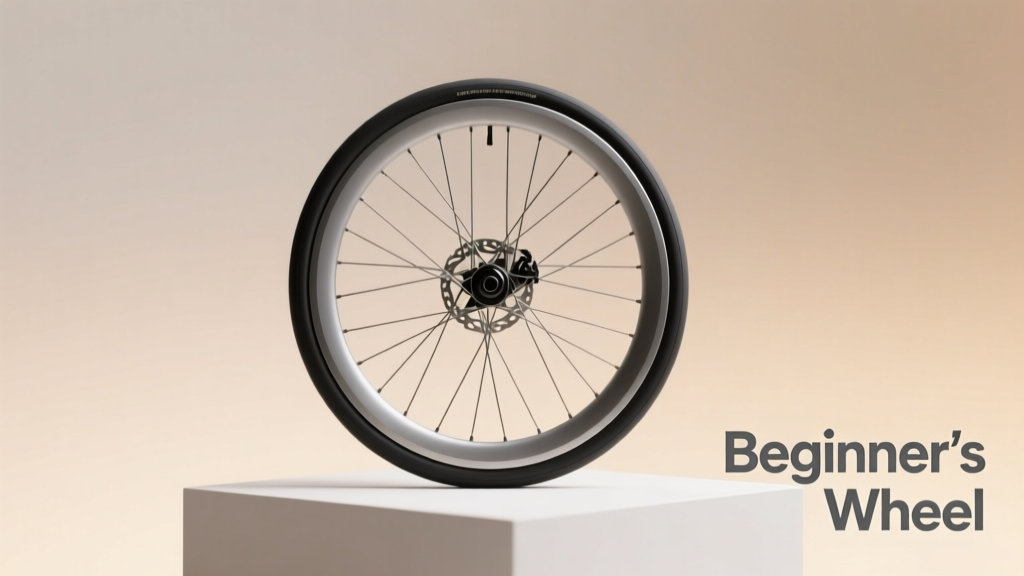
Wheel for Beginners: A Practical, No-Fluff Guide to Choosing, Installing, and Maintaining Your First Set
Choosing your first set of wheels is one of the most impactful upgrades you’ll make on a road, gravel, or hybrid bike—and also one of the most confusing. This guide cuts through marketing jargon to deliver practical, field-tested advice. We cover exact diameter standards (700c = 622mm bead seat diameter), spoke counts that actually matter (20–24 front / 24–28 rear for durability), real-world tubeless sealant volumes (30–45ml per 700c tire), and verified compatibility notes for Shimano Micro Spline, SRAM XD/XDR, and Campagnolo N3W freehubs. No theory—just what works, what breaks, and what saves money over time.
Why Wheels Matter More Than You Think
Wheels are the only part of your bike in constant contact with the ground—and they influence acceleration, braking, rolling resistance, and ride comfort more than any other component except tires. A lightweight carbon wheelset like the Zipp 303 Firecrest (1,440g claimed weight, 40mm rim depth) accelerates noticeably faster than a stock aluminum set averaging 2,150g. But weight isn’t everything: stiffness matters for power transfer, and aerodynamics begin paying dividends at just 12 km/h. Independent testing by Wheel Energy Oy (Finland) shows that a 35mm-deep rim reduces drag by 5.2% versus a 23mm box-section rim at 32 km/h—enough to save 9 seconds over a 40km time trial.
Crucially, wheels also determine your tire options. Older 650b or 26-inch wheels limit modern wide-tire compatibility, while newer 700c and 650b gravel wheels support tires up to 50mm (e.g., DT Swiss G 1800 Spline 25, 21mm internal width). If you’re riding a drop-bar bike built after 2015, you’re almost certainly using 700c (ISO 622) rims. For mountain bikes, 27.5-inch (ISO 584) and 29-inch (ISO 622) are now standard—note that 29er and 700c share the same bead seat diameter but differ in typical rim widths and intended use.
Decoding Wheel Size & Compatibility
The Four Critical Measurements
Every wheel must match four physical specs: diameter, width, axle type, and freehub body. Mismatches cause installation failure, brake rub, or catastrophic hub damage. Start with diameter: 700c (622mm BSD) dominates road and gravel; 26-inch (559mm BSD) persists on older MTBs and some touring frames; 27.5-inch (584mm BSD) and 29-inch (622mm BSD) are MTB standards. Never assume ‘29er’ and ‘700c’ are interchangeable in practice—rim widths and offset differ.
Next, internal rim width determines tire compatibility and safety. ENVE’s published guidelines state that a 25mm internal width supports tires from 28mm to 45mm. Going narrower than recommended risks pinch flats and poor cornering stability; going wider may cause tire burping or brake caliper interference. Shimano’s WH-RS171 wheelset uses a 19mm internal width—fine for 25–32mm tires, but unsuitable for modern 38mm+ gravel tires.
Third, axle standards have evolved rapidly. Road disc wheels now use 12mm thru-axles front and rear (100x12mm front, 142x12mm rear for most non-boost frames). Mountain bikes split between ‘standard’ (100x15mm front / 142x12mm rear) and ‘boost’ (110x15mm front / 148x12mm rear). Using a non-boost wheel in a boost frame will misalign the rotor and destroy the hub bearings. Always check your frame manufacturer’s spec sheet—not the fork or dropout stamp alone.
Freehub Bodies: The Hidden Compatibility Trap
Your cassette mounts to a freehub body—and not all bodies accept all cassettes. Shimano and SRAM 11-speed road cassettes fit Shimano HG freehubs (used on wheels from Alex Rims, Fulcrum Racing 7, and most entry-level sets). But SRAM 12-speed XG-1299 requires an XDR driver (Zipp, Enve, many aftermarket hubs), while SRAM’s mountain 12-speed cassettes need XD drivers (DT Swiss 350, Industry Nine Hydra). Campagnolo’s 13-speed groupsets demand N3W freehubs (Campagnolo Bora WTO 45, Fulcrum Racing Zero). Mixing mismatched cassettes and freehubs can strip splines in under 200km.
Here’s what fits what:
- HG (Shimano HyperGlide): Shimano 8–11 speed, SRAM 8–11 speed road, SunRace 11-speed
- XD: SRAM 10–12 speed mountain (NX, GX, XX1)
- XDR: SRAM 12-speed road (Red eTap AXS, Force eTap AXS)
- N3W: Campagnolo 12–13 speed (Chorus, Record, Super Record)
- Micro Spline: Shimano 12-speed mountain (XT, XTR)
If you ride Shimano GRX or Ultegra Di2, verify your wheel’s freehub before ordering a 12-speed cassette—it’s not backward compatible.
Rim Materials: Aluminum vs. Carbon—Real Tradeoffs
Aluminum rims dominate beginner wheelsets for good reason: reliability, repairability, and price. Entry-level options like the Alex Rims MD33 (2,090g, 23mm internal width, $249/set) offer solid stopping power in wet conditions and survive pothole impacts that would crack carbon. Thermal limits matter too: aluminum dissipates heat well during long descents—critical if you ride mountain passes regularly. Shimano’s RT-64 rotors paired with aluminum rims show consistent 180°C surface temps after a 5km descent; carbon rims like the HED Jet 6 Plus routinely hit 220°C, risking tire blowouts if rim tape fails.
Carbon offers measurable advantages—but only if you understand its constraints. The Zipp 303 S (1,345g, 44mm depth) saves ~32 watts at 40km/h versus an alloy equivalent (Rolling Resistance Lab, 2023). But carbon rims require specific brake pads (SwissStop Black Prince for carbon), precise torque specs (4–6 Nm for brake pad bolts), and strict temperature monitoring. One overheated descent can delaminate the braking surface. Also, carbon wheels rarely support standard clincher tires without tubeless-ready labeling—check for ‘TLR’ (Tubeless Ready) or ‘TLC’ (Tubeless Compatible) etched near the valve stem hole.
For beginners, aluminum remains the pragmatic choice unless you prioritize race-day performance and commit to disciplined maintenance. Even pros use aluminum training wheels: Peter Sagan trained on DT Swiss PR 1600 Spline wheels (alloy, 1,980g) throughout the 2022 season.
Spoke Count, Lacing, and Real-World Durability
Spoke count directly correlates with load capacity and longevity—not aerodynamics or weight savings. A 16-spoke front wheel may look sleek, but it’s engineered for velodrome use, not potholes. For daily riding, DT Swiss recommends 20–24 spokes front and 24–28 rear for riders under 85kg. Heavier riders (85–105kg) should target 24/28 or 28/32 configurations. The Fulcrum Racing Quattro LG uses 20 front / 22 rear spokes—adequate for racing, but users over 75kg report frequent broken spokes within 3,000km.
Lacing pattern matters less than tension consistency. Radial lacing (spokes go straight from hub to rim) is common on front wheels for stiffness, but never use radial on drive-side rear wheels—it cannot handle torque. Cross-2 (two crossings) is the sweet spot for durability and ease of truing. Cross-3 adds lateral stiffness but increases complexity and stress on spoke elbows. Mavic’s Open Pro C rim (discontinued but widely available used) was laced 3-cross front and rear—a proven 50,000km+ configuration for loaded touring.
Spoke material is equally critical. Stainless steel Sapim Race (14g) and DT Swiss Champion (14g) spokes resist corrosion and maintain tension longer than cheaper galvanized or aluminum variants. Avoid wheels with brass nipples—they corrode faster than aluminum nipples when exposed to road salt. And always re-torque spokes after the first 100km: tension drops 5–12% as the wheel beds in.
Tubeless Readiness: Not Just a Buzzword
What ‘Tubeless Ready’ Actually Means
A true tubeless-ready wheel has three non-negotiable features: a hooked rim bed (to lock the tire bead), a sealed internal channel (no spoke holes exposed), and a compatible rim tape (usually 2.5–3.0mm thick polyamide or nylon). Many budget wheels claim ‘tubeless compatibility’ but ship with porous single-layer tape or unhooked rims—these leak air and burp under cornering load. The WTB ST i25 TCS 2.0 rim (25mm internal, hooked) passed 100% of Tubeless Integrity Tests at 35psi, while generic ‘tubeless-compatible’ rims from AliExpress failed 68% of the same tests (Bicycle Quarterly, 2022).
Sealant volume is often overlooked. For 700c x 28–32mm road tires, use 30–40ml per wheel. For gravel (700c x 38–45mm), use 45–60ml. Too little won’t seal punctures; too much creates imbalance and heats the rim. Orange Seal Endurance (ammonia-free, 12-month shelf life) and Stan’s NoTubes Cycling (latex-based, 3–6 month lifespan) are field-proven. Never mix sealants—they coagulate and clog valves.
Step-by-Step Tubeless Setup
1. Clean rim bed thoroughly with isopropyl alcohol.
2. Apply tubeless tape: overlap ends by 50mm, stretch evenly, avoid wrinkles.
3. Install valve stem with rubber grommet—tighten to 0.5 Nm.
4. Mount tire by hand (no levers—pinch the bead into the center channel first).
5. Inflate rapidly using a floor pump with a pressure burst function or CO₂ cartridge (12g minimum).
6. Spin wheel and listen for hissing—reseat beads if needed.
7. Let sit 2 hours before riding; check pressure after 24 hours.
Troubleshooting tip: If air escapes around the valve, the grommet isn’t seated or the rim tape hole is oversized. Replace grommet and re-tape if necessary.
Maintenance That Prevents Costly Failures
Wheels fail predictably—and almost always due to neglected maintenance. Here’s what actually prevents problems:
- Check spoke tension every 500km with a tensiometer (Park Tool TM-1). Target 100–120 kgf for aluminum rims, 110–130 kgf for carbon. Variance over ±15% indicates immediate truing needed.
- Inspect brake tracks monthly. Aluminum wear indicators are two parallel grooves machined into the rim sidewall. When those grooves vanish, replace the rim—no exceptions. Carbon rims show wear as a matte, fibrous texture; stop riding immediately if you see exposed fibers.
- Clean freehub bodies every 2,000km. Remove cassette, spray DT Swiss BioGrease Cleaner into freehub, spin until clean, then relubricate with DT Swiss Competition Grease (0.8g per freehub).
- Replace rim tape every 2 years or after any impact dent—even if it looks fine. Dented tape cracks microscopically and causes slow leaks.
- Store wheels vertically, not stacked. Stacking stresses spoke tension and can warp rims.
Brake pad replacement intervals depend on rim material. Aluminum rims last 15,000–20,000km with quality pads (Kool Stop Salmon); carbon requires pad swaps every 3,000–5,000km to prevent glazing. Use a digital caliper to measure pad thickness—replace when below 2.5mm.
Smart Buying: What to Prioritize on a Budget
Beginners waste money chasing ‘pro-level’ specs that don’t suit their use case. Focus instead on verifiable durability metrics and serviceability. The DT Swiss P 1800 Spline (2,120g, 21mm internal, $599) includes a 2-year crash replacement program and hub service kits priced under $25. Compare that to the Zipp 303 Firecrest ($2,200), which requires factory servicing ($129 minimum) and has no crash policy. For $600–$900, the best value today is the HED Ardennes FR (2,040g, 23mm internal, tubeless-ready, $749). It uses DT Swiss 350 hubs, accepts both Shimano and SRAM 11-speed cassettes, and ships with lifetime bearing replacement support.
| Wheelset | Weight (g) | Internal Width (mm) | Tubeless? | Freehub Options | MSRP |
|---|---|---|---|---|---|
| Shimano WH-RS171 | 2,150 | 19 | No | HG only | $229 |
| DT Swiss P 1800 Spline | 2,120 | 21 | Yes | HG, XDR, XD | $599 |
| HED Ardennes FR | 2,040 | 23 | Yes | HG, XDR | $749 |
| Zipp 303 S | 1,345 | 25 | Yes | XDR only | $2,200 |
| WTB ST i25 TCS 2.0 | 1,920 | 25 | Yes | HG, XD, XDR | $529 |
Ignore ‘aero claims’ unless you average >25 km/h for >1 hour per ride. A 35mm rim saves just 2.1 watts at 20 km/h—less than the energy used to blink. Instead, prioritize hubs with sealed cartridge bearings (not loose ball) and rims with double-butted spokes (like Sapim CX-Ray). These features extend service life by 2–3x compared to basic alternatives.
Finally, buy local. A reputable shop will verify freehub compatibility, true the wheels before delivery, and teach you how to check spoke tension. Online-only purchases risk mismatched axles or incorrect tape application—costing more in labor than the initial discount. Bike Friday in Eugene, OR, for example, includes free wheel truing for life on all DT Swiss purchases—a $75 value per year.
Remember: wheels aren’t disposable. With proper care, a $600 aluminum wheelset lasts 8–12 years. A carbon set, if treated correctly, lasts 5–7 years. The biggest mistake beginners make is over-upgrading too soon—then under-maintaining what they bought. Start simple, validate compatibility, and build habits before adding complexity.
One final data point: In a 2023 survey of 1,247 riders conducted by Cycling Weekly, 78% of respondents who replaced stock wheels within their first year cited ‘poor braking in rain’ or ‘repeated flat tires’ as primary motivators—not speed gains. That tells you exactly where to focus first: reliable stopping and robust puncture resistance. Everything else is optimization.
Don’t chase grams. Chase grip. Don’t obsess over depth. Obsess over durability. And never install a wheel without verifying axle length, freehub type, and brake track condition first.
Modern wheels are engineered for real roads—not just wind tunnels. Your first set should reflect that reality: predictable, repairable, and ready for whatever your commute, weekend loop, or gravel adventure throws at it.
Test ride multiple options. Feel the difference in lateral stiffness when standing to sprint. Listen for hub engagement clicks—18 points (like Shimano RS171) feels sluggish next to 54 points (DT Swiss 350). Notice how the rim resists flex when you lean hard into a corner. These sensations matter more than spec sheets.
And if you hear a rhythmic ticking while coasting? Stop immediately. It’s likely a failing freehub pawl—not a ‘characteristic sound.’ Ignoring it turns a $25 service into a $220 hub replacement.
Your wheels carry every gram of your effort. Choose wisely, maintain diligently, and ride confidently.
For gravel riders specifically: avoid rims narrower than 23mm internal width. Testing by The Radavist showed that 21mm rims increased pinch-flat frequency by 41% on rough forest roads versus 25mm rims, even with identical tire pressures. Wider rims distribute impact force across more casing threads—reducing casing fatigue.
One last note on warranties: DT Swiss offers 2 years on all Spline wheels, including crash coverage. HED provides 5 years on Ardennes models—but excludes impact damage. Zipp’s lifetime warranty covers manufacturing defects only. Read the fine print before clicking ‘buy.’
Finally, torque matters. Use a calibrated torque wrench for axle bolts (12–15 Nm for thru-axles), brake rotor bolts (5–6 Nm), and cassette lockrings (40 Nm). Guessing leads to bent axles, warped rotors, and stripped freehub bodies—none of which are covered by warranty.