Car Upholstery Stain Removal: Step-by-Step (2026)
Car upholstery takes a beating from daily life — coffee spills, food crumbs, ink marks, and greasy fingerprints are inevitable. Most stains can be removed with the right technique and products, even if they have been sitting for weeks. The key is understanding what type of stain you are dealing with and using the appropriate cleaning method.
Identify Your Stain Type
Organic stains (coffee, food, blood) respond best to enzyme-based cleaners. Oil-based stains (grease, makeup, sunscreen) need a solvent or degreaser. Ink and dye stains require alcohol-based solutions. Using the wrong cleaner can set the stain permanently, so identification is your first step.
Coffee and Tea Stains
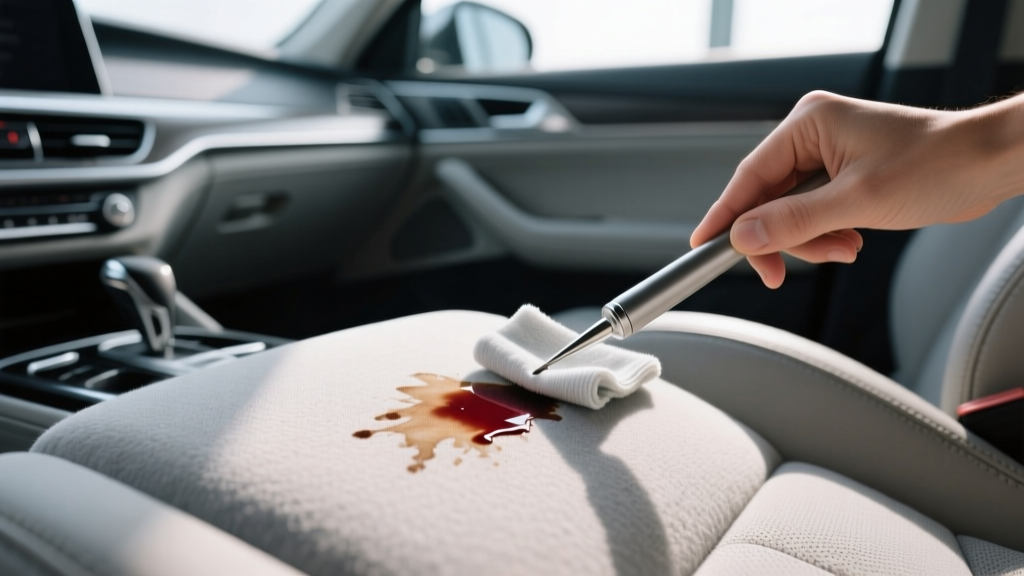
Blot fresh spills immediately with a clean, dry microfiber cloth — never rub, as this pushes the liquid deeper. For dried coffee stains, mix one tablespoon of white vinegar with two cups of warm water. Apply with a spray bottle, let sit for 10 minutes, then blot with a clean cloth. Repeat until the stain lifts. For stubborn coffee stains on fabric seats, use an enzyme cleaner like Bissell Professional Pet Stain & Odor Remover — it breaks down the tannins that cause the brown color.
Grease and Oil Stains
Grease requires a degreaser. Spray a small amount of automotive interior degreaser (Chemical Guys Nonsense is excellent) directly onto the stain. Let it sit for 5 minutes, then agitate gently with a soft-bristle brush. Blot with a clean cloth and repeat if necessary. For leather seats, use a leather-specific cleaner — degreasers can strip the protective coating.
Ink Stains
Ink is one of the hardest stains to remove from fabric upholstery. Dampen a cotton ball with isopropyl alcohol (91% or higher) and dab at the stain — do not rub. The ink will transfer to the cotton ball. Switch to fresh cotton balls as they become saturated. Once the ink is lifted, clean the area with a mild soap solution to remove alcohol residue. On leather, test the alcohol on a hidden area first, as it can strip the dye.
Food and Sauce Stains
Tomato-based sauces, chocolate, and dairy are common culprits. For fabric seats, use an enzyme cleaner — the enzymes break down proteins and organic matter. Apply, let sit for 15 minutes, then extract with a wet vac or blot repeatedly with damp cloths. For dried food, gently scrape off excess with a plastic spoon before treating.
Blood Stains
Always use cold water on blood — hot water sets it permanently. Blot with cold water and a clean cloth until the stain lifts. For stubborn blood, hydrogen peroxide (3%) works well on light-colored fabric but can bleach dark fabric — test first.
When to Call a Professional
If a stain covers a large area, has set for months, or is on delicate materials like suede or Alcantara, professional detailing is worth the $100-200 investment. Professionals have steam extractors, ozone machines, and industrial-grade chemicals that are not available to consumers.