How to Restore Faded Dashboard Trim: A Step-by-Step Guide
Your dashboard takes a beating from UV radiation every time your car sits in the sun. Over years, this exposure causes the plastic and vinyl to fade, crack, and develop a chalky white residue. A faded dashboard makes your entire car interior look neglected and significantly reduces resale value. Fortunately, restoration is possible with the right products and techniques.
Why Dashboards Fade
Dashboard materials (typically ABS plastic, PVC vinyl, or polyurethane) degrade when exposed to ultraviolet light. UV radiation breaks down the chemical bonds in the material, causing the surface to oxidize. This oxidation appears as fading (color loss), chalking (white powdery residue), and eventually cracking. Heat accelerates this process — a dashboard can reach 160°F (71°C) on a hot summer day.
Assessing the Damage
Before starting, evaluate the condition. Light fading (uniform color loss, no cracks) is the easiest to fix with a restorer product. Moderate damage (visible chalking, minor surface cracks) requires cleaning plus a trim restorer with pigment. Severe damage (deep cracks, delamination) may need professional repair or a dashboard cover as a cosmetic fix.
Step 1: Deep Clean
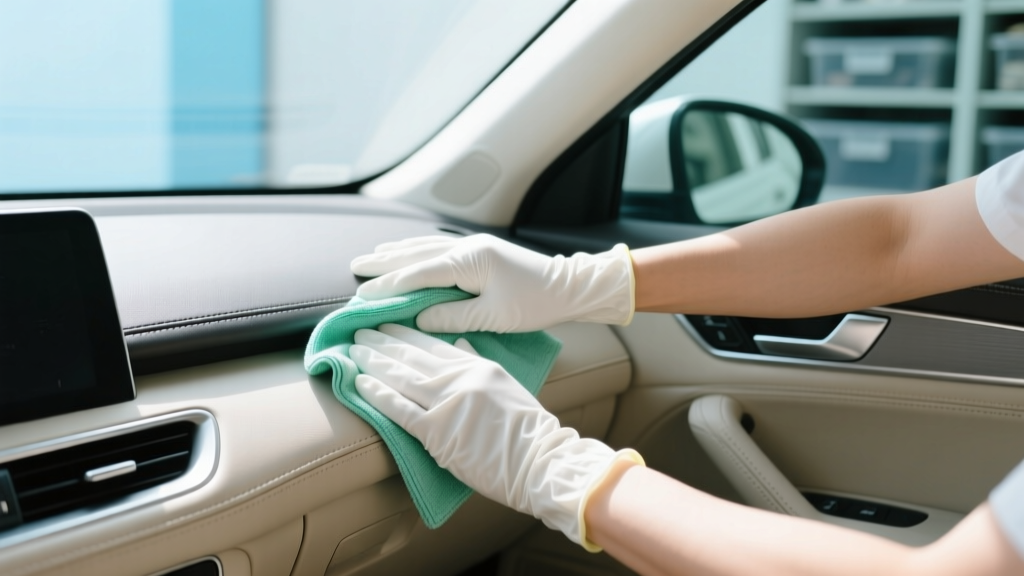
Use an all-purpose interior cleaner (Chemical Guys Nonsense or Meguiar's Quik Interior Detailer). Spray onto a microfiber towel and wipe the entire dashboard. Pay attention to textured areas where dirt accumulates. For stubborn grime in vents and seams, use a detailing brush. Allow the surface to dry completely — any moisture will prevent the restorer from bonding properly.
Step 2: Apply Trim Restorer
For faded (but not cracked) dashboards, use a product like Solution Finish Trim Restorer or Cerakote Ceramic Trim Coat. These contain pigments that restore the original dark color and UV inhibitors that prevent future fading. Apply with a foam applicator pad in thin, even coats. Work in sections — the product dries quickly. Two thin coats are better than one thick coat.
Step 3: Fill Minor Cracks
For hairline cracks, use a flexible vinyl repair compound like Permatex Vinyl Repair Kit. The compound fills cracks and flexes with temperature changes without cracking again. Clean the crack with isopropyl alcohol, apply the compound with a small spatula, and smooth with a wet finger. Allow 24 hours to cure before applying any restorer on top.
Step 4: UV Protection
After restoration, apply a UV protectant like 303 Aerospace Protectant or Armor All UV Shield. These create a barrier that blocks UV radiation and prevents the oxidation cycle from starting again. Reapply every 2-3 months for ongoing protection.
Prevention Going Forward
The best restoration is prevention. Use a windshield sun shade whenever parking outdoors — it reduces dashboard temperature by 30-40°F. Consider a UV-blocking window tint (legal in most states at 35-50% VLT on front windows). Park in shade or use a car cover when possible. Regular application of UV protectant every few months maintains the dashboard's appearance for years.