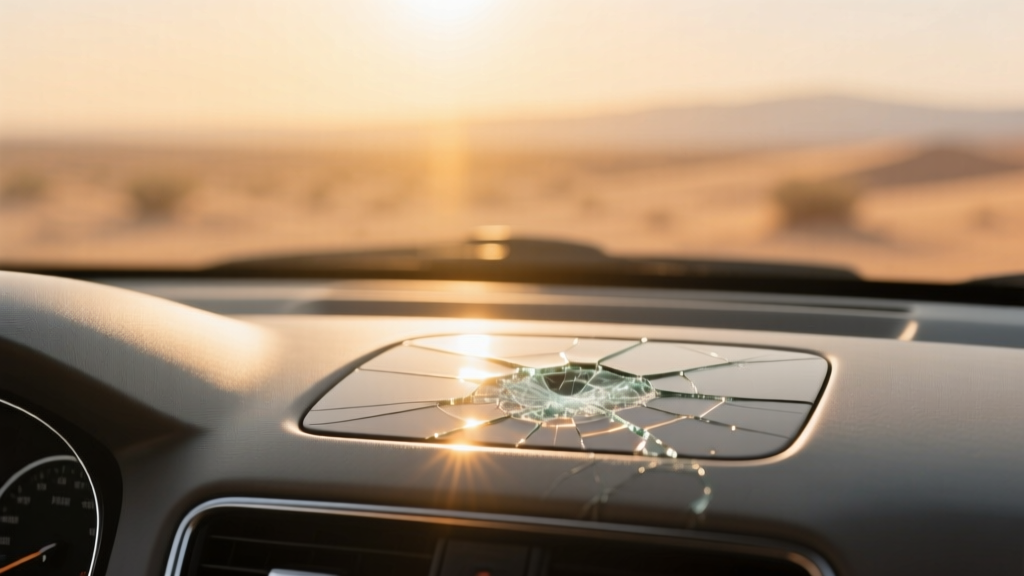
Dashboard Cracking in Heat: 7 Proven Prevention Tips
Why Dashboards Crack
Modern dashboards are made from vinyl, plastic, or soft-touch materials that degrade under prolonged UV exposure and heat. When temperatures inside a parked car exceed 160°F (71°C), the dashboard material expands, dries out, and eventually cracks. Once cracks form, they are nearly impossible to repair without replacing the entire dashboard panel.
Method 1: Use a Windshield Sunshade Every Time
A reflective windshield sunshade reduces dashboard surface temperature by 30-40°F. Accordion-style shades with aluminum coating are the most effective. Make it a habit: every time you park outdoors, deploy the shade. It takes 10 seconds and saves thousands in dashboard replacement costs.
Method 2: Apply UV Protectant Monthly
Use a dedicated dashboard protectant (not armor-all type products that create shine and glare). Look for products labeled "UV resistant" and "matte finish." Apply with a microfiber cloth, covering every exposed surface including the instrument cluster hood and defrost vent area. Reapply every 4 weeks during summer months.
Method 3: Park in Shade or Use a Car Cover
Whenever possible, park under trees, in garages, or in covered parking structures. If shade is unavailable, a car cover with UV-blocking fabric provides excellent protection. Even partial shade (dashboard area shaded by a building) makes a significant difference.
Method 4: Tint Your Windshield and Front Windows
Window tint film blocks up to 99% of UV rays and reduces heat transmission by 40-60%. Check your local regulations for legal tint percentages. Even a clear UV-blocking film (legal everywhere) provides substantial dashboard protection.
Method 5: Use a Dashboard Mat or Cover
Carpet-type dashboard mats (also called dash mats or dashboard covers) sit on top of the dashboard and absorb UV radiation before it reaches the original surface. They are custom-fit for most vehicle models and cost between 0-0.
Method 6: Keep Interior Temperature Down
Crack windows slightly when parked (if safe) to allow heat to escape. Solar-powered vent fans can also maintain air circulation. The lower the interior temperature, the less stress on dashboard materials.
Method 7: Condition Vinyl and Plastic Surfaces
Use a vinyl and plastic conditioner every 2-3 months. These products replenish the plasticizers that heat leaches from dashboard materials, keeping them flexible and resistant to cracking.
Signs Your Dashboard Is Already Damaged
- Fading or discoloration (especially on the driver side)
- A chalky or powdery residue on the surface
- Small hairline cracks near the defrost vents
- Sticky or tacky surface texture
If you notice these signs, start treatment immediately to prevent the damage from worsening.