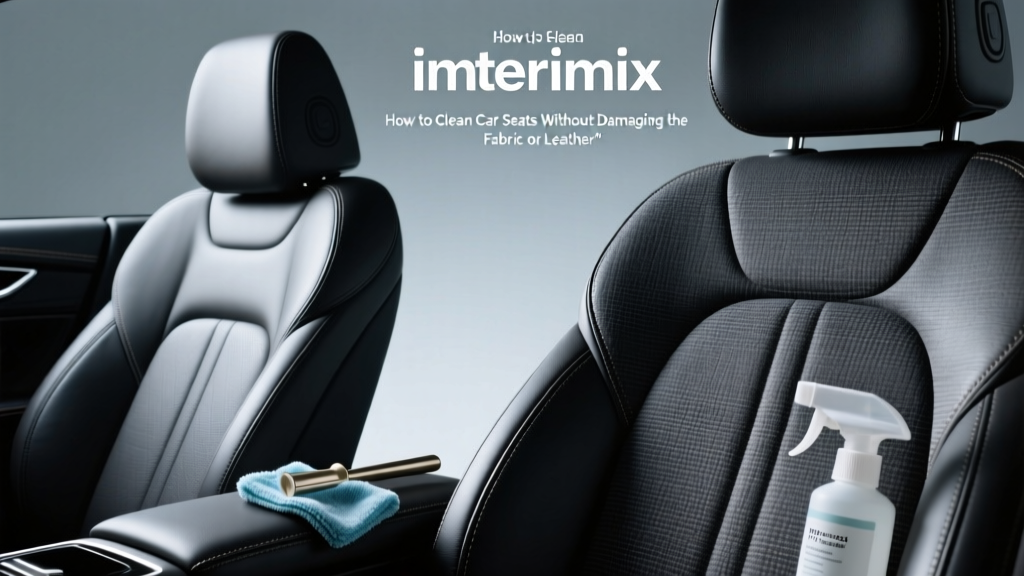
How to Clean Car Seats Without Damaging the Fabric or Leather
Car seats endure daily abuse — spilled coffee, muddy shoes, pet hair, child car seat residue, and general wear. But aggressive cleaning can damage the very surfaces you're trying to restore. Here's how to clean every type of car seat material safely and effectively.
Identify Your Seat Material First
Before applying any cleaner, determine your seat material. Fabric seats have a woven textile surface. Leather seats feel smooth and cool to the touch. Synthetic leather (leatherette/vinyl) feels warmer and more plasticky. Suede (Alcantara) has a soft, velvety nap. Each material requires different cleaning chemistry.
Fabric Seat Cleaning
Step 1: Vacuum thoroughly with a crevice tool to remove loose debris from seams and between cushions.
Step 2: Apply a foaming upholstery cleaner (Tuff Stuff or Chemical Guys Lightning Fast). Foam lifts stains without oversaturating the fabric — excess moisture can cause mold in the seat padding.
Step 3: Agitate gently with a soft-bristle brush in circular motions. Let the foam sit for 3-5 minutes.
Step 4: Blot with a clean microfiber towel. Do NOT rub — this pushes dirt deeper into the fibers.
Step 5: Allow to air dry completely. Use a fan to speed up the process. Never use a heat gun or hair dryer, which can shrink fabric.
Leather Seat Cleaning
Step 1: Dust with a dry microfiber cloth to remove surface debris that could scratch during cleaning.
Step 2: Apply a pH-neutral leather cleaner (Leather Honey or Chemical Guys Leather Cleaner). Avoid products containing alcohol, ammonia, or bleach — these strip the protective topcoat.
Step 3: Use a horsehair brush to work the cleaner into the grain. Horsehair is soft enough not to scratch but effective at lifting dirt from leather pores.
Step 4: Wipe away residue with a damp microfiber cloth. Dry immediately with a second cloth.
Step 5: Apply a leather conditioner within 24 hours. Cleaning removes natural oils that conditioning replaces.
Child Car Seat Residue
Child car seats leave compression marks, crumbs, and sticky residue. Remove the car seat, vacuum the area, and treat any stains with an enzyme-based cleaner (Nature's Miracle works well). Enzyme cleaners break down organic matter at the molecular level rather than just masking it. Allow full drying before reinstalling the child seat.
Common Mistakes to Avoid
- Too much water: Oversaturation leads to mold, mildew, and foam degradation
- Harsh chemicals: Bleach, ammonia, and undiluted vinegar can permanently damage all seat types
- Steam cleaning leather: High heat can crack and shrink leather surfaces
- Ignoring the care label: Many modern seats have manufacturer cleaning instructions — follow them
- Skipping the test spot: Always test any cleaner on a hidden area first