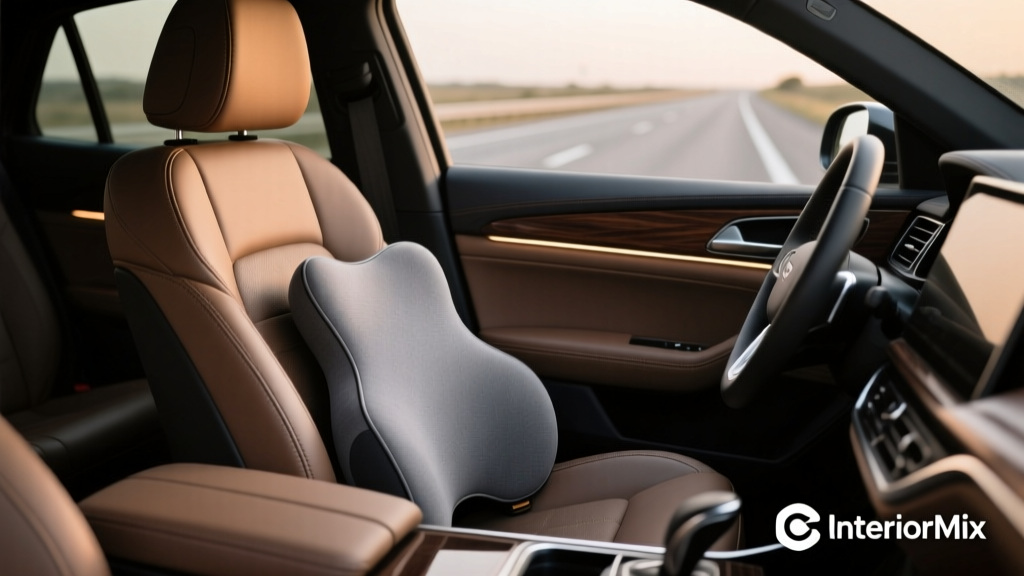
How to Choose the Right Lumbar Support Cushion for Long Drives
Lower back pain affects an estimated 80% of adults at some point, and long drives are a major trigger. Your car seat's built-in lumbar support may not match your spinal curvature, leading to slouching, muscle fatigue, and pain. A properly chosen aftermarket lumbar cushion can make the difference between an agonizing drive and a comfortable one.
Understanding Lumbar Anatomy
Your lumbar spine has a natural inward curve (lordosis) that should be maintained during sitting. When this curve flattens or reverses, the discs and ligaments in your lower back are placed under abnormal stress. A lumbar cushion fills the gap between your lower back and the seat, maintaining the natural curve.
Material Comparison
Memory foam: The most popular choice. Conforms to your body shape, provides even pressure distribution, and retains its shape well. Best for daily commuters. Look for density ratings of 3-5 lb/ft³. Downside: retains heat, which can be uncomfortable in summer.
Mesh/ergonomic: Breathable mesh stretched over a curved frame. Excellent ventilation but less conforming than foam. Best for hot climates and drivers who prioritize airflow over cushioning.
Inflatable: Air-filled cushions with adjustable firmness. Extremely portable and customizable. Best for travelers who use different vehicles. The downside is potential air leakage over time.
Gel-infused foam: Memory foam with gel beads or channels for temperature regulation. Offers the conforming benefits of foam with improved cooling. Usually 20-40% more expensive than standard foam.
Sizing Guide
The cushion should fill the gap at your natural lumbar curve — typically at belt-line height (around the level of your navel). Too high and it pushes your upper back forward; too low and it provides no benefit. Most adults need a cushion that's 12-15 inches wide and 10-13 inches tall.
Firmness Selection
- Soft (plush): Best if your car seat is already firm and you just need gap-filling
- Medium: Best for most drivers — provides support without feeling like a brick
- Firm: Best if your car seat is very soft and you need substantial support
Attachment Methods
Look for cushions with adjustable straps that secure around the seat back. Strapless cushions slide down during entry/exit and require constant repositioning. Some premium cushions use non-slip silicone backing, which works well on leather seats but can slip on fabric.
Tips for Maximum Benefit
- Adjust your seat position AFTER installing the cushion — your seating geometry changes
- Give yourself 1-2 weeks to adapt; initial discomfort is normal as your posture corrects
- Take breaks every 90 minutes regardless of cushion quality — movement is essential
- If you have diagnosed spinal conditions, consult your chiropractor or physical therapist before using any support device