# How to Protect Your Dashboard from Sun Cracking
Dashboard cracks are one of the most common and expensive interior problems. UV radiation breaks down the plasticizers in vinyl and soft-touch materials, causing brittleness and cracking.
## Why Dashboards Crack
- **UV radiation** breaks chemical bonds in vinyl/plastic
- **Heat cycling** (hot days, cool nights) causes expansion and contraction
- **Loss of plasticizers** makes material brittle over time
- **Chemical cleaners** can strip protective coatings
## Prevention Methods
### 1. Use a Windshield Sun Shade (Most Important)
A quality sun shade blocks 95-99% of UV rays and reduces dashboard temperature by 30-40°F. Use one every time you park, even on cloudy days (UV still penetrates clouds).
### 2. Apply UV Protectant Regularly
**Best products by type:**
- **Matte finish**: 303 Aerospace Protectant (most recommended)
- **Satin finish**: Chemical Guys VRP
- **Ceramic coating**: Gtechniq C6 (longest lasting, 6+ months)
**Application schedule:**
- Weekly: Quick detail spray
- Monthly: Full protectant application
- Every 6 months: Deep clean + ceramic coating
### 3. Window Tinting
Professional ceramic window tint blocks 99% of UV rays:
- Front windshield: Clear ceramic tint (legal everywhere)
- Side windows: Varies by state law (typically 35-70% VLT)
- Rear window: More flexibility in tint darkness
### 4. Park Smart
- Use covered parking whenever available
- Park with the rear facing the sun (back dash is less critical)
- Use car covers for extended outdoor parking
## How to Apply Protectant Correctly
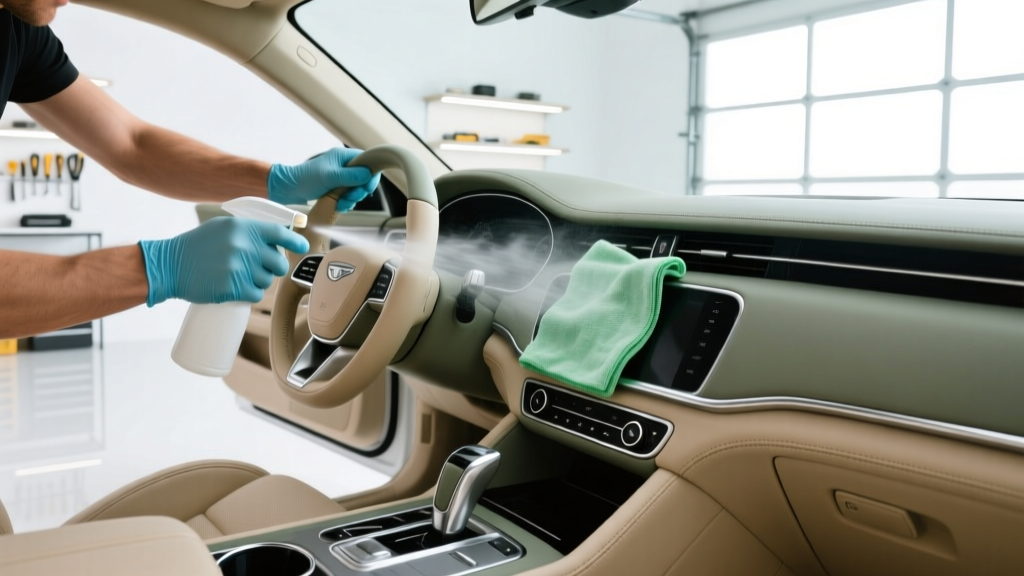
1. **Clean first**: Use a dedicated interior cleaner, not all-purpose
2. **Dry completely**: Moisture traps dirt under protectant
3. **Apply with microfiber**: Spray on cloth, not directly on dash
4. **Work in sections**: One panel at a time
5. **Buff to finish**: Remove excess for a non-greasy look
6. **Avoid electronics**: Keep protectant off screens and vents
## Early Signs of Damage
Watch for these warning signs:
- **Fading**: Color becoming lighter or uneven
- **Chalky residue**: Surface plasticizers evaporating
- **Hairline cracks**: Starting near defroster vents
- **Sticky surface**: Material breaking down
## Fixing Minor Cracks
If you catch cracks early:
1. Clean the area thoroughly
2. Apply vinyl/plastic repair compound
3. Smooth with a plastic spreader
4. Color match with vinyl dye
5. Seal with UV protectant
## What NOT to Do
- ❌ Don't use Armor All (silicone-based, attracts dust, causes drying)
- ❌ Don't use household furniture polish
- ❌ Don't wipe with paper towels (they scratch)
- ❌ Don't ignore the problem — cracks spread rapidly once started