How to Organize Your Car Trunk for Maximum Space and Efficiency
A disorganized trunk wastes space, creates noise while driving, and makes it impossible to find what you need. Whether you commute daily, haul gear for hobbies, or take family road trips, a well-organized trunk saves time and frustration. Here are proven strategies for every vehicle type.
Assessing Your Trunk Space
Start by emptying the trunk completely. Clean it with an all-purpose cleaner and let it dry. Measure the usable dimensions — width between wheel wells, depth from rear seats to trunk lid, and height to the parcel shelf or ceiling. Note the shape: sedan trunks are long and narrow, SUV cargo areas are tall and boxy, and hatchbacks have irregular shapes near the rear window. This assessment determines which organizers will fit best.
Trunk Organizers
Collapsible Crate Organizers: The most versatile option. They fold flat when not in use and expand to hold groceries, tools, sports gear, or emergency supplies. Look for ones with rigid sides (not floppy fabric), multiple compartments, and a non-slip bottom. The Best Ride Up Cars trunk organizer is a popular choice at $25-35. Place it against the rear seat back to prevent sliding.
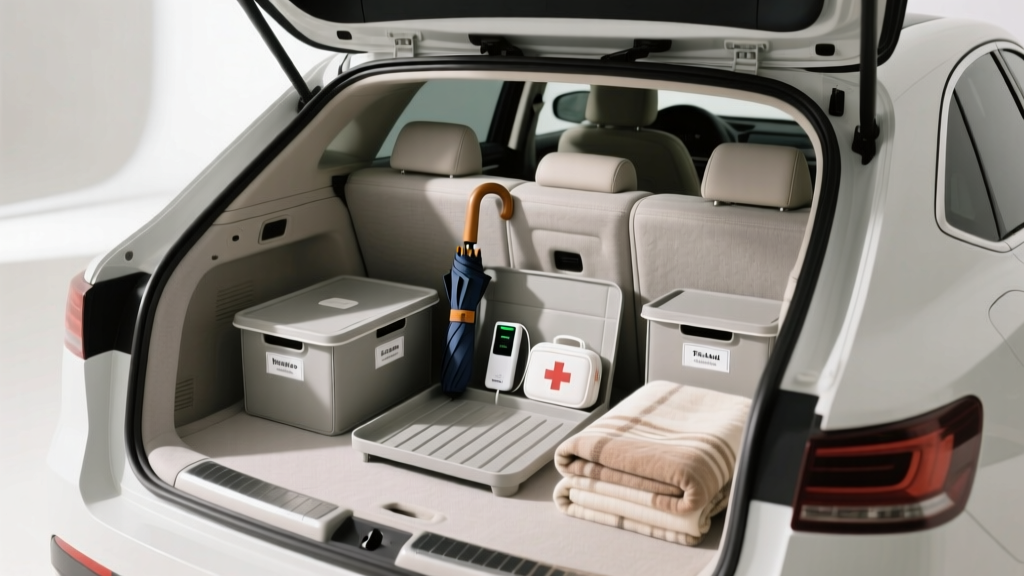
Stackable Bins: Hard plastic bins (like those from Sterilite or Rubbermaid) work well for SUVs and hatchbacks. Use different sizes for different categories: one for emergency supplies, one for sports gear, one for groceries. Label each bin. Stack heavier bins on the bottom. Secure with a cargo strap to prevent shifting on turns.
Seat-Back Organizers: Hang on the back of rear seats. Great for items you need quick access to — tissues, wipes, charging cables, snacks. Does not use trunk floor space at all.
Cargo Management Systems
Cargo Nets: Essential for securing loose items. Use a flat net over small items on the trunk floor or an envelope net against one side for taller items. Most vehicles have anchor points (D-rings) already installed — check your trunk floor near the corners. Aftermarket adhesive hooks work if your vehicle lacks them.
Cargo Bars: Telescoping bars that wedge between the sides of the trunk. Create a divider that keeps groceries from sliding into the back of the trunk during braking. Particularly useful in SUVs and hatchbacks where the cargo area is wide.
Trunk Liner with Raised Edges: WeatherTech and Husky Liners make custom-fit trunk liners with 2-inch raised edges. They contain spills, protect the carpet, and their textured surface prevents items from sliding. At $80-120, they are worth it for anyone who hauls messy items.
Zone-Based Organization
Divide your trunk into zones based on frequency of use. Zone 1 (nearest the opening or most accessible): daily items — reusable grocery bags, umbrella, car charger. Zone 2 (middle): weekly items — sports gear, shopping bags, cleaning supplies. Zone 3 (deepest/farthest): emergency items — jumper cables, first aid kit, spare tire tools. This way you rarely need to move everything to reach what you need.
Emergency Kit Essentials
Every trunk should have a dedicated emergency kit in a clearly labeled container. Include: jumper cables (or a lithium jump starter), flashlight with extra batteries, first aid kit, tire pressure gauge, duct tape, multi-tool, reflective triangles, blanket, and a phone charging cable. Check the kit every 6 months to replace expired items and dead batteries.