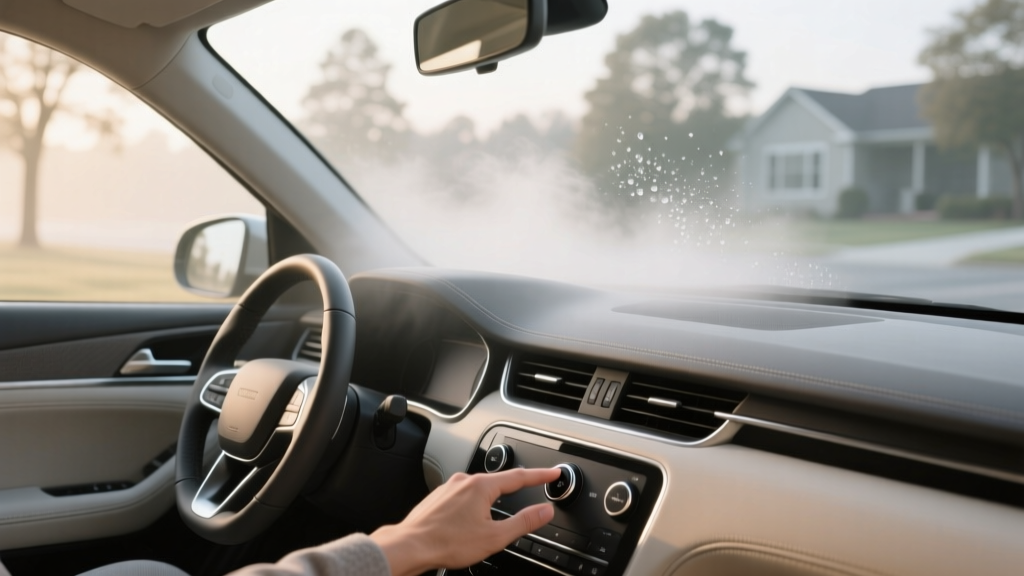
How to Defog Car Windows Quickly and Prevent Future Fogging
Foggy windows are a serious safety hazard — they can reduce visibility to near-zero in seconds, especially during rain or cold weather. Understanding why windows fog and how to clear them quickly can prevent accidents and make your daily commute safer.
Why Windows Fog
Fog forms when warm, moist air contacts a cold surface (your windshield). The moisture in the air condenses into tiny water droplets on the glass. In winter, this happens on the inside because the glass is cold from outside air and your breath adds moisture to the cabin. In summer with AC, it can form on the outside when cold AC air chills the glass below the dew point.
Fastest Way to Clear Interior Fog (Winter)
Step 1: Turn on the defroster (the button with the curved arrow icon) at maximum temperature. Hot air holds more moisture and heats the glass above the dew point.
Step 2: Turn the AC on simultaneously (even with heat). The AC acts as a dehumidifier, removing moisture from the air before it hits the windshield. Modern cars often do this automatically when you press the defrost button.
Step 3: Turn on the fresh air intake (disable recirculation). Recirculated air accumulates moisture from your breath. Fresh outside air is drier in cold weather.
Step 4: Crack a window slightly if possible. This accelerates the exchange of moist interior air for drier outside air.
Clearing Exterior Fog (Summer AC)
When fog forms on the outside of your windshield due to cold AC air, use your wipers to clear it immediately. Then adjust the AC vents so they do not blow directly on the windshield — redirect them toward your body. Increasing the AC temperature slightly also helps.
Long-Term Prevention
Anti-fog treatments: Products like Rain-X Anti-Fog or even a thin layer of shaving cream (applied and buffed off) create a hydrophilic surface that prevents water droplets from forming. Apply every 2-4 weeks.
Clean windows thoroughly: Dirty glass fogs faster because particles give moisture a surface to cling to. Clean the inside of your windshield with glass cleaner and a microfiber towel every month.
Replace cabin air filter: A clogged cabin air filter reduces airflow through the defrost system, making it slower to clear fog. Replace every 15,000-20,000 miles.
Silica gel packets: Keep a few silica gel packets on your dashboard to absorb excess moisture. Replace them monthly.
Emergency Solutions
If your defroster is broken, keep a microfiber towel in the door pocket for manual wiping. It is not as effective as a working defroster but clears enough visibility to drive safely to a repair shop. A portable 12V defroster ($15-20) is a good backup for vehicles with heater problems.