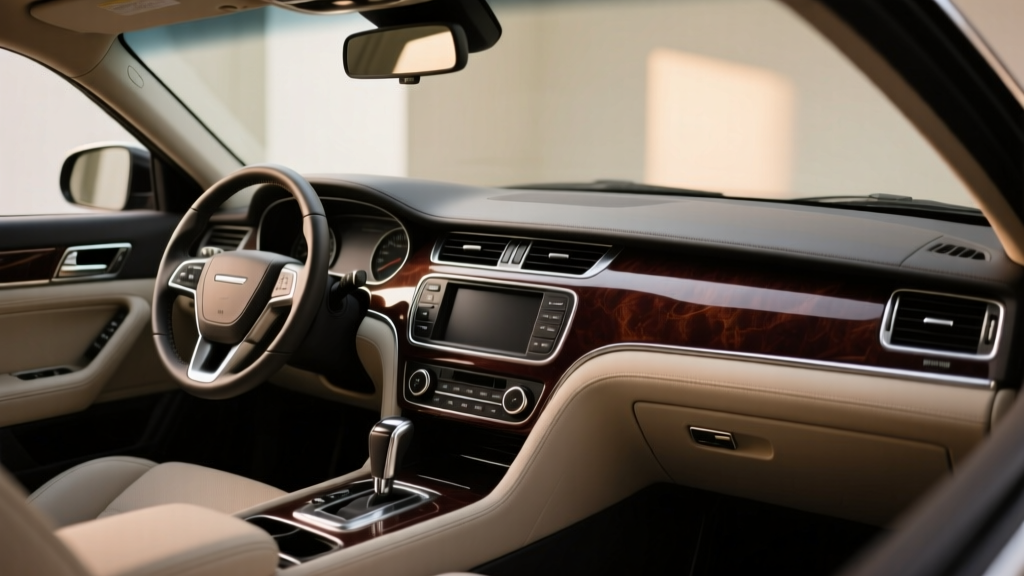
A faded dashboard is one of the most visible signs of an aging car interior. UV exposure, heat, and time combine to bleach and crack the dashboard surface. Here is how to restore it.
## Assessing the Damage
Before starting, determine the extent of fading: surface fading with color loss but smooth surface is easiest to fix, deep fading with micro-cracks needs fillers and restoration compounds, and severe cracking may require a dashboard cover or replacement.
## Materials Needed
- Dashboard cleaner (non-solvent based)
- Soft microfiber cloths
- Dashboard restorer compound or dye
- UV protectant spray
- Fine-grit sandpaper (2000 grit, for severe cases)
- Plastic filler (for cracks)
## Step 1: Deep Clean
Remove all dust and grime with a dedicated dashboard cleaner. Use a soft brush for textured surfaces and vents. Allow to dry completely.
## Step 2: Sand Lightly (Severe Cases Only)
For deeply faded dashboards, lightly sand with 2000-grit sandpaper in one direction. This removes the oxidized surface layer.
## Step 3: Apply Restorer Compound
Using a foam applicator, apply dashboard restorer in thin, even coats. Work in small sections. Two to three coats usually suffice.
## Step 4: UV Protection
Apply a UV protectant spray as the final step. Reapply every 2-3 months for ongoing protection.
## Cost vs. Replacement
Dashboard restoration costs $20-50 in materials, compared to $300-800 for professional replacement.