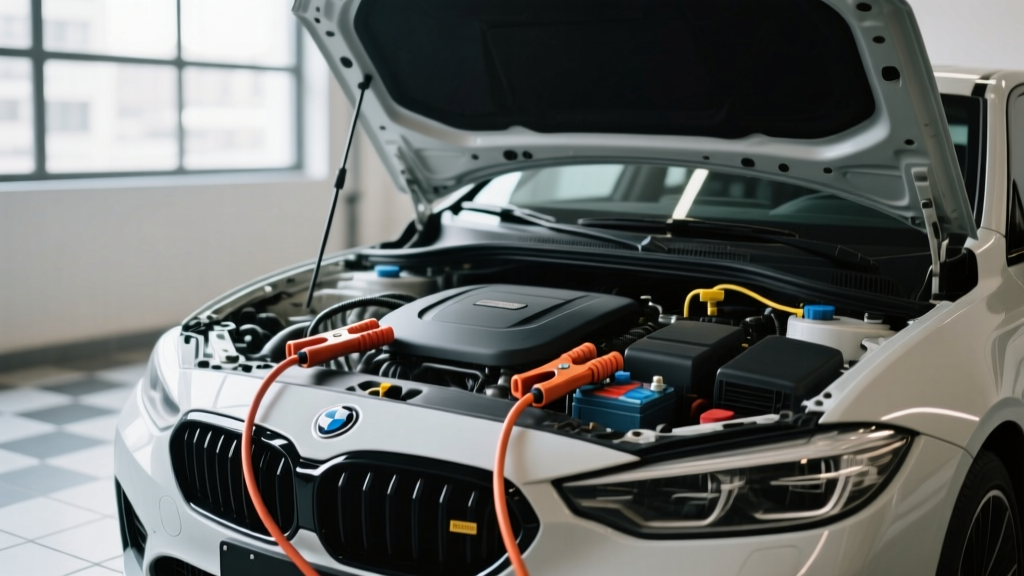
How to Jump Start a Car: Step-by-Step Guide
A dead car battery is one of the most common roadside problems — and one of the easiest to fix if you know what you're doing. This guide covers both the traditional jumper cable method and the increasingly popular portable jump starter approach.
What You'll Need
- Jumper cables (at least 10-gauge, 12–20 feet long) OR a portable jump starter
- A working vehicle with a charged battery (for the cable method)
- Safety glasses (optional but recommended)
Method 1: Using Jumper Cables
Step 1: Position the Vehicles
Park the working vehicle so the two batteries are close enough for the cables to reach — ideally nose-to-nose or side-by-side. Turn off both vehicles. Make sure they're not touching each other.
Step 2: Connect the Cables in the Correct Order
This order is critical for safety:
- Red to dead: Connect one red (positive) clamp to the positive terminal (+) of the dead battery.
- Red to donor: Connect the other red clamp to the positive terminal (+) of the good battery.
- Black to donor: Connect one black (negative) clamp to the negative terminal (−) of the good battery.
- Black to ground: Connect the final black clamp to an unpainted metal surface on the dead car's engine block — NOT to the dead battery's negative terminal. This prevents sparks near the battery.
Step 3: Start the Working Vehicle
Run the donor car for 2–3 minutes to transfer some charge to the dead battery.
Step 4: Start the Dead Vehicle
Try to start the car with the dead battery. If it doesn't start after 3–4 attempts, wait another 5 minutes and try again. If it still won't start, the battery may be too far gone or there's another issue.
Step 5: Disconnect in Reverse Order
- Black clamp from the engine block ground
- Black clamp from the donor battery negative
- Red clamp from the donor battery positive
- Red clamp from the now-started car's battery
Step 6: Drive to Recharge
Drive the jump-started car for at least 30 minutes at highway speeds to allow the alternator to recharge the battery. Short city trips won't fully recharge it.
Method 2: Using a Portable Jump Starter
Portable jump starters (also called jump packs) are compact lithium battery packs that let you jump start your car without another vehicle. They're increasingly affordable ($50–$150) and fit in a glove box.
- Connect the red clamp to the positive battery terminal
- Connect the black clamp to an unpainted metal ground on the engine block
- Turn on the jump starter
- Wait 30–60 seconds, then start the car
- Disconnect in reverse order immediately after the car starts
Most modern jump starters have built-in safety features that prevent reverse polarity damage.
Common Mistakes to Avoid
- Wrong cable order: Always follow the red-red-black-ground sequence
- Connecting black to dead battery negative: Can cause sparks and hydrogen gas ignition
- Letting cables touch each other: Can cause a short circuit
- Not driving long enough after: A short drive won't recharge the battery
- Ignoring the root cause: If your battery dies repeatedly, get it tested — it likely needs replacement
When Jump Starting Won't Work
If the car won't start even after multiple attempts with good cables and a charged donor battery, the problem may be:
- A completely dead battery that needs replacement
- A faulty alternator not charging the battery
- A bad starter motor
- A blown fuse
In these cases, you'll need a mechanic or roadside assistance.
How Long Do Car Batteries Last?
Most car batteries last 3–5 years. If yours is older than 4 years and has died once, it's worth replacing proactively — a new battery costs $100–$200 and is far cheaper than being stranded.