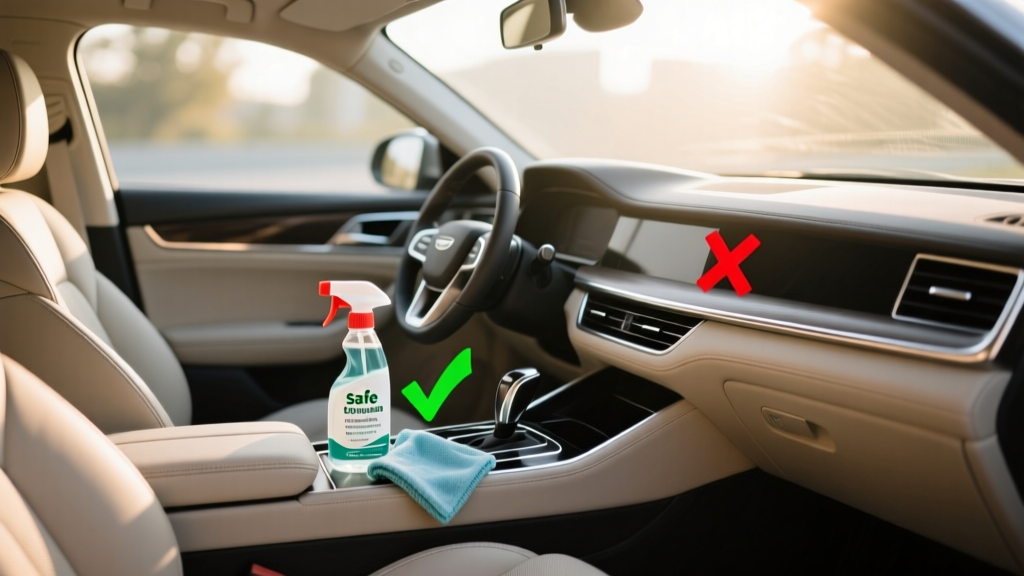
Can You Use Household Cleaners on Car Interior? What Is Safe and What Is Not
Many car owners reach for household cleaners when cleaning their car interior. Some work fine, others cause irreversible damage. The key difference is that automotive surfaces have specialized coatings and materials that react differently to chemicals than household surfaces. Here is a definitive guide to what is safe and what is not.
Safe Household Cleaners
Diluted dish soap (Dawn, Palmolive): A few drops in warm water is safe for most hard surfaces — dashboard, door panels, center console. Dish soap is pH-neutral and designed to cut grease without being corrosive. Dilution is key — too much soap leaves a sticky residue that attracts dust. Rinse with a clean damp cloth and dry immediately.
White vinegar (diluted 50/50 with water): Safe for glass, hard plastic, vinyl, and rubber. Excellent for removing nicotine residue, hard water spots, and light stains. The smell dissipates quickly. Do NOT use on leather — the acidity can strip the protective coating over time. Do NOT use on natural stone trim (some luxury cars have stone accents).
Rubbing alcohol (70% isopropyl): Safe for spot-cleaning hard plastic and removing adhesive residue. Use sparingly — alcohol dries out rubber and vinyl with repeated use. Never use on leather, fabric, or painted surfaces. Good for disinfecting steering wheels and door handles.
Unsafe Household Cleaners
Bleach: Never use bleach on any car interior surface. It discolors fabric and leather instantly, corrodes metal trim, and degrades plastic. Even diluted bleach causes damage. The chlorine fumes in a confined car interior are also a health hazard.
Ammonia-based glass cleaner (Windex): Damages window tint film, strips anti-glare coatings from touchscreens, and dries out leather and rubber. Ammonia is the enemy of automotive interiors. Use automotive-specific glass cleaner (ammonia-free) instead.
Furniture polish (Pledge, etc.): Creates a shiny, slippery surface on the dashboard that reflects sunlight onto the windshield, reducing visibility. The silicone in furniture polish builds up over time and attracts dust. Dashboard protectants are formulated to leave a matte finish that does not reflect.
Carpet cleaners (Resolve, etc.): Many household carpet cleaners contain enzymes and oxidizers designed for home carpet fibers. Automotive carpet is typically a different material (nylon loop pile) and these products can cause discoloration or leave residue that attracts more dirt. Use automotive upholstery cleaner instead.
Baking soda paste: While often recommended online for stain removal, baking soda is abrasive and can scratch plastic trim and navigation screens. It can also leave a white residue in carpet fibers that is very difficult to remove completely. Professional carpet extractors achieve better stain removal without the risk.
The Rule of Thumb
When in doubt, use products specifically labeled for automotive use. They cost only slightly more than household equivalents but are formulated and tested for automotive materials. The $5-10 premium prevents hundreds of dollars in damage. For a safe all-purpose cleaner, dilute a few drops of dish soap in warm water — it handles 80% of interior cleaning needs without risk.