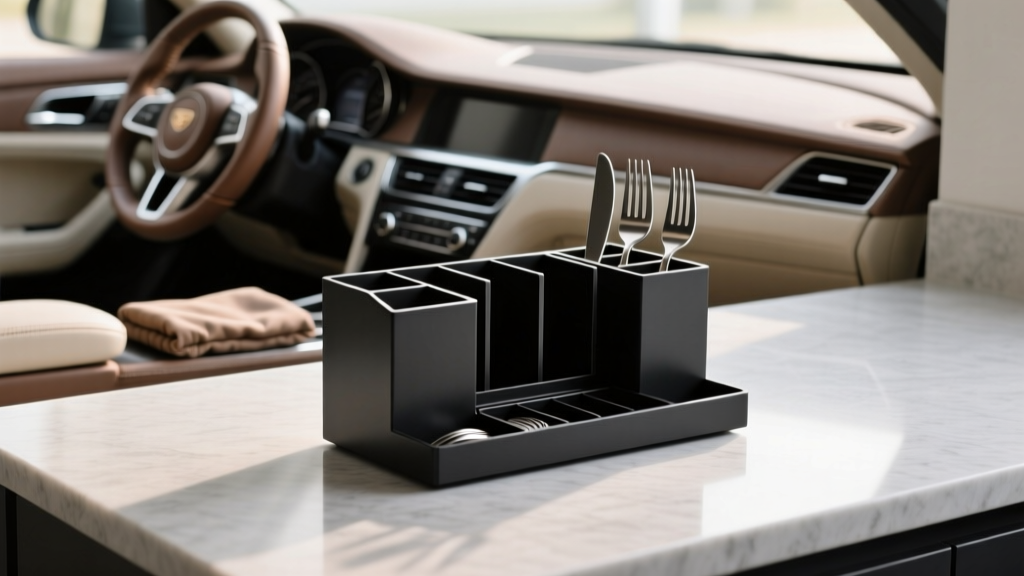
Utensil Organizer: Best Picks for Car Interiors (2026)
Eating on the go is part of real-life driving?school drop-offs, road trips, long commutes, rideshare shifts, and weekend adventures. The problem is that utensils (and the little things that come with them) tend to migrate: a fork in the glovebox, napkins in the door pocket, condiment packets under the seat. Before long, your ?clean? cabin doesn?t feel clean anymore.
A good utensil organizer solves a surprisingly wide range of interior headaches. It keeps spoons, forks, chopsticks, straws, napkins, wet wipes, and even small seasonings in one predictable place. That means fewer rattles, fewer crumbs, fewer emergency stops when someone can?t find a napkin, and less chance of spills on your upholstery.
This guide breaks down what matters when you?re buying a utensil organizer for a car?fitment, materials, cleaning, mounting, and what features actually make day-to-day driving easier. You?ll also find step-by-step setup tips, real-world examples, common mistakes to avoid, and a quick FAQ.
What Is a Car Utensil Organizer (and What It Isn?t)?
A car utensil organizer is a compact storage solution designed to keep eating utensils and small meal accessories contained and easy to reach inside a vehicle. Depending on the style, it may mount to a seatback, sit in a center console, tuck into a door pocket, or attach to a visor or headrest.
It?s not the same as:
- A trunk organizer: Great for groceries and tools, but usually too big and too far from the driver/passengers for everyday utensil access.
- A generic pouch: Works in a pinch, but without compartments, clean/dirty separation, and wipe-friendly materials, it can turn into a messy ?food drawer.?
- A full lunch bag: Lunch bags hold food; utensil organizers keep the small essentials organized so the cabin stays tidy.
Why a Utensil Organizer Belongs in a Clean Car Interior
1) Cleaner surfaces and fewer stains
When napkins and wipes are within reach, you?re more likely to handle small spills immediately?before coffee drips or sauce smears set into leather, vinyl, or cloth seats.
2) Less distraction while driving
Digging around for a fork at a red light is still distraction. A dedicated organizer reduces ?search time? and keeps your eyes up and attention where it belongs.
3) Better road trip readiness
Road trips are where utensil storage really pays off. You can pack:
- Reusable cutlery (or individually wrapped disposable sets)
- Napkins, wet wipes, and hand sanitizer
- Straws, chopsticks, stir sticks
- Condiment packets in a leak-proof mini pouch
4) A more premium, intentional cabin feel
Enthusiasts obsess over interior details?mat fitment, trim care, and clutter control. A utensil organizer is a small add-on that makes your daily cabin experience feel more ?dialed in.?
Types of Utensil Organizers (Which Style Fits Your Car?)
Center console insert organizers
Best for: Drivers who want quick access and a factory-like look.
Pros: Stable, easy to grab, no straps; often includes small dividers.
Cons: Must match your console dimensions; can reduce space for other items.
Real-world example: If you drive a compact sedan with a deep console bin, an insert tray with utensil-length slots keeps a reusable fork/spoon set from sliding around and rattling.
Seatback or headrest-hung pouches
Best for: Families, rideshare drivers, and rear-seat passengers.
Pros: Frees up console space; can serve as a ?snack and supplies? station for kids.
Cons: Some can swing or kick-mark if mounted poorly; may look bulky in minimalist interiors.
Tip: Choose reinforced straps and a low-profile design so it doesn?t sag over time.
Door pocket organizers / slim vertical cases
Best for: Small cabins or drivers who prefer not to clutter the center area.
Pros: Fast access at stops; easy to stash.
Cons: Door pockets can get wet from bottles/umbrellas; you?ll want water-resistant materials.
Visor-mounted organizers
Best for: Light, slim kits (napkins, wipes, straws, cutlery for one).
Pros: Uses ?dead space,? keeps items high and dry.
Cons: Overloading can cause sagging; may interfere with visor mirrors or airbags in some vehicles.
Compact travel cutlery cases (standalone)
Best for: Minimalists, enthusiasts who keep the cabin pristine, and EV owners who like quiet, rattle-free storage.
Pros: Clean, contained, washable; easy to move between cars/bags.
Cons: Doesn?t manage napkins/wipes unless you choose a multi-compartment kit.
Key Features to Compare Before You Buy
Size and fitment (measure first)
The best organizer is the one that fits your actual storage location. Before ordering, measure:
- Console bin: length, width, and depth (and check for hinges or USB ports)
- Door pocket: maximum depth and width at the narrowest point
- Seatback area: strap length, seat shape, and whether you have rear vents
Material and cabin durability
- Water-resistant fabric (Oxford, nylon): Great all-around, easy to wipe down.
- Neoprene: Soft, grippy, quiet (reduces rattles), but can hold odors if not cleaned.
- PU leather: Looks upscale and matches many interiors; check stitching quality and heat resistance.
- Hard plastic inserts: Easy to clean; verify it won?t squeak or scratch your console.
Cleaning and hygiene design
This matters more than people expect. Look for:
- Wipe-clean lining or removable washable sleeves
- Drainable or vented areas if you might store damp utensils
- Clean/dirty separation (two compartments or a removable dirty pouch)
Closure type (zip, Velcro, snap, elastic)
- Zippers: Secure and tidy; choose smooth zippers that won?t snag.
- Velcro: Fast, but can collect lint and wear out with heat cycles.
- Snaps: Durable and clean-looking; less adjustable.
- Elastic loops: Great for individual utensils, but can loosen over time.
Noise control (rattle prevention)
If you care about a quiet interior, prioritize:
- Soft inner lining
- Individual utensil sleeves or loops
- A snug fit in the console (no sliding)
Heat resistance and sun exposure
Cars get hot fast. If your organizer sits in direct sun, avoid thin plastics that can warp and cheap adhesives that can fail. A fabric pouch with sturdy stitching usually survives heat cycles better than bargain glued seams.
Step-by-Step: How to Choose the Right Utensil Organizer for Your Vehicle
- Pick the storage zone. Decide whether you want driver access (center console), passenger access (glovebox/door), or family access (seatback).
- List what you?ll carry. A realistic kit usually includes:
- 2?4 utensil sets
- Napkins and wet wipes
- Hand sanitizer
- Straws and a small trash bag roll
- Measure the space. Use a tape measure; don?t guess. Note any obstructions like charging cables or console latches.
- Choose a material that matches your lifestyle. Families and rideshare? Go wipe-clean and water-resistant. Enthusiast show-car vibes? Consider low-profile PU leather or a tailored insert.
- Decide on clean/dirty management. If you?ll reuse utensils, choose an organizer with a separate ?used? compartment or a removable washable pouch.
- Check mounting method and safety. Avoid mounting that blocks airbags or interferes with seat movement. If it?s seatback-mounted, confirm straps won?t chafe leather.
- Prioritize quick access. You should be able to grab a napkin or wipe in seconds while parked?without dumping the whole kit.
Smart Setup: How to Stock a Car Utensil Organizer (Without Creating Clutter)
A well-stocked organizer is small but complete. Here?s a practical approach that keeps your cabin tidy.
Step-by-step stocking checklist
- Start with sealed basics. Add individually wrapped utensil sets or a clean reusable set in a case.
- Add cleaning essentials. Pack a small wipe pack and a few extra napkins (folded flat to save space).
- Include ?mess control.? Add a mini roll of trash bags or a small disposable bag for used wipes/utensils.
- Prevent leaks. Place condiment packets inside a tiny zip pouch so a burst packet doesn?t stain your organizer.
- Do a weekly reset. Toss old napkins, replace wipes if dried out, and wipe the interior lining.
Pro tip for enthusiasts
If your interior is premium (leather/Alcantara), keep a dedicated microfiber cloth in a separate sleeve. That way, you?re not wiping a dash with the same napkin that touched food.
Product Recommendations: What to Buy Based on Your Needs
Rather than pushing one brand, here are the organizer styles that consistently make sense for real cars and real routines.
Best for daily commuting: Console insert tray + slim cutlery case
- Why it works: Factory-clean look, minimal movement, fast access.
- Look for: A tray with a long slot (or adjustable divider) and a case that prevents rattles.
Best for families and rear-seat snacks: Seatback organizer with multiple compartments
- Why it works: Kids can grab napkins and utensils without climbing into the front.
- Look for: Reinforced strap points, wipe-clean fabric, and a zip pocket for ?used? items.
Best for rideshare and delivery drivers: Water-resistant zip pouch system
- Why it works: Easy to sanitize, quick restock, professional appearance for passengers.
- Look for: A main zip pouch plus a removable inner pouch (so you can wash just the dirty section).
Best for road trips: Compact kit with napkin/wipe section + utensil sleeves
- Why it works: One grab-and-go bag that covers most ?we stopped at a drive-thru? moments.
- Look for: Extra space for straws, stirrers, and a small bottle of sanitizer.
Common Mistakes to Avoid
- Buying without measuring. A console organizer that?s 1 inch too wide will either not fit or will squeak and rub trim.
- Ignoring clean/dirty separation. Reusable utensils tossed back in with clean ones quickly become a smell and bacteria issue.
- Choosing cheap Velcro for hot climates. Heat cycles can weaken adhesives and stitching, especially on bargain products.
- Overstuffing the organizer. If it?s bulging, it will be annoying to use, and items will fall out when you need them most.
- Mounting in unsafe places. Avoid blocking airbags, seat tracks, or pedal areas. If you?re unsure, choose a console or door-pocket option.
- Skipping a maintenance routine. Even the best organizer becomes gross if you never empty crumbs or replace dried-out wipes.
Practical Tips for Keeping Your Utensil Organizer Clean and Odor-Free
- Do a 60-second weekly reset: Remove trash, check wipes, and shake out crumbs.
- Wipe interior surfaces: Use a mild interior-safe cleaner or warm soapy water on wipeable linings.
- Keep a small ?used utensil? bag: Even a simple zip bag prevents contamination.
- Don?t store open food: The organizer is for tools and accessories, not leftovers.
- Rotate napkins and wipes: Heat dries wipes and makes napkins brittle; refresh monthly in summer.
FAQ: Utensil Organizers for Cars
What?s the best place to keep a utensil organizer in a car?
For driver-focused use, the center console is usually best. For families and passengers, a seatback organizer is more practical. If you want a minimalist setup, a slim case in the glovebox or door pocket keeps everything hidden but accessible when parked.
Are reusable utensils safe to store in a car?
Yes, as long as they?re clean and dry before storage. Use a case with individual sleeves or a dedicated compartment, and keep a separate pouch for used utensils until you can wash them properly.
Will a utensil organizer melt or warp in hot weather?
Quality fabric organizers handle heat better than thin plastics. If you choose a plastic insert, look for thicker, rigid material and avoid direct sun exposure when possible. Zippers, stitching, and adhesives are often the first failure points in extreme heat.
What should I keep in a basic car utensil kit?
A solid starter kit includes: two utensil sets, napkins, wet wipes, hand sanitizer, straws, and a small trash bag. If you have kids, add bibs or extra wipes and a spare straw.
How do I stop utensils from rattling in the console?
Use a cutlery case, choose an organizer with elastic loops or sleeves, and add a thin rubber liner or felt pad under a hard tray insert. A snug fit is the key?movement equals noise.
Is a utensil organizer worth it if I rarely eat in the car?
Even occasional use can justify it if you keep napkins and wipes for spills, messy hands, or quick cleanups. Many owners buy one for ?just in case? moments and end up using it weekly.
Next Steps: Buy Smarter and Keep Your Cabin Cleaner
Start by choosing where the organizer will live (console, seatback, door pocket), then measure that space and decide how many utensil sets you realistically need. Prioritize wipe-clean materials, secure closures, and a clean/dirty separation plan?those three details make the difference between ?nice idea? and something you?ll actually use.
For more practical car interior upgrades, storage solutions, and cleaning guides, explore the latest articles on carinteriormix.com.