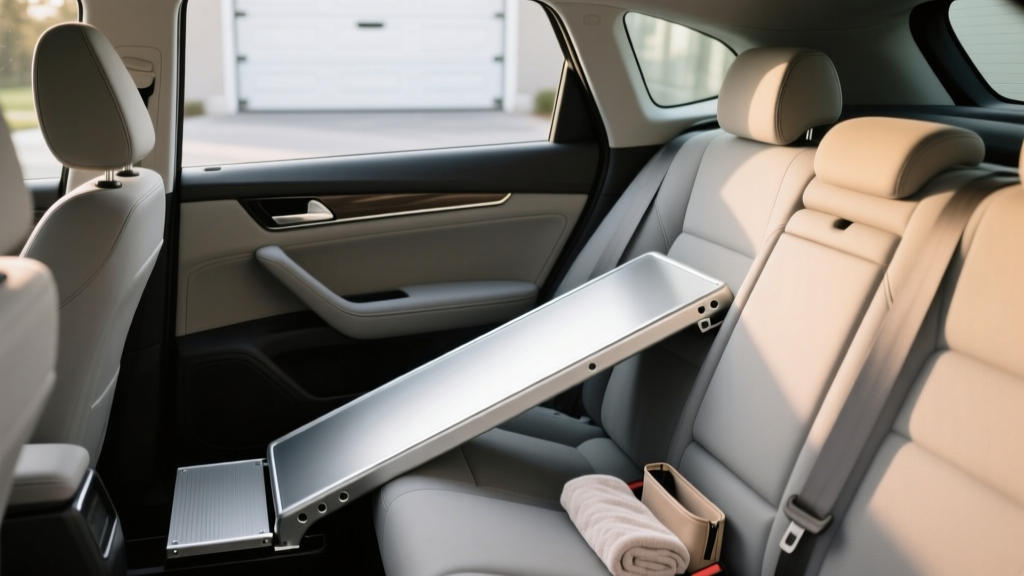
Ultimate Guide to Wheelchair Ramp Storage - CarInteriorMix
If you carry a wheelchair ramp in your vehicle?whether it?s for a family member, a mobility client, or your own daily independence?you already know the ramp is only half the story. The other half is where it lives when you?re driving, parking, loading groceries, or making a quick stop. Poor wheelchair ramp storage can turn an otherwise well-equipped car into a cluttered, unsafe space with blocked visibility, damaged trim, or a ramp that slides around at the worst time.
This guide is built for car owners and enthusiasts who care about keeping the cabin clean, functional, and safe. We?ll cover the most practical ways to store different ramp types in common vehicles, how to secure them so they don?t become a projectile in a sudden stop, and how to choose storage accessories that actually fit real-world interiors. You?ll also get step-by-step setup instructions, common mistakes to avoid, and a short FAQ at the end.
Whether you drive a compact hatchback, a family SUV, a minivan, or a pickup, you can set up ramp storage that?s stable, quiet, and easy to access?without sacrificing all your cargo space.
Understanding Wheelchair Ramp Types (Because Storage Depends on It)
The ?best? storage method depends heavily on what kind of ramp you have and how often you use it. Before you buy tie-downs or start drilling mounts, identify your ramp style and dimensions.
Common ramp types and storage implications
- Folding ramps (bi-fold or tri-fold): Often the easiest to store. They can sit flat in the trunk/cargo area, stand upright behind a seat, or slide under a cargo floor if the vehicle has one.
- Telescoping ramps: Typically longer when collapsed but thinner. Great for tight storage, but they can shift if not strapped down.
- Single-fold ramps: Bulkier than tri-fold. Usually best stored flat or in a dedicated bag with anchors.
- Threshold ramps (small, solid pieces): More common for home use, but some people carry them. They?re dense and can damage interior trim if unprotected.
- Modular ramps: Rare for daily vehicle carry due to multiple parts. If you do, you?ll need a labeled storage system.
Key measurements you should know
- Collapsed length, width, and thickness (measure it yourself?listed dimensions can vary with handles and hinges)
- Total weight (affects whether a vertical mount is realistic)
- Sharp edges or exposed hardware (impacts whether you need a padded bag)
Best Places to Store a Wheelchair Ramp in a Vehicle
Good wheelchair ramp storage comes down to three priorities: safety, access, and space efficiency. Here are the most common storage locations, with pros and cons that reflect real vehicle interiors.
1) Cargo area (trunk/SUV rear) ? the most common solution
Best for: folding ramps, single-fold ramps, ramps in carry bags
- Pros: easy to strap down; keeps ramp out of the cabin; works with most vehicles
- Cons: can eat up cargo space; may block access to spare tire compartment if placed flat
Practical tip: Place the ramp against the seatbacks and strap it to factory cargo hooks. This reduces sliding and keeps weight closer to the vehicle?s center.
2) Upright behind the rear seats ? great for quick access
Best for: lighter folding ramps, tri-fold ramps
- Pros: faster to grab; preserves floor space for strollers, bags, or walkers
- Cons: must be secured well; can rattle against plastic trim if unpadded
Real-world example: Many crossover owners stand a tri-fold ramp vertically behind the 60/40 rear seat and use two short cam straps to anchor it to the cargo tie-down points?quiet, secure, and easy to remove with one hand.
3) Under cargo floor (if your vehicle has it)
Best for: slim tri-fold ramps, telescoping ramps
- Pros: hidden, clean look; prevents theft; reduces cabin clutter
- Cons: limited height; not common in every vehicle; may compete with emergency gear storage
4) Back seat footwell or behind the front seats (only if truly necessary)
Best for: smaller ramps, occasional use in vehicles without cargo space
- Pros: workable for sedans; ramp stays accessible in bad weather
- Cons: can interfere with passenger legroom; higher safety risk if unsecured
Safety note: If the ramp is in the passenger cabin, treat it like any heavy tool?secure it so it cannot move forward in a hard stop.
Step-by-Step: How to Secure a Wheelchair Ramp So It Doesn?t Slide or Tip
No matter where you store it, the goal is the same: prevent movement in all directions (forward, backward, side-to-side, and upward bounce). Here?s a practical setup that works in most trunks and cargo areas.
What you?ll need
- Two cam buckle straps (1" wide is usually enough; avoid ratchet straps unless you know how to avoid overtightening)
- Non-slip mat (rubber cargo liner, tool drawer liner, or a dedicated anti-slip pad)
- Padded ramp bag or edge protection (optional but highly recommended)
- Access to cargo tie-down points (factory D-rings/hooks)
Step-by-step instructions (cargo area flat storage)
- Clean the area. Dirt and sand reduce friction and can grind into carpet and plastic panels.
- Lay down a non-slip mat. This is a simple upgrade that dramatically reduces sliding and rattles.
- Position the ramp against the seatback. Keeping it tight to a fixed surface helps stability.
- Use two anchor points. Attach one strap left-to-right across the ramp, then a second strap at a different point (closer to the other end). Two straps prevent pivoting.
- Tighten with cam straps until snug. You want firm contact, not crushed hinges or bent rails.
- Check movement. Try to slide and lift the ramp. If it moves more than an inch, adjust placement or strap angles.
- Protect trim and reduce noise. If the ramp touches plastic panels, add foam edge guards or a folded microfiber towel as a buffer.
Step-by-step instructions (upright storage)
- Place the ramp vertically with the hinge side toward the seatback. This helps it sit flatter and reduces wobble.
- Use a padded bag or wrap contact points. Upright storage often causes squeaks against interior panels without padding.
- Anchor the top and bottom. Use one strap around the upper third and a second around the lower third, both tied to cargo hooks.
- Confirm rear visibility and hatch clearance. Close the liftgate slowly the first time to ensure no interference.
Storage Accessories and Product Recommendations (What?s Actually Worth Buying)
You don?t need a specialized ?wheelchair ramp storage kit? to do this well, but a few smart accessories make a big difference in safety and daily usability. Below are practical categories to shop for, along with what to look for.
1) Ramp carry bags (highly recommended)
- Best for: keeping upholstery clean, protecting trim, reducing rattles
- Look for: reinforced handles, durable zipper, internal straps, and a water-resistant bottom
- Fit tip: Choose a bag that matches your ramp?s collapsed dimensions with a little extra room for handles and hinges.
2) Cam buckle tie-down straps (better than bungee cords)
- Best for: stable anchoring without over-compressing the ramp
- Look for: coated hooks (to avoid scratching), 8?12 ft length, and at least 300 lb working load rating
- Why they win: bungees stretch; cam straps hold position.
3) Non-slip cargo mat or liner
- Best for: controlling slide, protecting carpet, and making cleanup easy
- Look for: rubberized backing, easy-to-wipe surface, and coverage that reaches cargo hooks
4) Cargo barrier, trunk organizer, or storage bin system
- Best for: keeping the ramp separate from groceries, tools, and sports gear
- Look for: rigid sides, anchor straps, and a low enough profile to not block loading
Quick comparisons: what?s best for your vehicle type?
- Sedan: a ramp bag + non-slip mat + two cam straps anchored to trunk tie-downs (or a trunk organizer with straps)
- Hatchback: upright storage behind seats with two straps, plus padding to eliminate rattles
- SUV/Crossover: cargo mat + straps to D-rings; consider a vertical mount if you frequently need full cargo floor space
- Minivan: store flat behind third row (if used) or along one side; bins help keep the ramp from competing with family cargo
- Pickup (with cab storage): keep ramps in-cab only if strapped; otherwise use a lockable bed box to prevent theft and weather exposure
Keeping Your Interior Clean and Damage-Free
Wheelchair ramps often bring in grit, salt, and moisture?especially in winter or rainy climates. A few habits protect your vehicle interior and keep the ramp working smoothly.
- Wipe the ramp before stowing. A quick pass with a shop towel prevents sand from grinding into carpet.
- Use a dedicated ?ramp towel.? Keep it in a small sealed bag so it?s always available.
- Protect high-contact panels. Adhesive-backed felt strips (the kind used for furniture) work well where the ramp touches plastic trim.
- Ventilate after wet use. If the ramp is damp, crack the windows briefly or remove the bag at home to prevent odor and mildew.
Common Mistakes to Avoid (And What to Do Instead)
- Mistake: Relying on bungee cords.
Do instead: Use cam buckle straps to eliminate stretch and sudden slack. - Mistake: Storing the ramp loose ?just for a short drive.?
Do instead: Set a minimum standard: one non-slip mat + at least one strap every time. - Mistake: Overtightening with ratchet straps.
Do instead: If you must use ratchets, tighten gently and avoid crushing hinges or bending rails. - Mistake: Blocking emergency access.
Do instead: Keep the ramp from trapping your spare tire access panel, jack, medical kit, or mobility equipment. - Mistake: Ignoring rattles.
Do instead: Add padding at contact points; rattles often mean movement, and movement means wear. - Mistake: Storing a wet ramp in a sealed bag for days.
Do instead: Dry it out at home or use a ventilated bag to reduce mildew risk.
Real-World Storage Setups That Work
Setup A: Daily driver SUV with frequent ramp use
- Tri-fold ramp in padded bag
- Upright behind rear seats
- Two 1" cam straps to cargo D-rings
- Felt strips on plastic contact points
Why it works: Fast access, quiet cabin, and full cargo floor remains available for errands.
Setup B: Sedan trunk with limited tie-down points
- Folding ramp laid flat against seatback
- Rubber trunk mat to prevent sliding
- One strap to trunk anchor points (or through a sturdy trunk loop), plus a tight-fitting organizer to brace movement
Why it works: Uses friction + bracing when anchor points are minimal, keeping the ramp stable without permanent mods.
Setup C: Family minivan with changing cargo needs
- Ramp stored flat along one side of the rear cargo well
- Low-profile storage bin system for groceries and medical supplies
- Two straps fixed in place so the ramp can be re-secured in seconds
Why it works: Flexible space management?important when seats go up and down frequently.
FAQ: Wheelchair Ramp Storage
How do I store a wheelchair ramp in a small car?
Start with a ramp that collapses compactly (tri-fold or telescoping if possible). Store it flat in the trunk on a non-slip mat, then secure it with cam straps to any factory hooks. If trunk space is extremely limited, consider upright storage behind the front passenger seat?only if you can strap it so it can?t shift forward.
What?s the safest way to keep a ramp from becoming a projectile in a crash?
Use two points of restraint (two straps) and anchor them to solid tie-downs. A non-slip mat helps, but friction alone isn?t enough for hard braking. If the ramp is in the passenger cabin, treat it like a heavy toolbox: strap it down tightly and keep it low.
Can I mount a wheelchair ramp to the interior permanently?
Yes, but it?s usually best to use existing cargo mounting points or vehicle-specific brackets rather than drilling into body panels. Permanent mounts can be great for consistent daily use, but they should not interfere with airbags, seat mechanisms, or rear crumple zones. When in doubt, have a mobility upfitter or trusted installer review the plan.
How do I stop ramp rattles and squeaks?
Rattles usually come from contact with hard trim or slight movement in the straps. Add padding where the ramp touches the car (felt strips, foam edge guard, or a towel), tighten cam straps evenly, and confirm the ramp isn?t rocking. A padded ramp bag is often the simplest fix.
Should I store my ramp inside the cabin or in the trunk?
Trunk/cargo area storage is usually cleaner and safer. Cabin storage can work when necessary, but only if the ramp is fully secured and not interfering with passenger comfort, visibility, or airbag zones.
Wrap-Up: Next Steps for Better Wheelchair Ramp Storage
If you want a storage setup that feels factory-clean and works every day, focus on three upgrades: a non-slip mat, two cam buckle straps, and a padded carry bag. Then choose a storage position?flat or upright?that matches your ramp type and how often you need access.
- Measure your ramp?s collapsed size and weight.
- Pick a storage location that doesn?t block visibility or emergency gear.
- Secure it with two straps to proper anchor points.
- Add padding to protect trim and eliminate noise.
- Do a quick weekly check for strap wear and loose hardware.
Want more practical interior setup guides like this? Explore the latest tips and how-tos on carinteriormix.com and keep your ride comfortable, organized, and ready for anything.