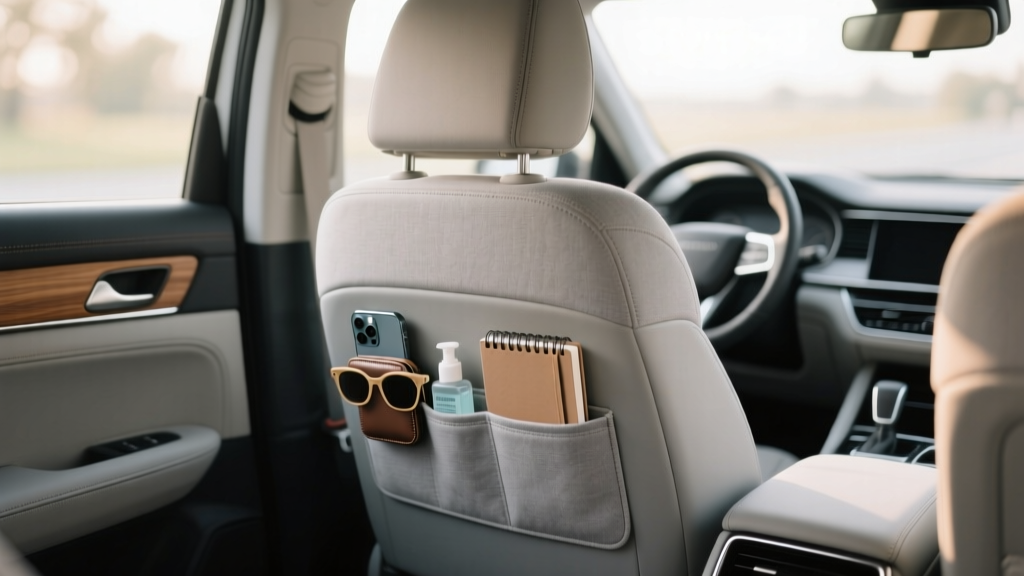
Ultimate Guide to Seat Back Pocket Setup - CarInteriorMix
Seat back pockets look like a small detail in a car interior?until you live with them every day. A well-set seat back pocket setup keeps essentials within reach, reduces cabin clutter, and makes road trips (and daily commutes) noticeably calmer. A bad setup, on the other hand, turns into a messy catch-all that bulges, sags, and spills the moment someone brakes.
Whether you drive solo, shuttle kids, or regularly carry passengers, the space behind the front seats is prime real estate. Done right, seat back storage helps protect your upholstery, keeps items from sliding under seats, and supports a cleaner, more premium feel inside the cabin. This guide walks through how to set up your seat back pockets like a pro?what to store, what to avoid, and which accessories actually work.
Below you?ll find practical steps, real-world examples, product comparisons, and a few easy habits that keep your car interior looking sharp.
What Counts as a ?Seat Back Pocket Setup??
A seat back pocket setup is the system you use to organize items on the rear of the front seats. That can mean:
- Built-in seat back pockets (found on many sedans, SUVs, and trucks)
- Aftermarket seat back organizers that strap to the seat and add compartments
- Hybrid setups where you use the OEM pocket for slim items and an organizer for heavier gear
The goal is simple: store frequently used items in a way that?s tidy, safe, and doesn?t damage the seat upholstery or interfere with passenger comfort.
Why Seat Back Organization Matters (Beyond ?Being Neat?)
1) Faster access, less distraction
If tissues, wipes, chargers, or a flashlight are always in the same place, you spend less time digging around. That?s good for convenience and reduces driver distraction?especially when you?re parked roadside or handling quick stops.
2) Cleaner floors and less under-seat chaos
Loose items migrate. They end up under seats, jammed in rails, or rolling into footwells. A seat back pocket system acts as a ?home base? that stops the spread.
3) Better passenger experience
Passengers appreciate clear legroom and a place to stash a phone, water bottle, or book. A smart setup looks intentional, like a well-designed car interior?not an afterthought.
4) Protects upholstery (when done correctly)
Containing items in pockets or organizers reduces seat scuffs from shoes, toys, and bags. The wrong setup can do the opposite, which is why choosing the right organizer and load matters.
Know Your Seat and Pocket Type First
Before buying anything or loading up the pocket, take 2 minutes to inspect what you?re working with:
- OEM pocket material: fabric, leatherette, leather, mesh, or elastic band style
- Seat shape: sporty bucket seats vs. flatter seat backs
- Rear passenger type: adults (knees higher) vs. kids (more kicking and movement)
- Airbags and wiring: some seats have side airbags; avoid strap paths that cross airbag seams
- Heated/ventilated seats: minimize anything that blocks airflow paths or adds pressure points
Real-world example: In compact sedans with limited rear legroom, bulky organizers can press into passengers? knees. In that case, the best setup is usually ?slim and vertical?: a thin organizer with flat pockets, not a thick multi-compartment unit.
Step-by-Step: Build the Perfect Seat Back Pocket Setup
Step 1: Empty, clean, and reset the pocket
- Remove everything from the pocket (including old receipts and pens).
- Vacuum crumbs from the pocket seam and the rear floor area.
- Wipe the pocket and seat back:
- Fabric: interior upholstery cleaner or lightly damp microfiber
- Leather/leatherette: pH-balanced leather cleaner + dry microfiber
- Let it dry fully before reloading.
Step 2: Decide your ?zones? (driver side vs. passenger side)
Most cars have two seat backs?use them differently:
- Behind the driver: emergency + utility (less frequently accessed while driving)
- Behind the front passenger: comfort + convenience (more likely to be reached)
Tip: If you often drive with one rear passenger, dedicate the organizer to the opposite side so it doesn?t steal knee room.
Step 3: Choose what belongs in the seat back pocket (and what doesn?t)
Good candidates for seat back storage are light, flat, and frequently used:
- Tissues, napkins, wet wipes (in a sealed pack)
- Small first-aid kit (soft pouch)
- Charging cable + compact power bank
- Microfiber cloth
- Hand sanitizer (secure, leak-proof bottle)
- Kids? coloring book, thin notebook, magazine
- Registration/insurance copies (only if you?re comfortable; many prefer glovebox)
Items that usually should not go in the seat back pocket:
- Heavy metal water bottles (they swing, stress seams, and can injure in a sudden stop)
- Loose snacks (crumbs + pests + odors)
- Sharp objects (tools, scissors, uncapped pens)
- Bulky toys that create pressure points and stretch elastic
- Aerosols and heat-sensitive items
Step 4: Pick the right organizer style (if you need one)
If your built-in pocket is small or sags, an aftermarket seat back organizer can transform the space. The best style depends on your needs:
Organizer styles compared
- Slim panel organizer (flat pockets): Best for small cars and adults in the rear. Minimal knee intrusion, tidy look.
- Multi-compartment organizer (with bottle holders): Best for families and road trips. More storage, but can be bulky.
- Kick mat + organizer combo: Best for protecting seat backs from kids? shoes while adding storage.
- Tablet-holder organizer: Best for entertainment setups. Look for adjustable straps and stable corners.
What to look for when buying
- Attachment points: headrest straps plus a lower anchor (strap or buckles) for stability
- Material: easy-clean PU leather, durable polyester, or heavy-duty Oxford fabric
- Reinforced stitching: especially around bottle pockets and top straps
- Non-slip backing: helps reduce sliding on leather seats
- Safe strap routing: avoids airbag seams and doesn?t pinch seat controls
Step 5: Install the organizer correctly (no wobble, no sag)
- Loosen the headrest (if removable/adjustable) to route straps cleanly.
- Center the organizer on the seat back so pockets hang straight.
- Tighten top straps firmly?most ?floppy organizer? problems start here.
- Secure the lower anchors:
- If it uses a strap around the seat: keep it low and tight, not across moving lumbar panels.
- If it uses a tuck-in anchor: push it deep into the seat crease so it doesn?t pop out.
- Test for movement: push side-to-side and pull the pockets. If it shifts easily, re-tighten.
- Adjust for passenger comfort: sit in the rear seat and confirm knee clearance.
Quick fit check: If the organizer bows outward when loaded, it?s either overfilled or not anchored low enough.
Step 6: Load it with a ?light-to-heavy? rule
How you load matters as much as what you load. Use this order:
- Top pockets: light, frequently used items (tissues, wipes, cables)
- Mid pockets: medium items (small book, microfiber, compact umbrella)
- Bottom pockets: only if well-supported; keep items soft and not overly heavy
Real-world example: If you place a full 1-liter bottle in a side pocket, it can sway and slowly stretch the organizer, causing sagging. A better approach is a smaller bottle (or store drinks in door pockets/cupholders).
Smart Setup Templates (Copy These)
Daily commuter setup
- Tissues + sanitizer (top)
- Charging cable + small power bank
- Microfiber cloth
- Compact flashlight
Family/kids setup
- Wet wipes (resealable)
- Trash solution: small hanging bag or lined pocket
- Coloring book + 2-3 crayons (in a case)
- Spare socks or light sweater (soft pouch)
- Kick mat organizer to protect the seat back
Road trip setup
- Travel tissues + motion sickness supplies (if needed)
- Snacks in sealed containers (avoid loose packaging)
- Spare charging cables for rear passengers
- Folded paper map or itinerary printout
- Small first-aid kit + blister pads
Product Recommendations: What Works Best for Most Drivers
Rather than chasing gimmicks, focus on organizer types that consistently perform well across vehicles.
Best all-around: Slim panel organizer (PU leather or Oxford fabric)
- Pros: clean look, easy to wipe, minimal bulk, good for sedans
- Cons: fewer large compartments
- Who it?s for: most car owners who want tidy daily storage
Best for families: Kick mat + organizer combo
- Pros: protects seat backs from scuffs, adds storage, easy cleanup
- Cons: can reduce rear-seat ?premium? look if the material is cheap
- Who it?s for: parents, rideshare drivers, anyone transporting kids often
Best for entertainment: Tablet-holder organizer with rigid frame
- Pros: stable viewing, reduces dropped devices
- Cons: can be awkward if rear passengers are tall
- Who it?s for: families on long trips and rear-seat passengers who stream content
Buying tip: Look for organizers that list compatibility with your headrest type. Some integrated headrests (common in sport seats) don?t allow strap routing, so a tuck-in style or a different solution may be needed.
Common Mistakes to Avoid
- Overloading the pocket: stretched elastic, sagging fabric, and a ?bulge? that annoys rear passengers.
- Storing leak-prone items: lotions, cheap sanitizer caps, or drink bottles that can pop open in heat.
- Blocking seat movement: straps or anchors that interfere with seat tracks or reclining mechanisms.
- Ignoring airbag areas: avoid routing straps across seams or panels where airbags deploy (check your manual).
- Creating hard impact hazards: heavy objects become projectiles in a crash?keep storage soft and light.
- Letting trash live there: once a pocket becomes a trash bin, it?s hard to keep the cabin feeling clean.
Maintenance: Keep the Setup Looking ?New?
- Weekly 60-second reset: remove trash, consolidate items, re-seat anything slipping out.
- Monthly wipe-down: clean organizer surfaces and pocket seams to prevent grime buildup.
- Seasonal swap: rotate contents (winter gloves vs. summer sunscreen) so you?re not carrying useless clutter.
FAQ: Seat Back Pocket Setup
Are seat back organizers safe to use?
They can be, if installed securely and not routed across airbag seams or seat controls. Keep loads light and avoid hard or heavy items that could become dangerous in a sudden stop.
How do I stop a seat back organizer from sagging?
Tighten the headrest straps, use the lower anchor properly (deep in the seat crease or tightly buckled), and reduce weight in lower pockets. Sagging is usually a mix of loose installation and overloading.
What?s the best seat back storage for small cars with limited rear legroom?
A slim panel organizer or just the OEM pocket with a minimalist ?flat-only? rule. Avoid thick organizers with bottle holders?they tend to poke into knees in compact rear seats.
Can I use the seat back pocket for a water bottle?
It?s not ideal for large or heavy bottles. If you must, use a small, lightweight bottle in a snug holder and keep it low-slosh. Door pockets and cupholders are usually better.
How do I keep kids from kicking and dirtying the seat back?
A kick mat organizer is the easiest fix. Pair it with a simple rule: shoes stay off the seat back, and wipes live in the top pocket so cleanup is instant.
Will an organizer damage leather seats?
It can if it shifts and rubs over time or if straps are too tight and create pressure points. Choose a non-slip backing, keep it clean, and check monthly for abrasion or imprints?especially on soft leather.
Your Next Steps
- Do a full pocket reset today: empty, vacuum, wipe, and only put back items you actually use.
- Pick a setup template: commuter, family, or road trip?then adjust to your habits.
- If you buy an organizer, prioritize fit and stability: slim and secure beats big and floppy every time.
- Set a recurring reminder: a quick weekly reset keeps your car interior looking intentionally organized.
Want more practical interior upgrades and organization ideas? Browse the latest guides on carinteriormix.com and build a cabin setup that feels clean, comfortable, and ready for anything.