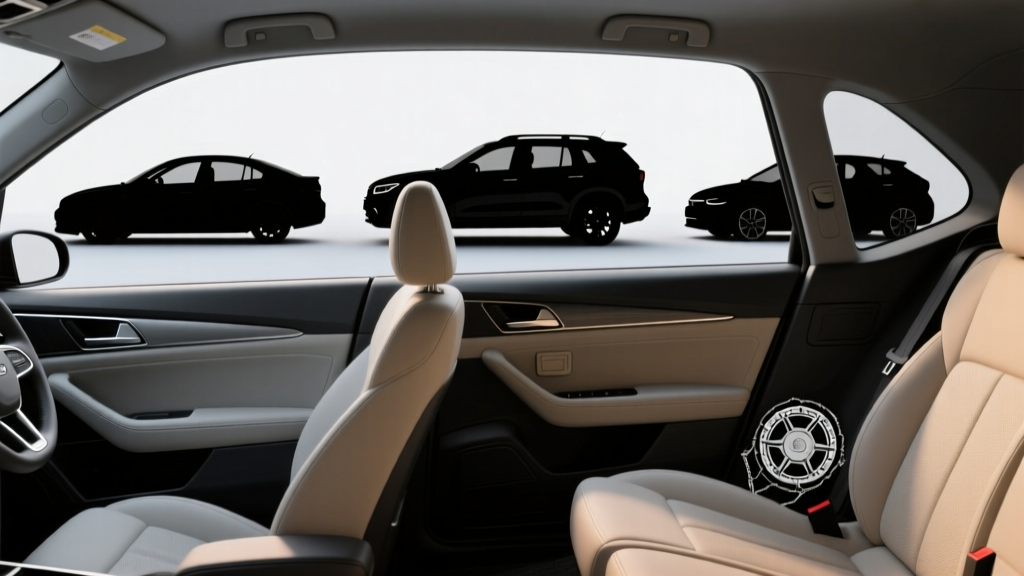
Snow Chains by Car Model: Storage Compatibility (2026)
Snow chains (and snow socks) are one of those winter essentials you hope you never need?but when conditions turn ugly or a mountain pass requires them, having the right set in the car can save your trip. The part most drivers don?t plan for is where to put them. Chains are heavy, dirty, sharp-edged, and often wet. Tossing them loose in the trunk can tear carpet, stain upholstery, and rattle against interior panels. Worse, in a sudden stop, a loose chain bag becomes a projectile.
This guide focuses on a practical question: Which snow chain storage solutions fit your car model and interior layout? We?ll break down common storage locations (spare tire well, under-floor bins, side cubbies, cargo rails, trunk organizers), how those spaces differ by vehicle type, and what to measure so you don?t buy a storage box that doesn?t fit. You?ll also get product-style recommendations, packing tips, and the mistakes that ruin trunks every winter.
Whether you drive a compact sedan, a three-row SUV, or an EV with a frunk, you?ll come away knowing exactly how to store chains cleanly, safely, and in a way that actually makes sense for your cabin and cargo area.
Why Snow Chain Storage ?Compatibility? Is a Real Thing
Snow chain kits aren?t one-size-fits-all?and neither is storage. Even if your tire size matches the chain set, the bag/box may not match your vehicle?s available storage spots. Compatibility depends on:
- Vehicle type and packaging: Sedans often have deep trunks; hatchbacks prioritize vertical space; SUVs may have under-floor storage.
- Spare tire setup: Full-size spare, donut spare, or no spare changes what fits in the well.
- Interior materials: Felt trunk liners and light carpets stain easily; hard plastic tubs wipe clean.
- Access needs: Chains should be reachable without unloading the entire cargo area.
- Chain type: Traditional link chains are bulky; cable chains and textile snow socks pack smaller.
Step 1: Identify Your Car Category (Faster Than Searching by Make/Model)
Instead of chasing a perfect make/model list (cargo layouts vary by trim level), start by placing your vehicle into the category that matches your interior and cargo design. Use the examples as ?real-world references? for what typically fits.
Compact Cars & Subcompacts (Sedan/Hatch)
Typical models: Honda Civic, Toyota Corolla, Mazda3, VW Golf, Hyundai Elantra, Kia Forte
Best storage spots:
- Trunk side cubby (if present): Ideal for a compact cable chain bag or snow socks.
- Spare tire well (above the spare): Works if you use a flat, sealed case.
- Behind trunk hinge cover areas: Sometimes a narrow ?dead space? fits a thin pouch.
Compatibility notes: Traditional link chains for larger tire sizes may be too bulky for side cubbies. Hatchbacks benefit from strap-down organizers to prevent sliding.
Midsize Sedans
Typical models: Toyota Camry, Honda Accord, Nissan Altima, Hyundai Sonata
Best storage spots:
- Deep trunk floor area: A medium hard case or heavy-duty tote fits easily.
- Spare tire well perimeter: Store a sealed bag around the donut spare without blocking the jack.
Compatibility notes: You can usually fit a more protective container (hard case) without losing much cargo usability?great for keeping the trunk carpet clean.
Crossovers (Compact/Midsize)
Typical models: Toyota RAV4, Honda CR-V, Mazda CX-5, Subaru Forester, Nissan Rogue, Hyundai Tucson
Best storage spots:
- Under-floor cargo compartment: The cleanest and most secure option.
- Rear side bins: Some trims have molded pockets perfect for socks or compact chains.
- Cargo organizer strapped to tie-down points: Keeps chains accessible without lifting the floor panel.
Compatibility notes: Many crossovers have a two-position load floor. If yours sits lower, you may gain enough depth for a hard case; in the upper position, you may need a softer bag.
Three-Row SUVs & Minivans
Typical models: Toyota Highlander, Honda Pilot, Kia Telluride, Ford Explorer, Chrysler Pacifica, Honda Odyssey
Best storage spots:
- Rear under-floor bins (behind third row): Common and very chain-friendly.
- Well beside the spare tire tools: Often has extra volume for a sealed chain bag.
- Seat-back cargo organizers: Useful when under-floor space is taken by emergency gear.
Compatibility notes: If you frequently use the third row, avoid loose chain bags on the cargo floor?chains slide forward and can damage seat backs and trim.
Pickup Trucks
Typical models: Ford F-150, Ram 1500, Toyota Tacoma/Tundra, Chevy Silverado
Best storage spots:
- Under-seat rear storage (crew cab): Great for a tough, sealed chain case.
- In-bed toolbox: Best for frequent winter driving; keeps wet chains outside the cabin.
- Side bed cubbies (where equipped): Fits compact sets.
Compatibility notes: If chains ride in the cabin, use a hard-sided container. Link chains can chew through soft bags under seat pressure.
EVs and Hybrids (Frunk/Under-Floor Differences)
Typical models: Tesla Model Y/3, Ford Mustang Mach-E, Hyundai Ioniq 5, Kia EV6, Toyota Prius
Best storage spots:
- Frunk (if available): Keeps wet, grimy chains away from the cabin.
- Under-floor trunk bin: Excellent if it?s molded plastic and easy to wipe.
- Lower trunk well: Many EVs have a deep ?sub-trunk? that fits a medium case.
Compatibility notes: EV cargo wells vary wildly by model and year. Measure before buying a hard case, and always keep chain storage away from charge cables to avoid grime transfer.
Step 2: Measure the Storage Area (So You Don?t Buy the Wrong Case)
Here?s a quick method you can do in five minutes with a tape measure.
- Pick your intended location: under-floor bin, spare tire well, side cubby, frunk, under-seat.
- Measure width � depth � height: Use the narrowest point (trim curves steal space).
- Check clearance for lids/panels: Under-floor panels may bow or not latch if the case is too tall.
- Account for ?must-keep? items: Jack, wheel lock key, first aid kit, inflator, charging cable.
- Leave breathing room: Aim for 0.5?1 inch of extra space so you can remove the case easily with gloves on.
Real-world example: Many compact crossovers have an under-floor bin that?s wide enough for a case but shallow near the latch. A soft rectangular bag compresses and fits; a rigid plastic box doesn?t, even if the numbers look close.
Storage Solution Types (What Works Best and When)
1) Heavy-Duty Sealed Chain Bag (Budget-Friendly)
Best for drivers who use chains a few times per winter and want a simple solution.
- Pros: Flexible fit in odd-shaped bins; inexpensive; easy to carry.
- Cons: Can leak meltwater; fabric can tear; less protection for interior trim.
- Best match: Hatchbacks, compact sedans, under-floor compartments.
2) Hard Plastic Storage Case (Cleanest for Interiors)
Best when you care about keeping trunk carpet and upholstery pristine.
- Pros: Contains water and grit; stacks well; won?t snag liners.
- Cons: Must match your cargo bin dimensions; can rattle unless secured.
- Best match: Midsize sedans, SUVs with roomy under-floor storage, trucks under rear seats.
3) Collapsible Storage Tote + Waterproof Liner (Most Versatile)
A practical middle ground for drivers who need flexibility.
- Pros: Collapses when not needed; can hold gloves, kneeling pad, and towel.
- Cons: Needs a good liner to prevent leaks; not as ?grab-and-go? as a case.
- Best match: Crossovers and SUVs with tie-down points.
4) Chain Storage + Trunk Organizer System (Best for Frequent Winter Trips)
Think of this as a dedicated winter kit: chains, headlamp, gloves, reflective vest, and traction aids all in one place.
- Pros: Quick access; prevents shifting; keeps winter gear organized.
- Cons: Takes cargo space; requires tie-down anchors for best results.
- Best match: Ski-trip vehicles, family SUVs, overland-style setups.
Recommended ?Winter Chain Storage Kit? (What to Pack Together)
Storing chains alone is good; storing them with the right accessories makes them actually usable in a storm.
- Waterproof gloves (rubberized palms help with cold metal)
- Kneeling pad or foldable foam mat (keeps your knees out of slush)
- Small towel (wipe hands and steering wheel after installation)
- Trash bags or a wet bag (for used, dirty chains)
- Headlamp (chains are often installed in low light)
- Reflective triangle/vest (especially for roadside installs)
- Instruction card laminated or sealed in a zip bag
Tip: Keep a second pair of thin liner gloves in the kit. You can wear liners under waterproof gloves for warmth and dexterity.
Step-by-Step: How to Store Snow Chains Without Destroying Your Trunk
- Let chains cool and drain: After use, shake off slush and let them drip for a minute before packing.
- Bag them twice: Put chains in their storage bag, then place that bag into a second waterproof bag or liner.
- Add a moisture absorber: A small desiccant pack or moisture-absorbing pouch helps reduce mildew smells.
- Use a rigid base if on carpet: If you don?t have a hard case, place the bag in a shallow plastic tray or bin lid.
- Secure the load: Use cargo hooks, tie-down points, or a strap so the chains can?t slide.
- Keep them accessible: Don?t bury chains under luggage. If you?re heading into chain-control zones, place them near the hatch/trunk opening.
Compatibility Cheat Sheet: What Usually Fits Where
Use this as a quick ?best bet? guide when shopping for chain storage containers.
- Small hatchback: Compact chain bag or snow socks in side cubby; collapsible tote strapped to cargo hooks.
- Compact sedan: Flat hard case or double-bag setup in spare tire well; avoid loose bags near trunk hinges.
- Midsize sedan: Medium hard case placed at trunk front (near seat backs) to reduce sliding.
- Compact SUV: Under-floor bin with a sealed bag; organizer system if bin is shallow.
- Three-row SUV/minivan: Under-floor rear bin; add a label so anyone can find it fast.
- Pickup truck: Hard case under rear seat; bed toolbox for wet/dirty storage.
- EV with frunk: Chains in frunk in a sealed case; keep a barrier between chains and charging accessories.
Product-Style Recommendations (Choosing the Right Storage Upgrade)
Best for Most Cars: Sealed Chain Case (Medium, Low-Profile)
Look for a low-profile plastic case with strong latches and a carry handle. Low-profile cases fit under cargo floors more easily than tall ?tub? styles.
Best for Small Cargo Areas: Cable Chain Bag + Waterproof Over-Bag
If your car has minimal spare room, pick a compact chain set (where appropriate for your tires and clearance) and store it in a heavy waterproof over-bag. This setup flexes around trim contours and still protects carpets.
Best for SUVs: Modular Trunk Organizer with Tie-Down Straps
A modular organizer prevents movement, keeps accessories together, and makes it easy to grab the whole kit when chain control appears.
Best for Trucks: Lockable Toolbox Storage
If you regularly deal with mud, salt, and wet chains, the bed toolbox is the cleanest solution. Put chains in a sealed bag inside the box to reduce corrosion and mess.
Common Mistakes That Ruin Interiors (and How to Avoid Them)
- Storing wet chains on carpet: Meltwater carries road salt that stains and smells. Use a sealed container or double-bag method.
- Letting chains slide around: Chain links chew up plastic trim and scuff panels. Strap your storage container to tie-downs.
- Burying chains under luggage: When you need them, you need them now. Keep them reachable in winter travel season.
- Forgetting gloves and a light: Installing chains barehanded in freezing wind is miserable and unsafe.
- Blocking the spare tire/jack: If you store chains in the spare well, ensure you can still remove the jack and tools quickly.
- Mixing chains with clean textiles: Don?t store chains against blankets, kids? sports bags, or charging cables?grit transfers fast.
FAQ: Snow Chain Storage Compatibility
Do snow chains have to be stored in the trunk?
No. Many vehicles can store chains under the cargo floor, in side cubbies, under rear seats (trucks), or in a frunk (some EVs). The best spot is secure, accessible, and separated from clean interior materials.
What?s the best container for wet chains after use?
A hard plastic case is the cleanest. If you don?t have one, use a double-bag setup: the chain bag inside a waterproof over-bag, plus a small towel or absorbent pad.
Will chains damage my cargo area even if they?re in a bag?
They can. Link edges can wear through thin fabric, and trapped meltwater can leak. For carpeted trunks, add a rigid base (tray/bin lid) or upgrade to a hard case.
How do I know if a hard case will fit under my SUV?s cargo floor?
Measure the smallest height under the floor panel (often near the latch). Choose a case that?s at least 0.5?1 inch shorter than that height so the panel closes and latches without bending.
Should I keep chains in the car year-round?
If you live in a region with unpredictable snow or travel to mountain areas, yes?just check them seasonally. Replace damaged links, dry them after winter, and store them clean to reduce corrosion and interior odor.
What about snow socks?are they easier to store?
Usually, yes. Snow socks pack smaller, fit better in side cubbies, and are lighter. They still need waterproof storage after use because they hold slush and grit.
Actionable Next Steps
- Choose your storage location (under-floor bin, spare well, side cubby, frunk, under-seat).
- Measure it and decide whether you need a flexible bag or a low-profile hard case.
- Build a mini winter kit (gloves, headlamp, kneeling pad, towel, wet bag).
- Secure everything using tie-down points or straps so nothing slides.
- Do a dry run at home once per season: confirm the kit is accessible and you can close cargo panels properly.
If you want more practical interior-friendly storage ideas?organizers, liners, winter car care, and smart cabin setups?explore the latest guides on carinteriormix.com.