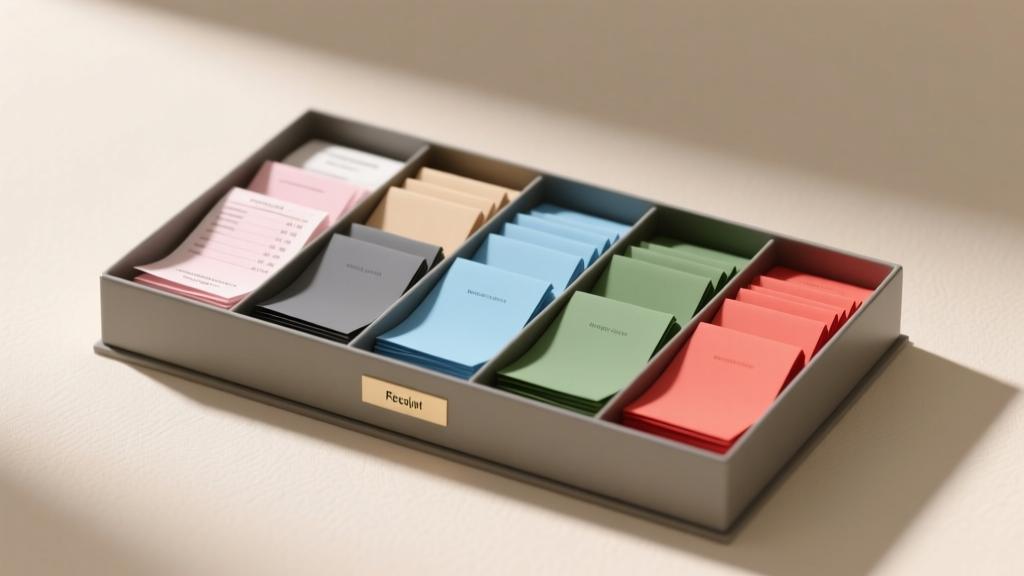
Receipt Box Setup Color Matching Guide - CarInteriorMix
If you?ve ever cleaned out your glove box and found a crumpled pile of gas slips, parking stubs, toll receipts, and service invoices, you?re not alone. A receipt box is one of those small interior upgrades that quietly makes your car feel more organized?especially if you track maintenance, drive for work, share a vehicle, or just like having documentation on hand.
But here?s the detail most people miss: the right receipt box isn?t only about size and compartments. Color matching matters more than you?d think. Done well, a receipt box looks like it belongs in the cabin?blending with your console, door pockets, or glove compartment and avoiding that ?afterthought accessory? vibe. Done poorly, it becomes visual clutter, clashes with trim, and can even draw attention to an otherwise clean interior.
This guide walks you through a practical, real-world approach to receipt box setup and interior color matching, including materials, finishes, placement, and common pitfalls. You?ll come away with a clear plan for choosing a receipt organizer that looks OEM-clean and works every day.
What Is a Receipt Box (and Why Color Matching Matters)
A receipt box is a small organizer?usually a compact bin, slim filing box, or divided case?designed to hold paper receipts, service records, and small documents inside the vehicle. You?ll see them marketed as ?car receipt organizers,? ?glove box organizers,? or ?car document holders,? but the goal is the same: keep paper flat, sorted, and easy to grab.
Why matching your interior color and finish makes a difference
- Less visual noise: A box that matches your cabin reads as part of the interior instead of an accessory sitting on top of it.
- Cleaner perceived interior: Even when the car isn?t freshly detailed, matching accessories help your cabin look intentional.
- Better day-to-day usability: A high-contrast box can be easier to find, but it can also look messy. Matching lets you choose visibility with purpose (labels, tabs) instead of loud color.
- Resale-friendly: Neutral, interior-matched accessories don?t scream ?custom,? which can help your car feel more universally appealing.
Step 1: Identify Your Interior Color Palette (Beyond ?Black? or ?Beige?)
Most interiors aren?t a single color. They?re a mix of base color, trim accents, and finish levels. Before buying anything, take 60 seconds to identify what you actually have.
Quick checklist: what to look at
- Main surfaces: seats, lower dash, lower door panels (these typically define the primary interior color)
- Upper dash color: often darker to reduce glare
- Center console finish: matte plastic, satin, piano black, brushed aluminum, wood-look, or carbon-style
- Stitching and piping: contrast stitching (white, red, blue, tan) can influence your ?accent match? approach
- Carpet and headliner: these often sit in a different shade than the seats
Real-world examples
- ?Black interior? might include charcoal seats, a pure black upper dash, and satin silver trim. A jet-black glossy organizer could clash while a matte charcoal organizer looks factory.
- ?Tan interior? might really be warm beige seats with a dark brown dash top. A tan box may match the seats but look out of place against the darker console?so you may choose a darker tone if the box lives up front.
- Two-tone interiors (black and red, black and tan) often look best when the organizer matches the larger area it sits against (console area, door pocket, glove box).
Step 2: Match Finish and Texture, Not Just Color
Color is only half the story. Interior parts are usually matte or satin to reduce reflections and fingerprints. The wrong sheen can stand out even if the shade is close.
Common organizer materials and how they ?read? in a cabin
- Matte ABS/plastic: closest to most factory interior plastics; forgiving with fingerprints and scuffs
- Soft-touch TPU/silicone: grippy and quiet (no rattles); can attract lint in some colors
- PU leather (synthetic leather): looks premium; choose grain and stitching carefully to avoid mismatching seat texture
- Fabric/felt organizers: good for glove boxes; can fade and trap dust if exposed
- Clear acrylic: functional but typically looks non-OEM; best for hidden placement
Finish matching tips that work
- Avoid high-gloss surfaces unless your interior already features piano black and you?re okay with fingerprint maintenance.
- Choose satin or matte for most modern interiors?especially if the box sits in the console area.
- Pick a similar grain when buying PU leather: smooth leather can look ?office accessory? next to a pebbled automotive grain.
Step 3: Choose the Right Color Strategy for Your Cabin
There are three proven approaches for receipt box color matching. Pick one based on where the box will live and how visible you want it to be.
Strategy A: OEM blend (best for most people)
Match the organizer to the dominant interior plastic near its location (often black/charcoal). This keeps things looking factory and minimizes distraction.
- Best for: center console storage, door pockets, under-seat bins
- Recommended colors: matte black, charcoal, dark gray
Strategy B: Accent match (for enthusiasts who like coordinated details)
Match the organizer to a secondary accent like stitching, trim, or seat piping.
- Best for: show cars, enthusiast builds, interiors with strong accent colors
- Examples: black box with red stitching; tan box to match leather inserts; gray box to match headliner
Strategy C: High-contrast (for maximum visibility)
Use a contrasting color to make receipts easy to find quickly?useful for rideshare, delivery drivers, fleet vehicles, or anyone who needs fast access.
- Best for: glove box, work vehicles, cars shared by multiple drivers
- Examples: light gray box in a black glove box; bright label tabs on a dark organizer
- Pro move: keep the organizer neutral and use colored dividers/labels for visibility
Step 4: Measure Your Space and Plan Placement
A receipt box that matches perfectly but doesn?t fit your car is a guaranteed frustration. Before ordering, measure and choose a location that won?t interfere with driving or daily cabin use.
Common placement options
- Glove box: most discreet; best for long-term storage (service records, warranty docs)
- Center console bin: easy access; best for current-month receipts and parking stubs
- Door pocket: quick grab, but more prone to bending and moisture exposure
- Seat-back pocket: great for passengers; can be messy if not compartmentalized
- Trunk side cubby: ideal for larger maintenance folders, but not for daily receipt access
Simple measurement checklist
- Measure width, depth, and height of the storage area.
- Subtract at least 10?15 mm on each side to allow easy removal.
- Consider the opening angle of lids/doors?some glove boxes taper inward.
- Check for obstructions: USB ports, 12V sockets, hinge arms, manuals, fuse access panels.
Step 5: Set Up Your Receipt Box System (Step-by-Step)
A good setup keeps receipts from turning into a mixed stack. The goal is a simple, repeatable routine that takes seconds.
Step-by-step setup
- Sort by purpose first: create categories that match how you actually use receipts.
- Pick dividers or envelopes: use 3?6 sections max so it stays simple.
- Label clearly: printed label tape or pre-made tabs look cleaner than marker.
- Choose a ?quick drop? section: a front slot for today?s receipts prevents stuffing random papers elsewhere.
- Set a reset schedule: once a month (or at oil changes), archive or toss what you don?t need.
Recommended categories (easy and effective)
- Fuel & charging (especially helpful for tracking costs)
- Maintenance & repairs (oil changes, tires, parts)
- Parking & tolls
- Insurance & registration (copies only; originals may be better at home depending on your region)
- Warranty & major work (alignment, transmission service, battery replacement)
Practical tip: reduce paper bulk
- Fold receipts only once (not into tiny squares) so text stays readable.
- If you want maximum neatness, keep a mini binder clip or paper clamp in the box for the current month.
- Thermal receipts fade?snap a photo and store it in a maintenance album on your phone.
Product Recommendations: What to Buy (and What to Avoid)
The ?best? receipt box depends on your interior style and where you?ll store it. Here are the types that consistently work well in real cars.
1) Slim PU leather receipt organizer (premium look)
- Best for: glove box, seat-back pocket, console side
- Color matching strengths: blends well with leather interiors (black, tan, brown)
- Look for: matte finish, subtle grain, minimal logos, reinforced edges
- Watch out for: shiny PU that looks like a desk accessory
2) Matte plastic divided box (most OEM-like)
- Best for: center console bin, door pocket, under-seat storage
- Color matching strengths: easy match to factory plastics (black/charcoal)
- Look for: felt or rubber pads to prevent rattles, removable dividers
- Watch out for: hard plastic lids that squeak or fit loosely
3) Expandable accordion file (maximum organization)
- Best for: trunk cubby, glove box (if large enough), fleet/ride-share vehicles
- Color matching strengths: usually hidden, so color is less critical
- Look for: durable tabs, strong spine, compact footprint
- Watch out for: bulky models that don?t fit glove boxes in smaller cars
Quick comparison
- Best for a clean factory look: matte plastic divided box in black/charcoal
- Best for upscale interiors: matte PU leather in a matching seat/trim tone
- Best for heavy receipt volume: compact accordion file with labeled tabs
Color Matching Tips That Make Your Setup Look Factory
- Match the darkest nearby surface if you?re unsure. Dark neutrals hide dirt and blend with most interiors.
- Use a ?two-tone rule?: if your interior is two-tone, match the tone that dominates the organizer?s location (console vs glove box vs door pocket).
- Keep logos minimal: big brand marks disrupt the OEM look even if the color is perfect.
- Coordinate with other organizers: if you already have a console tray or seat gap filler, match materials and sheen across accessories.
- Test in daylight: interior lighting and tinted windows can mask mismatches until you see it in the sun.
Common Mistakes to Avoid
- Choosing glossy black in a matte cabin: it shows fingerprints and stands out immediately.
- Ignoring undertones: ?beige? can lean yellow, pink, or gray?pick a neutral tan if you can?t match perfectly.
- Buying too large for the glove box: many glove boxes taper; measure the narrowest point.
- Over-compartmentalizing: too many sections leads to random stuffing; keep it simple.
- Storing loose receipts near heat: thermal paper fades faster when left against hot surfaces.
- No routine: even the best receipt organizer fails if you never empty or archive it.
FAQ: Receipt Box Setup and Color Matching
What color receipt box works best in most cars?
Matte black or charcoal is the safest choice for most interiors because it matches common interior plastics, hides dirt, and looks the least like an add-on accessory.
Should I match the receipt box to my seats or my dashboard?
Match it to the surface around where it will sit. If it lives in the center console area, match console plastics and trim. If it stays in the glove box, match the glove box interior color (or go neutral).
Are leather receipt organizers worth it?
Yes if your interior is leather-heavy and you want a more premium look. Choose a matte PU leather with subtle grain and minimal branding. If you prioritize durability and OEM appearance, matte plastic is often better.
How do I stop my receipt box from rattling?
Use organizers with rubber feet or add thin felt pads to contact points. In a console bin, a small non-slip liner underneath also helps a lot.
How long should I keep receipts in the car?
Keep daily items (parking, tolls, fuel) for a month or until reconciled. Keep service and repair receipts much longer?ideally for the life of the vehicle, especially for warranty-related work and resale value.
Do receipts really fade that fast?
Thermal receipts can fade within months, especially in heat. If the receipt matters (repairs, warranty, expensive parts), take a photo and store it in a dedicated album or folder.
Next Steps: Build a Setup You?ll Actually Use
Start by deciding where your receipt box will live?glove box for discreet storage, console for daily use, or trunk for long-term records. Measure that space, then choose a matte, low-gloss organizer that matches the nearest interior surfaces. Keep your system simple with a few labeled sections and a monthly reset routine, and you?ll stop the paper pile before it starts.
If you want more practical interior organization and detailing tips, explore more guides on carinteriormix.com?we?re building a library of real-world upgrades that keep your cabin clean, functional, and factory-fresh.