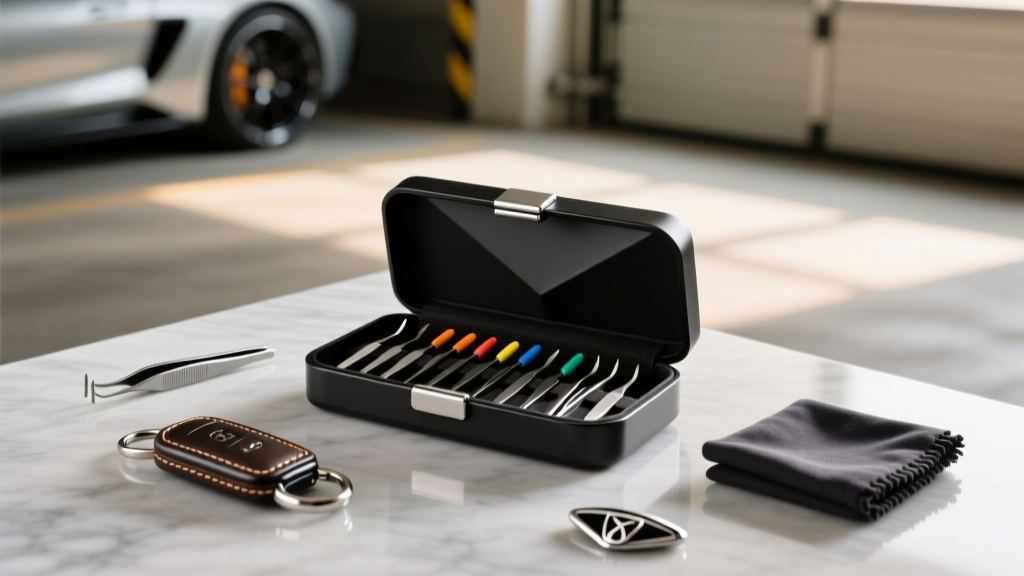
Tweezer Case Storage: Upgrade Your Car Interior (2026)
If you?ve ever fished around in your center console for a small tool?only to pull out loose coins, a half-melted mint, and a mystery charger?you already understand the bigger issue: tiny items get lost fast inside a car. Tweezers are one of those ?small but mighty? tools that can save the day, whether you?re removing a splinter, grabbing a shard of glass after a minor mishap, or pulling a fuse in a pinch. The problem is that most people toss them into the glove box unprotected, where they get dirty, bent, or vanish when you need them most.
A professional tweezer case storage upgrade is a simple interior organization project that makes your vehicle feel more deliberate and better equipped?like a well-built tool roll for everyday life. This guide is written for car owners who care about clean, functional interiors and want a tidy, reliable way to store precision tools (tweezers, mini scissors, splinter picks) without cluttering the cabin.
Even if you?re not ?that person? with a full roadside kit, upgrading your tweezer storage is a small, realistic step toward a more organized car. Done right, it improves cleanliness, prevents tool damage, and keeps sharp tips safely contained?especially important if you have kids or pets riding along.
Why Tweezer Storage Matters in a Car Interior
Cleaner cabin, fewer germs
Tweezers are hygiene tools. When they roll around a dusty console or glove box, they pick up grime that you don?t want near skin. A sealed or semi-sealed case helps keep the tool clean and ready.
Protects tips and alignment
Precision tweezers can lose alignment if they?re crushed by heavier items. Even standard slant-tip tweezers can become misaligned, making them frustrating to use. A rigid case prevents bending and protects the tip.
Faster access when it counts
Real-world uses inside a vehicle include:
- Removing a splinter from a finger during a road trip
- Pulling tiny debris from a phone charging port or a seat rail
- Retrieving small screws/clips dropped into a tight crevice
- Handling a blown fuse (many fuse pullers are basically tweezers)
- Picking out a small piece of glass after a window chip or break-in cleanup (use caution and gloves)
Safety for passengers
Loose sharp objects are a hazard. Hard braking can send small tools sliding. A secure case plus a fixed mounting point keeps everything safer and reduces rattles.
Pick the Right Tweezer Case for Automotive Use
A ?good? tweezer case for a bathroom drawer isn?t always ideal for a car. Heat, vibration, and constant movement change the requirements. Look for these features before you buy or repurpose a case.
Key features to look for
- Rigid structure: Aluminum, hard plastic, or reinforced EVA prevents crushing.
- Secure closure: Latch, zipper, or strong snap that won?t pop open on bumps.
- Interior retention: Elastic loops or molded channels that stop tools from rattling.
- Compact footprint: Slim enough for a console tray or door pocket without hogging space.
- Easy-to-clean lining: Wipeable fabric or smooth plastic interior helps with hygiene.
- Heat tolerance: Avoid low-quality plastics that warp in hot cabins.
Common case types (pros and cons)
1) Slim hard-shell cases
- Pros: Best protection, excellent for precision tweezers, clean look.
- Cons: Can be slightly bulkier than pouches.
2) EVA zip pouches
- Pros: Affordable, shock-resistant, easy to stow, often includes elastic loops.
- Cons: Zippers can snag; cheaper models collapse under heavy pressure.
3) Leather or faux leather sleeves
- Pros: Premium feel, quiet (less rattle), slim profile.
- Cons: Less crush protection; may absorb moisture; heat can stiffen low-quality faux leather.
4) Repurposed eyeglass cases
- Pros: Easy to find, rigid, discreet, fits many tweezers well.
- Cons: Interior can be fuzzy (lint), may be too wide for tight console trays.
Where to Store a Tweezer Case in Your Car (Best Locations)
The ?best? spot depends on how often you use tweezers and how minimalist you want your interior to feel.
Top storage locations
- Center console organizer tray: Great for daily access; choose a slim case to prevent lid interference.
- Glove box: Ideal if you want it out of sight; pair with a small divider so it doesn?t migrate.
- Door pocket: Convenient, but prone to temperature swings and moisture from bottles/umbrellas.
- Seat-back organizer: Good for family vehicles; ensure the case is secured so it doesn?t fall out.
- Cargo side pocket: Works for SUVs/hatchbacks, especially if it?s part of a broader emergency kit.
A quick real-world example
If you drive a compact sedan with a shallow center console, a hard-shell eyeglass-style case usually fits better than a chunky zip pouch. In a truck or SUV with deeper storage bins, an EVA zip pouch can hold tweezers plus a mini flashlight and alcohol wipes without feeling crammed.
Step-by-Step: Upgrade Your Tweezer Case Storage Like a Pro
This is a simple upgrade, but doing it methodically makes it cleaner and more durable. Plan for 20?40 minutes.
What you?ll need
- A tweezer case (hard-shell, EVA, or sleeve)
- Your preferred tweezers (slant tip, pointed, or flat tip)
- Small microfiber cloth
- Isopropyl alcohol wipes (70% is a safe general choice for cleaning tools)
- Optional: adhesive-backed hook-and-loop (Velcro) strips
- Optional: non-slip liner sheet for console/glove box
- Optional: label maker or small label tag
Step 1: Choose the right tweezers for your car kit
One good pair beats three mediocre ones. Consider:
- Slant-tip: Best all-around for grooming and general use.
- Pointed-tip: Best for splinters and fine debris (store securely?sharp).
- Flat-tip: Better for grabbing wider items without piercing.
If you want a single ?car pair,? a quality slant-tip is usually the most versatile.
Step 2: Clean and prep the tweezers before storage
- Wipe the tweezers with an alcohol wipe.
- Dry with a microfiber cloth to prevent moisture sitting in the case.
- If the tips are misaligned, gently realign them before storing (or replace if bent).
Step 3: Set up the inside of the case to prevent rattles
Rattling is the fastest way to make an ?upgrade? feel cheap. Aim for a snug fit:
- If your case has elastic loops, place tweezers tip-down or tip-inward so they can?t poke the zipper/latch.
- If the case is larger than the tweezers, add a small folded microfiber or thin foam piece to reduce movement.
- Avoid loose cotton balls or fluffy fillers that shed lint onto the tips.
Step 4: Choose a mounting strategy (loose, anchored, or integrated)
Pick one of these, depending on how ?OEM-clean? you want it to look.
Option A: Loose placement with a non-slip liner (simplest)
- Cut a small piece of non-slip liner for your console tray or glove box shelf.
- Place the case on top so it doesn?t slide.
- Check that the console lid closes without interference.
Option B: Anchored with hook-and-loop strips (most secure)
- Test-fit the case location first (console wall, glove box side, cargo pocket panel).
- Clean the mounting surface with isopropyl alcohol and let it dry.
- Apply one strip to the case and the matching strip to the car surface.
- Press firmly for 30?60 seconds. Let adhesive cure if the product recommends it.
Tip: Avoid mounting to delicate soft-touch plastics that can discolor when adhesive is removed. In those areas, use a removable organizer bin instead.
Option C: Integrated into an organizer tray (cleanest look)
- Measure your console tray compartments.
- Select a case that matches one compartment closely.
- Add a thin non-slip pad underneath for stability.
Step 5: Add ?micro-essentials? without turning it into clutter
A professional storage setup keeps the kit tight. Helpful add-ons that still stay minimal:
- 2?3 alcohol wipes in a tiny sealed packet
- Small adhesive bandages (a couple, not a whole box)
- A mini LED keychain light (for finding a splinter at night)
- Nitrile gloves (one pair) if you expect roadside use
Step 6: Label it (yes, really)
In a shared vehicle, labeling prevents the case from becoming a random ?mystery box.? Simple labels:
- ?First Aid ? Tweezers?
- ?Precision Tools?
- ?Splinter Kit?
Product Recommendations: What Works Well for Cars
Instead of chasing a specific brand, focus on proven formats and features that survive automotive life. Here are solid, easy-to-shop categories with what to look for.
Best overall: Slim hard-shell precision tool case
- Look for: hard plastic or aluminum shell, internal elastic, positive latch.
- Best for: enthusiasts who want a clean, professional setup in the center console.
Best value: EVA zip pouch (small)
- Look for: semi-rigid EVA, smooth zipper, internal mesh pocket for wipes.
- Best for: glove box storage and compact ?micro-kits.?
Best discreet repurpose: Hard eyeglass case
- Look for: firm hinge, easy-open clasp, minimal fuzzy lining (or add a wipeable insert).
- Best for: drivers who want a stealthy, no-fuss solution.
Comparison table (quick pick)
- Most protective: Slim hard-shell case
- Most versatile: EVA zip pouch
- Most budget-friendly: Repurposed eyeglass case
- Most premium feel: Leather sleeve (best if stored in a protected compartment)
Common Mistakes to Avoid
- Storing tweezers loose in the console: They collect grime and can damage interior plastics if they slide.
- Choosing a case that?s too big: It becomes ?one more thing? and gets removed, defeating the purpose.
- Using weak adhesive on textured surfaces: It fails in heat and leaves residue. Clean, flat surfaces work best.
- Overstuffing the case: A tweezer kit isn?t a junk drawer. Too many items cause rattles and slow access.
- Ignoring heat and moisture: Wet wipes left unsealed can dry out; cheap plastics can warp in a hot cabin.
- Not checking interference: A case that blocks a console lid or glove box hinge will annoy you daily.
Practical Tips for Keeping It Clean and Ready
- Monthly 30-second check: Open the case, confirm it?s dry, clean the tips if needed.
- Keep it away from drink spills: If stored in the door pocket, separate from bottles.
- Use a dedicated compartment: If your console has a removable tray, reserve one section for ?micro tools.?
- Pair with a small trash solution: A tiny car trash bin keeps wrappers out of the same area as hygiene tools.
- If you carry pointed tweezers: Always store them in a rigid case and orient tips away from the opening.
FAQ: Professional Tweezer Case Storage in Cars
Should I keep tweezers in the glove box or center console?
If you use them often (kids, outdoor hobbies, frequent road trips), the center console is more convenient. If you want a cleaner look and less daily interaction, the glove box is a great ?set and forget? spot?just add a non-slip liner so the case stays put.
Will heat in a parked car damage tweezers or the case?
Most stainless-steel tweezers handle heat fine, but cheap plastic cases can warp and some adhesives can fail. Choose a rigid case with a strong closure and avoid leaving alcohol wipes loose where they can dry out.
What?s the best way to stop rattling?
Use a case with internal retention (elastic loop or molded slot). If there?s still movement, add a thin microfiber inside the case or place a non-slip liner under the case where it sits.
Can I mount the case with Velcro inside my car?
Yes, as long as you clean the surface first and apply it to a stable, non-delicate area. Avoid soft-touch rubberized panels if you?re worried about marks when removing adhesive later.
Do I need a dedicated ?car tweezers,? or can I swap from home?
A dedicated pair is better. Swapping increases the odds they?ll be missing when you need them, and a car pair can be kept clean and protected in its case full-time.
What else belongs in a small tweezer kit without overdoing it?
Keep it minimal: a couple of alcohol wipes, a few bandages, and optionally a small light. If you add more than that, you?re better off building a separate compact first-aid pouch.
Next Steps: Make This Upgrade Stick
The best interior upgrades are the ones that stay useful after the novelty wears off. Pick a case that fits your space, secure it so it doesn?t slide, and keep the contents minimal and clean. Once you?ve done that, you?ll notice something surprising: your car feels calmer and more ?handled,? because the little everyday problems have a solution ready to go.
Ready to keep refining your cabin setup? Explore more practical car interior organization and upgrade guides on carinteriormix.com.