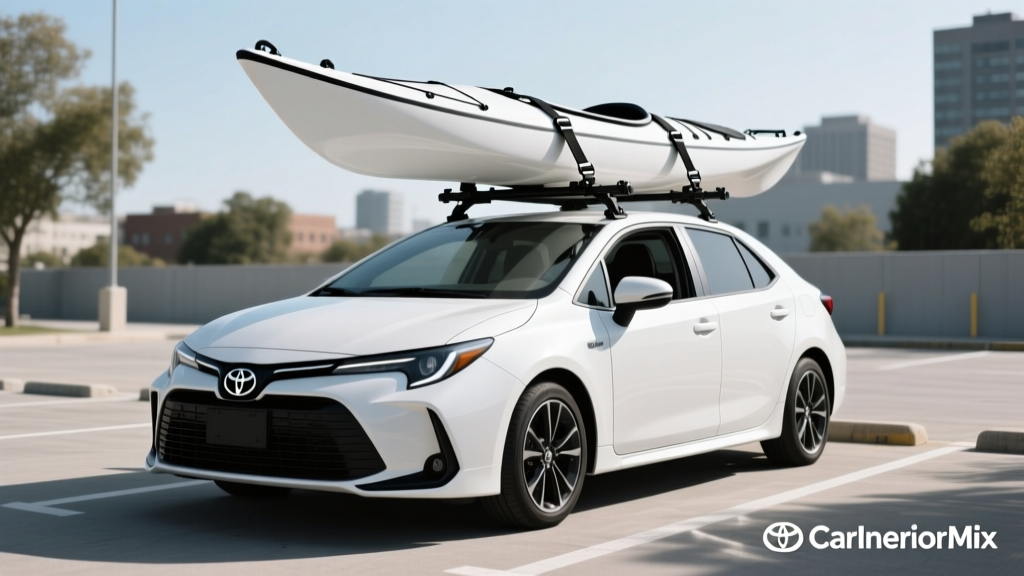
Kayak Strap Compatibility by Car Model (2026)
Hauling a kayak sounds simple until you?re standing in your driveway with two straps, a bundle of loose line, and a roof that?s either too glassy, too curved, or too short to inspire confidence. The right strap setup doesn?t just protect your kayak?it protects your car?s roof, your interior trim, and everyone else on the road.
Different vehicles create different challenges: a sedan with a smooth roof and fixed door frames is a very different strapping job than a compact SUV with factory rails, or a pickup with a tonneau cover and no easy tie-down points. This guide breaks down kayak strap setup compatibility by common car models and roof types so you can choose a setup that fits your vehicle, your budget, and your comfort level.
If you care about keeping your headliner clean, your door seals quiet, and your paint free of strap scuffs, you?re in the right place. Let?s match the right kayak transport method to the car you actually drive.
Quick Compatibility Overview: Match Your Car to the Right Strap Setup
Most kayak transport setups fall into four ?car compatibility? buckets. Find your bucket first; it makes everything else easier.
- Factory side rails (raised or flush): Common on SUVs/wagons (RAV4, CR-V, Outback). Best compatibility with crossbars + cam straps.
- Naked roof (no rails): Common on sedans/coupes (Civic, Corolla, Accord). Works with a door-jamb rack (clip-fit) or temporary foam blocks + straps (short trips only).
- Fixed mounting points: Some cars have threaded points hidden under trim (certain Volkswagens, some Mazdas). Excellent for a clean, secure rack install.
- Truck bed: Works with bed extenders, rack towers, or over-bed racks. Straps often anchor to factory bed loops.
Key Terms You?ll See (and What They Mean)
- Cam straps: Webbing straps tightened with a cam buckle. Preferred for kayaks?secure without over-cranking.
- Ratchet straps: Can over-tighten and deform kayaks. Best avoided unless you really know what you?re doing.
- Bow/stern lines: Front and rear lines that prevent fore-aft movement and add safety in crosswinds.
- J-cradles / saddles: Kayak carriers that mount to crossbars and improve stability.
Compatibility Guide by Vehicle Type (with Real-World Examples)
Sedans (Honda Civic/Accord, Toyota Corolla/Camry, Nissan Altima)
Best setup: Clip-fit roof rack (door-jamb towers) + crossbars + cam straps + bow/stern lines.
Why: Sedans typically have a ?naked roof? with no factory rails, so the rack must grip the door frame safely. Once you have crossbars, kayak carrying becomes straightforward.
What works well:
- Two crossbars spaced as wide as your roof allows (wider is more stable).
- J-cradles for one or two kayaks, especially on narrower roofs.
- Hood-trunk loop straps for bow/stern anchors when you don?t have tow hooks.
Real-world tip: On many sedans, running straps through the cabin (through open windows) is tempting but noisy and can damage interior trim. Use a proper rack or foam blocks for short, low-speed trips only.
Hatchbacks (VW Golf, Mazda3 Hatch, Subaru Impreza)
Best setup: Clip-fit roof rack or fixed mounting points (if equipped) + crossbars + saddles or J-cradles.
Why: Hatchbacks are often short-roofed, so crossbar spread matters. A solid rack system reduces ?porpoising? (the kayak rocking at highway speeds).
- Best for one kayak: Saddles or foam blocks (short trips) plus bow/stern lines.
- Best for two kayaks: J-cradles or a stacker bar on crossbars.
Compatibility note: Many hatchbacks have small rear spoilers. Stern lines should route to an anchor point that won?t rub the spoiler edge.
Compact SUVs (Toyota RAV4, Honda CR-V, Mazda CX-5, Hyundai Tucson)
Best setup: Factory rails + aftermarket crossbars + J-cradles or saddles + cam straps + bow/stern lines.
Why: This category is the easiest for kayak transport. Many trims include side rails, and the roof height is manageable for loading.
Watch-outs by design:
- Flush rails (no gap underneath): You?ll need crossbars designed for flush rails; don?t assume universal fit.
- Panoramic sunroofs: Avoid placing foam blocks directly on glass; use crossbars and carriers instead.
- Short crossbar spread: Use bow/stern lines for highway stability.
Midsize SUVs & 3-Row SUVs (Highlander, Pilot, Telluride, Explorer)
Best setup: Crossbars + saddles (for easy loading) + bow/stern lines (strongly recommended).
Why: The roof is higher, and loading can be awkward. Many owners add a step stool and choose carriers that guide the kayak into position.
Practical tip: If you?re loading solo, consider a rear-loading assist (a felted roller or temporary slide pad) to protect the rear interior trim and roof edge.
Wagons (Subaru Outback, Volvo V60/V90)
Best setup: Factory rails + crossbars + J-cradles or stacker.
Why: Wagons often have excellent roof length and crossbar spread, which is ideal for longer touring kayaks.
Outback-specific tip: If your Outback has integrated swing-up crossbars, confirm their weight rating and width before adding carriers. They?re convenient but not always ideal for multiple boats.
Pickup Trucks (Ford F-150, Toyota Tacoma, Ram 1500)
Best setup: Bed rack or ladder rack + cam straps + bow/stern lines to bed anchors.
Why: A kayak can ride in the bed, but most are too long to be fully supported. A bed extender or rack provides the right support points.
- Short-bed trucks: Use a hitch-mounted bed extender to support the stern.
- With tonneau cover: Choose rack systems compatible with tonneau rails, or plan tie-down points carefully.
Interior-friendly tip: Avoid running straps through rear doors to create anchors. It can crease door seals and cause wind noise later.
Vans (Honda Odyssey, Toyota Sienna, Ford Transit Connect)
Best setup: Crossbars on factory rails (if available) or a vehicle-specific rack system.
Why: Vans have long roofs but can be tall. Once fitted with crossbars, they carry kayaks extremely well.
Loading tip: A small folding step and a side-loading technique reduces the chance of dragging the kayak across the roof edge.
Step-by-Step: Secure a Kayak with Cam Straps (Roof Rack + Crossbars)
This is the most universal ?proper? method once you have crossbars on the vehicle.
- Position the kayak and carriers: Center the kayak over the crossbars. If using J-cradles, seat the hull snugly in the cradle.
- Set strap orientation: Place cam buckles on the side you?ll access easily (usually passenger side), and keep buckles away from paint.
- Loop the strap over the kayak: Go over the kayak, under the crossbar, back over the kayak, and under the opposite side of the crossbar.
- Thread the cam buckle correctly: Feed webbing through the buckle as directed so the cam bites when you pull tight.
- Tighten until snug?don?t crush: The kayak shouldn?t shift when you shake it, but you shouldn?t visibly deform the hull.
- Secure strap tails: Tie off loose ends so they don?t flap and slap your car (a quick half hitch or strap wrap works).
- Add bow and stern lines: Attach to secure points (tow hooks, frame-mounted tie points, hood loops). Keep lines angled and evenly tensioned.
- Final checks: Close doors, confirm straps aren?t pinched incorrectly, and verify nothing rubs against sharp edges.
Driveway test: Grab the kayak at the side and try to move it. The kayak should move the car?s suspension, not slide on the rack.
Step-by-Step: Temporary Foam Block Strap Setup (Naked Roof, Short Trips)
Foam blocks can work for short distances at lower speeds, but they?re more sensitive to wind and roof shape. Use this only if you?re confident and your kayak isn?t overly heavy.
- Clean the roof: Dirt under foam becomes sandpaper. Wipe the roof and the foam.
- Place foam blocks: Space them apart as far as practical, aligned with strong sections of the roof.
- Set the kayak hull-down (usually): Follow the kayak manufacturer?s recommendation to prevent oil-canning (dents).
- Run straps through the doors: Open doors, pass straps through the cabin (not over the roof edge), then close doors carefully.
- Tighten evenly: Alternate sides to keep the kayak centered.
- Add bow/stern lines: Hood and trunk loop straps help a lot here.
Noise and interior tip: Straps routed through the cabin can chafe B-pillar trim and leave marks. A towel or strap sleeve at contact points helps.
Product Recommendations: What to Buy (and Why)
Best All-Around: Crossbars + Cam Straps + Bow/Stern Lines
- Cam straps (12?15 ft): Look for rubber buckle guards to prevent paint damage.
- Bow/stern line kit: Prefer ratcheting line tensioners designed for kayak lines (not heavy ratchet straps).
- Hood/trunk loop anchors: Simple web loops that bolt under existing hood/trunk bolts for safe tie points.
Carrier Styles Compared (J-Cradle vs Saddles vs Stacker)
- J-cradles: Great for stability and carrying two kayaks on narrower crossbars. Slightly more wind noise.
- Saddles: Faster loading, good for heavier kayaks. Often best for taller SUVs where you want a ?drop-in? feel.
- Stacker: Efficient for multiple boats, but requires careful padding and strap technique to prevent hull scuffs.
Truck Owners: Bed Extender vs Bed Rack
- Hitch bed extender: Budget-friendly and quick to remove. Works well for longer boats in short beds.
- Bed/ladder rack: Best highway stability and keeps the kayak out of the bed. Higher cost but most secure.
Common Mistakes to Avoid (That Damage Cars and Kayaks)
- Using ratchet straps on rotomolded kayaks: Over-tightening can permanently deform the hull, especially in heat.
- Letting metal buckles touch paint: Always keep buckles off the roof and doors; use buckle pads or position buckles above the kayak.
- Skipping bow/stern lines on short roofs: If crossbar spread is limited, bow/stern lines add critical stability.
- Strapping to plastic trim: Don?t anchor lines to bumper covers or trim pieces?they can crack or pull loose.
- Ignoring door seal routing: If straps pass through door openings, ensure they lay flat and don?t kink weatherstripping.
- Not re-checking after 10?15 minutes: Webbing can settle. Stop once, re-tighten lightly, then you?re usually set.
Practical Tips for Cleaner, Quieter, More Interior-Friendly Transport
- Use strap sleeves: A simple padded sleeve reduces strap buzz and protects paint at contact points.
- Twist the strap once: If a strap ?hums? at speed, one twist in the webbing often quiets it.
- Protect door jambs: If using clip-fit racks, keep the contact areas clean and inspect for grit to avoid scuffs.
- Mind garage clearance: Measure total height with the kayak loaded; write it on a sticky note on the dash.
- Heat matters: In summer, check tension more often?kayaks soften slightly and straps can loosen.
FAQ: Kayak Strap Setup Compatibility
Do I really need a roof rack, or can I use foam blocks?
Foam blocks can work for short, low-speed trips with a light kayak and solid bow/stern lines. For regular highway driving, heavier kayaks, or frequent trips, a proper roof rack with crossbars is safer, quieter, and easier on your car?s paint and interior seals.
What?s the safest strap type for kayaks?
Cam straps are the standard because they?re secure without encouraging over-tightening. Ratchet straps can be safe in experienced hands, but they?re the most common cause of dented or warped kayak hulls.
How do I know if my car has flush rails or raised rails?
Raised rails have a visible gap between the rail and the roof you can slip fingers under. Flush rails sit tight to the roof with little to no gap. The difference matters because crossbar clamps are designed specifically for one style or the other.
Where should I attach bow and stern lines if my car has no tow hooks?
Use hood loop straps under the hood bolts for the bow and trunk loop straps (or frame-mounted points) for the stern. Avoid tying to plastic bumper covers or flimsy trim.
Can I carry two kayaks on a compact SUV like a RAV4 or CR-V?
Yes. The most common approach is crossbars with two J-cradles (one per kayak) or a stacker system. Pay attention to crossbar weight ratings and keep both kayaks centered to avoid leaning loads.
How tight should kayak straps be?
Tight enough that the kayak doesn?t slide or rock on the carriers when you shake it firmly. If you see the hull deforming, you?ve gone too far. Snug and stable beats ?as tight as possible.?
Next Steps: Set Up Your Car Once, Then Load in Minutes
Start by identifying your vehicle?s roof type?factory rails, naked roof, fixed points, or truck bed. From there, choose the simplest secure system you?ll actually use: crossbars and cam straps for most cars, a bed rack for many trucks, and foam blocks only as a temporary solution. Do a driveway shake test, add bow/stern lines when roof length is limited, and re-check tension shortly after you hit the road.
Want more practical car-interior-friendly transport tips, gear setup guides, and owner-focused advice? Explore the latest guides on carinteriormix.com.