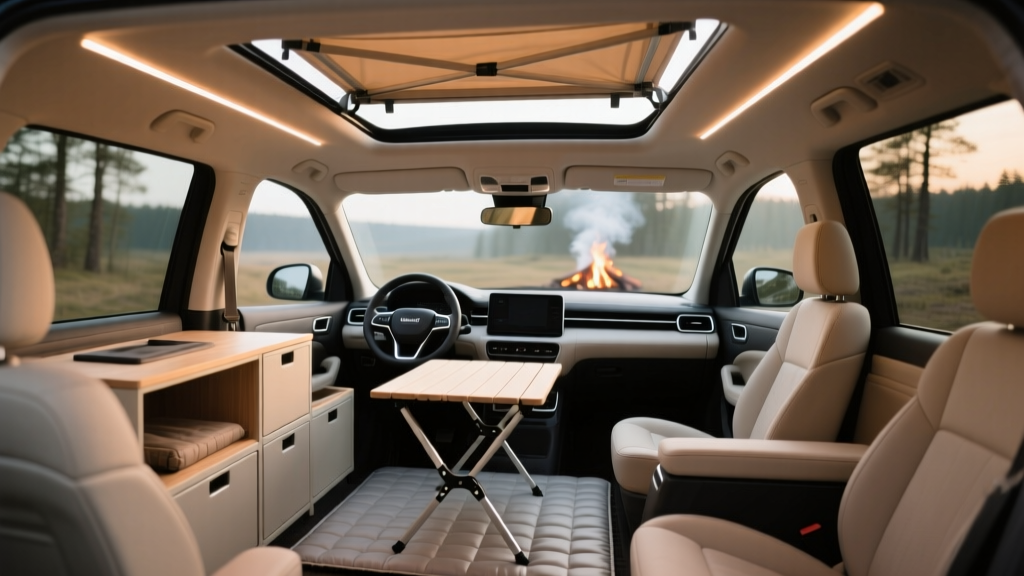
Camping Interior Prep for Vehicles (2026)
A great camping trip can be made?or quietly ruined?by what happens inside your vehicle. Wet gear soaking your carpet, food smells baked into upholstery, batteries dying overnight, sand grinding into seat rails, and a ?quick nap? that turns into a stiff back and fogged windows. Camping interior prep isn?t just about comfort; it?s about protecting your vehicle?s resale value, keeping your cabin safe and functional, and making sure you actually enjoy the trip.
The right setup also saves time. When your storage is organized, your sleeping solution fits properly, and your interior is protected from dirt and moisture, you spend less time rummaging for essentials and more time exploring. Whether you?re building a simple weekend kit for a compact sedan or setting up a full sleep platform in an SUV, a thoughtful approach pays off quickly.
This guide walks you through choosing the right camping interior prep for your specific vehicle and camping style?step by step?with practical product recommendations, real-world examples, and the most common mistakes to avoid.
Start With Your Camping Style and Vehicle Reality
Define your camping ?mission?
Before you buy a single organizer or mat, decide how you?ll actually camp. Your interior prep should match your priorities:
- Car camping (developed sites): More focus on organization, easy cleanup, and comfort.
- Dispersed/overlanding-lite: More focus on durability, dust control, power management, and water handling.
- Sleep-in-car vs. drive-to-tent: Sleep-in-car requires airflow, flat sleeping surface, window privacy, and condensation control.
- Solo vs. family/pets: Families need faster access to snacks, layers, wipes, and trash management. Pets need seat protection and containment.
Know your vehicle?s constraints
Two vehicles in the same class can have wildly different interior layouts. Take 10 minutes to measure and inspect:
- Cargo length and width with rear seats up and folded
- Seat-fold angle (flat, sloped, or stepped)
- Anchor points (tie-downs, child-seat anchors, cargo hooks)
- 12V outlets and USB ports location and whether they?re live with ignition off
- Interior materials (cloth vs. leatherette) and how easily they stain
Real-world example: A compact crossover may advertise ?flat-folding seats,? but still leaves a 2?3 inch step between cargo floor and folded seatbacks. If you?re sleeping inside, you?ll need a platform, a leveling pad, or a carefully chosen sleeping mat to bridge the gap.
The Core Pillars of Camping Interior Prep
1) Protection: Keep dirt, water, and wear off your interior
Protection is the foundation. Without it, camping quickly becomes ?deep clean season.? Focus on three zones: floor, seats, and cargo area.
- Floor mats: All-weather mats with tall edges catch mud and snow. Look for vehicle-specific fit if you camp often.
- Cargo liners: A raised-lip cargo liner protects carpet from coolers, wet boots, and leaky water jugs.
- Seat covers: Great for pets, wet clothing, and heavy use. Choose washable, non-slip backing, and airbag-compatible designs for front seats.
- Door-sill guards: Helpful if you load heavy bins or have dogs jumping in and out.
Quick tip: If you don?t want full seat covers, keep a compact ?seat towel kit? (two microfiber towels and a fitted waterproof seat protector) for quick transitions after hikes or swimming.
2) Organization: Make every item easy to find and secure
Cabin clutter isn?t just annoying?it?s dangerous. In a sudden stop, loose gear becomes projectiles. Your organization plan should:
- Control movement (bins, straps, nets)
- Create zones (kitchen, sleep, clothing, tools)
- Speed access to the essentials (headlamp, first aid, trash bags, wipes)
3) Comfort and livability: Sleep, airflow, temperature, and lighting
If you?re sleeping in your vehicle, comfort is about more than a mattress. Ventilation, privacy, and condensation control are equally important.
- Sleeping surface: Choose a mat that fits your cargo footprint and bridges seat gaps.
- Airflow: Window vent shades or bug screens allow cracked windows without inviting insects.
- Privacy: Reflective window covers or curtains help with sleep and temperature control.
- Lighting: Warm LED lights reduce eye strain and make nighttime organization easier.
4) Cleanliness: Control odors, trash, and moisture
Moisture is the quiet enemy of car interiors. It causes odors, mildew, and foggy windows.
- Trash management: A sealed hanging trash bag or small bin keeps wrappers and food waste contained.
- Odor control: Charcoal bags and quick wipe-down routines help more than strong air fresheners.
- Moisture control: Microfiber towels, a small squeegee for windows, and a dry bag for wet items go a long way.
Step-by-Step: Build Your Camping Interior Prep Plan
Step 1: Do a 15-minute ?interior audit?
- Remove everything from the cabin and cargo area.
- Vacuum and wipe down high-touch surfaces (steering wheel, handles, seat edges).
- Inspect for existing issues: worn floor areas, stains, rattles, loose trim, sticky seat rails.
- Identify what must stay accessible: spare tire access, jack tools, battery compartment (hybrids), cargo floor storage.
Step 2: Choose your protection layer (floor, seats, cargo)
- Install all-weather floor mats if you don?t already have them.
- Add a cargo liner with a raised lip?especially if you carry coolers, wet shoes, or pets.
- Decide between full seat covers vs. strategic protection (rear bench cover + front seat back protectors).
Pro tip: If you?re using a sleeping platform, still keep a cargo liner underneath. Platforms trap debris; liners make post-trip cleanup much faster.
Step 3: Map your storage zones
- Daily access zone: Snacks, water bottle, headlamp, rain layer, small first-aid kit.
- Camp setup zone: Lantern, stove kit, lighter, utensils, paper towels.
- Recovery/safety zone: Tire inflator, jump pack, tow strap, basic tools.
- Sleep zone: Bedding, window covers, pillow, earplugs.
Use this to decide which items belong in the cabin (fast access) versus cargo (bulk storage).
Step 4: Add secure storage that matches your interior
- Stackable bins with lids: Best for SUVs and hatchbacks. Choose uniform sizes so they don?t tip.
- Soft-sided duffels: Better for sedans and tight cargo openings. Less rattle, easier to compress.
- Seatback organizers: Useful for families; keep wipes, sunscreen, and snacks tidy.
- Cargo net or tie-down straps: Keeps coolers and bins from sliding.
Step 5: Plan your sleeping and ventilation setup (if applicable)
- Fold seats and measure the sleeping footprint (length, width at narrowest point).
- Decide on a solution:
- Foam + leveling pads: Budget-friendly, adaptable.
- Inflatable SUV mattress: Convenient, but watch for punctures and uneven support.
- Platform build: Most comfortable long-term; adds weight and reduces cargo flexibility.
- Install window bug screens or vent shades for airflow.
- Add window covers for privacy and temperature control.
Real-world example: If you camp in humid or cold areas, cracked windows with bug screens plus a microfiber towel for morning condensation can prevent that ?damp cabin? smell that lingers for weeks.
Step 6: Set up power and lighting safely
- Charging plan: Confirm whether your 12V outlet stays on when the car is off. If not, consider a small portable power station.
- Lighting: USB-rechargeable LED strip lights or puck lights make nighttime gear access easier without draining your car battery.
- Cable management: Use short cables, adhesive clips, and keep cords away from pedals and seat rails.
Step 7: Create a cleanup routine for every trip
- Keep a small cleaning kit: wipes, microfiber towel, mini brush, and a trash bag.
- At the trailhead or campsite, knock dirt off shoes before entering the car.
- Separate wet gear immediately into a dry bag or plastic tote.
- After the trip, remove mats and liners first, then vacuum, then wipe surfaces.
Product Recommendations and Smart Comparisons
All-weather floor mats: vehicle-specific vs. universal
- Vehicle-specific mats: Best coverage and spill containment. Ideal if you camp often or travel in muddy/snowy conditions.
- Universal mats: Cheaper upfront, but often slide, curl at edges, or leave exposed carpet.
Cargo liners: carpeted vs. rubberized
- Rubberized with raised edges: Best for wet gear, coolers, pets.
- Carpeted liners: Look nicer and reduce sliding, but absorb spills and odors more easily.
Seat protection: hammock-style pet covers vs. full seat covers
- Hammock-style rear cover: Great for dogs, keeps hair off seats, helps prevent pets from falling into footwells.
- Full seat covers: Better for repeated wet clothing, kids, and long-term wear protection.
Storage: hard bins vs. soft organizers
- Hard bins: Stack well and protect fragile items, but can rattle and shift without tie-downs.
- Soft organizers/duffels: Quieter and easier to pack around uneven cargo shapes; less protection for delicate gear.
Interior-friendly add-ons worth considering
- 12V tire inflator: Essential for gravel roads and temperature swings.
- Compact jump starter: Safer than relying on another vehicle.
- Magnetic or adhesive LED lights: Makes the cabin feel like a usable space, not a dark storage box.
- Reusable desiccant packs: Helpful for condensation control when sleeping inside.
Common Mistakes to Avoid
- Overbuilding too soon: Many people build a platform and buy gear before doing a single test night. Do a trial run first.
- Ignoring tie-downs: A heavy cooler sliding forward is a safety hazard. Secure big items every time.
- Relying on strong air fresheners: They mask odors instead of solving them. Control moisture and clean surfaces.
- Blocking airbags or seat functions: Front seat covers must be airbag-compatible, and organizers shouldn?t interfere with seat rails.
- Forgetting ventilation: Sleeping in a sealed vehicle leads to condensation, fog, and damp fabrics.
- Packing loose cooking gear inside: Spilled oils and food odors soak into soft-touch plastics and headliners. Use sealed containers.
FAQ: Camping Interior Prep for Cars, SUVs, and Trucks
How do I keep my car interior clean when camping in muddy or sandy areas?
Use all-weather floor mats with tall edges, a cargo liner with a raised lip, and a ?shoe protocol? (a small brush + a towel at the door). Keep a sealed bin for dirty gear and a microfiber towel for quick wipe-downs before dirt gets ground into carpet fibers.
What?s the best way to sleep comfortably in an SUV without building a platform?
Start by leveling the seat-fold step with a foam pad or folded blanket, then use a high-quality sleeping mat sized for your cargo area. Add window bug screens for airflow and reflective window covers for privacy and temperature control.
Do I need seat covers for camping, or are towels enough?
Towels work for occasional trips, but they slip and don?t protect seams well. If you camp frequently, have kids or pets, or carry wet gear, a washable rear bench cover or airbag-compatible seat covers are a better long-term solution.
How can I prevent condensation when sleeping in my vehicle?
Ventilate?crack two windows slightly using bug screens or vent shades to create crossflow. Keep wet items out of the cabin, wipe windows in the morning, and consider reusable desiccant packs if you camp in cold or humid conditions.
What?s a simple interior prep checklist I can reuse for every trip?
- Install mats/liners, empty loose items
- Secure heavy gear with straps or nets
- Pack cleanup kit (wipes, trash bags, towel)
- Confirm power plan (charging, lights)
- Set ventilation + privacy items if sleeping inside
Your Next Steps: Build a Setup That Works Every Time
Choosing the right camping interior prep comes down to matching your vehicle?s layout with your camping habits?and then protecting, organizing, and securing everything so it?s easy to live with. Start small: floor and cargo protection first, then add storage zones, then refine comfort and power after a test trip. One weekend of real use will teach you more than hours of shopping.
If you want to make progress quickly, do this on your next free afternoon:
- Measure your cargo area and seat-fold layout.
- Add or upgrade floor mats and a cargo liner.
- Build a two-bin system: one for camp setup, one for recovery/safety.
- Do a one-night ?driveway camp? to test sleep, airflow, and lighting.
For more practical interior guides?cleaning routines, organizer ideas, pet-friendly setups, and material-specific care?explore the latest articles on carinteriormix.com.