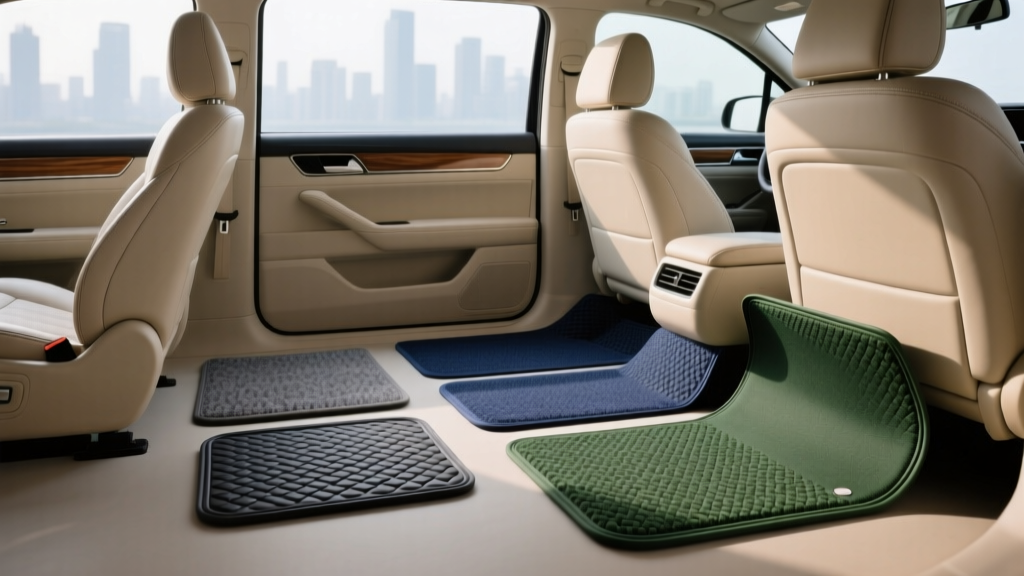
Floor Mats Buying Guide: Best Picks for Cars (2026)
If you already understand the basics of car floor mats?materials, universal vs. custom fit, and the difference between carpet and all-weather?this second part is where the buying decision gets real. Floor mats aren?t just a ?nice-to-have? accessory. They?re one of the few interior upgrades that directly affects cleanliness, resale value, comfort, and even safety (think: mat slippage under pedals).
This guide focuses on the details that separate a mat you tolerate from a mat you actually appreciate every day: retention systems, edge design, climate-specific performance, compatibility with modern interiors (hybrids/EVs and dead pedals), and what to look for when your life includes kids, pets, messy work boots, or snow and road salt.
Let?s make sure the set you buy fits your vehicle, your climate, and your habits?without paying for features you don?t need.
Advanced Fit and Coverage: What ?Good Fit? Really Means
Fit isn?t only about whether the mat matches your car?s floor outline. The best car floor mats control where debris goes, protect the vulnerable carpet edges, and stay locked in place.
Key Coverage Areas to Inspect
- Pedal area: The mat must sit flat and never interfere with gas, brake, or clutch operation.
- Dead pedal (footrest): Many factory carpets wear here first. Look for mats with dead pedal coverage if your model supports it.
- Door sills and rocker edges: Dirt often spills off your shoes when entering/exiting. Higher sidewalls help.
- Rear center hump: For families and ride-share drivers, the hump catches a surprising amount of grime.
- Seat rails: Mats that tuck cleanly around rails reduce ?crumb traps? and make vacuuming easier.
Sidewalls, Lips, and Channels: The Spill-Management Trio
If you?ve ever watched melted snow creep across a flat mat and soak the carpet, you already understand why edge design matters. Look for:
- Raised perimeter lip: A higher rim is better for winter slush and muddy boots.
- Deep grooves/channels: Helps trap liquid and guide it away from the center where your shoes sit.
- Textured surface: Improves traction so your heel doesn?t slide, especially when wet.
Real-world example: A skier in Colorado will benefit more from deep channels and a tall perimeter lip than a flat ?stylish? mat. The same mat can be overkill for a city commuter in a mild climate.
Retention and Safety: How to Prevent Mat Creep
Floor mat movement isn?t just annoying?it can be dangerous. A mat that slides forward can interfere with pedals. This is why retention features deserve as much attention as material.
Common Retention Systems
- Factory anchor grommets: Many vehicles have posts on the driver side. The best mats match these exactly.
- Hook-and-loop (Velcro) pads: Works well on carpeted floors; less effective on slick surfaces.
- Anti-skid nibs/spikes: Helps grip carpet but can be harsh on delicate carpeting over time.
- Clips or locking rings: Great when engineered for the specific vehicle; avoid universal clips that don?t align.
Step-by-Step: Checking Driver Mat Safety After Installation
- Remove old mats completely (especially stacked mats?double-matting is a common hazard).
- Install the new driver mat and engage the factory anchors or locks.
- Press the mat into place along the firewall edge and around seat rails so it lays flat.
- Test pedal clearance: With the engine off, press the gas and brake fully through their travel. Make sure nothing catches.
- Check for curl or lift: Any upward curl near the pedals is a ?no.? Re-seat the mat or choose a better-fitting model.
- Do a short drive check: After 5?10 minutes, confirm the mat hasn?t migrated.
Climate and Lifestyle Matching: Buy for Your Mess
The ?best? floor mat is the one that matches what you actually track into your vehicle. Here?s a practical way to choose based on conditions.
Snow, Salt, and Slush (Winter Climates)
Prioritize containment and ease of cleaning:
- All-weather rubber or TPE mats with tall sidewalls
- Deep channels to hold meltwater
- Full rear coverage if passengers bring snow into the back seat
Tip: In heavy winter regions, remove and dump mats weekly. Salt can crystallize and abrade surfaces if left too long.
Rainy Coastal Areas and Muddy Trails
- Choose mats with aggressive texture to prevent wet-foot slipping
- Look for a lip that won?t collapse when stepping in
- Consider a cargo liner if you carry wet gear
Hot, Sunny Regions (Heat and UV Exposure)
- Look for UV-stable materials (quality TPE often resists warping better than cheap PVC-style rubber)
- Avoid mats with a strong chemical odor that lingers?heat makes it worse
- Check reviews for curling edges during summer
Kids, Pets, and Everyday Spills
- Pick mats with a matte or lightly textured finish (hides scuffs and crumbs)
- Rear mats with bridge coverage help if kids frequently climb between seats
- Pair with a rear seat protector if pets ride often
Material Deep Dive: Rubber vs. TPE vs. Hybrid Designs
Part 1 likely covered the basics, so here?s how they behave after months of real use.
Rubber All-Weather Mats
- Pros: Durable, grippy, great containment, usually lower cost
- Cons: Can smell initially, may harden in extreme cold if low quality, can look ?work truck? in luxury interiors
TPE (Thermoplastic Elastomer) Mats
- Pros: Often lighter than rubber, good temperature stability, premium look, typically low odor
- Cons: Cheaper blends may warp; slicker surfaces can show scuffs
Carpet Mats (OEM-Style)
- Pros: Best for comfort and upscale appearance, quieter underfoot
- Cons: Stains and salt are harder to remove; not ideal for harsh winters
Hybrid/Layered Options
Some owners run carpet mats in dry seasons and swap to all-weather mats in winter. It?s not glamorous, but it works?and it keeps your interior looking sharp when conditions allow.
Product Recommendation Framework (Without Guesswork)
Rather than chasing the most hyped brand, use this quick framework to narrow down the best floor mats for your vehicle and needs.
Recommendation by Use Case
- Best for harsh winters: Custom-fit all-weather mats with tall sidewalls, deep channels, and factory anchor compatibility.
- Best for a daily commuter in mild climate: OEM-style carpet mats or low-profile all-weather mats that are easy to remove and vacuum.
- Best for families: Full set (front + rear) with rear center coverage; prioritize easy-clean texture.
- Best for outdoor enthusiasts: All-weather mats plus a matching cargo liner; look for quick dump-and-rinse design.
- Best for luxury interiors: Premium carpet with heel pad + precise edge binding, or refined TPE with a clean, matte finish.
Quick Comparison Checklist (Use This While Shopping)
- Is it vehicle-specific (year/make/model/trim) and does it mention retention compatibility?
- Does the driver mat have anchor holes/grommets that match your floor posts?
- Are the rear mats one-piece or two-piece? One-piece often covers the center hump better.
- Is the edge design a true raised lip or just a slight ridge?
- Is there feedback about warping, curling, or odor after heat/cold exposure?
Step-by-Step: Measuring and Verifying Fit Before You Buy
Even custom-fit mats can vary based on trim, drivetrain tunnel shape, and seat configuration. A few minutes of verification can save you a return.
- Confirm your vehicle details: Year, make, model, trim, and whether you have special features (manual transmission, hybrid battery hump, third row).
- Check the floor anchor type: Look for posts, hooks, or snaps on the driver side.
- Measure key points (optional but helpful):
- Driver footwell width at the widest point
- Distance from seat rail to firewall
- Rear floor hump height and width
- Compare to listing photos: Good listings show the underside (retention) and sidewall height.
- Read reviews for your exact generation: ?Fits my Camry? isn?t enough?verify the model year range.
Cleaning and Maintenance: Keep Them Working Like New
Floor mats last longer?and protect better?when they?re cleaned the right way.
All-Weather Mat Cleaning Routine (Weekly or Biweekly)
- Remove mats and dump debris outside the car.
- Rinse with water. For heavy grime, use a mild soap and a soft brush.
- Rinse thoroughly to avoid residue (residue can make mats slippery).
- Air dry completely before reinstalling to prevent moisture buildup and odor.
Carpet Mat Cleaning Routine (Monthly or As Needed)
- Vacuum slowly using a crevice tool around edges and anchor points.
- Spot treat stains quickly (coffee and road salt get harder to remove over time).
- For salt lines: use a dedicated carpet cleaner or a diluted vinegar solution, then blot and extract.
Tip: If your car smells ?damp? after rain, check under the mats. Trapped moisture is a common cause of musty interiors.
Common Mistakes to Avoid
- Stacking mats (double-matting): This increases the risk of pedal interference and reduces retention effectiveness.
- Buying universal mats for a vehicle with floor anchors: If the anchors don?t match, the mat can slide.
- Choosing shallow-lip mats for winter: You?ll end up with soaked carpet and lingering salt stains.
- Ignoring rear coverage: The back seat area often gets dirtier than the front in family cars.
- Not cleaning regularly: Dirt acts like sandpaper. Over time it can wear through carpet and dull all-weather textures.
- Assuming ?rubber? always means durable: Cheap rubber blends can crack in cold weather or warp in heat.
FAQ: Floor Mat Selection and Buying
1) Are custom-fit floor mats really worth the extra cost?
For most owners, yes?especially in the driver footwell. Custom-fit mats usually lock into factory anchors, cover more edges, and reduce movement. If you deal with snow, mud, or kids, the added coverage pays off quickly.
2) What?s better: rubber or TPE all-weather mats?
Both can be excellent. Rubber is often heavier and very grippy, while TPE tends to look more refined and can resist warping when it?s high quality. The bigger difference is build quality?sidewall height, channels, and retention?rather than the label alone.
3) Will all-weather mats damage my carpet underneath?
They shouldn?t, but problems happen when moisture gets trapped. If you regularly step in with wet shoes, pull the mats occasionally to dry the carpet. Also avoid aggressive spikes on delicate carpet if you notice fuzzing.
4) How do I stop my driver floor mat from sliding?
Make sure the mat is secured to factory anchors (if your car has them), remove any old mats underneath, and confirm the underside grip matches your floor type (carpet vs. bare/flat). If it still moves, it?s often a fit issue?switch to a vehicle-specific set.
5) Should I buy a one-piece or two-piece rear mat?
A one-piece rear mat typically provides better coverage over the center hump and is easier for families. Two-piece mats can be easier to remove and clean, but they often leave the hump exposed where dirt collects.
6) Do I need a cargo liner too?
If you carry groceries, sports gear, strollers, or a dog, a cargo liner is one of the most practical add-ons. It prevents spills from soaking into trunk carpet and makes cleanup much faster.
Conclusion: Choose Mats That Match Your Reality
The best floor mats aren?t defined by a logo?they?re defined by fit, retention, and how well they handle your day-to-day mess. If you drive through winter slush, prioritize tall sidewalls and secure anchors. If you?re maintaining a luxury interior, focus on refined materials and clean edges. And if your car is a family hauler, rear coverage matters as much as the front.
Next Steps (Quick Action Plan)
- Check your current mats for movement, curl near pedals, and gaps around edges.
- Decide your priority: maximum containment (winter/off-road) or premium look (daily driving).
- Verify factory anchors and choose a set designed for your exact year/make/model/trim.
- Add a cargo liner if you regularly carry wet or messy items.
- Set a simple cleaning schedule?your mats (and carpet) will last longer.
For more practical interior buying guides, cleaning routines, and car cabin upgrade tips, explore the latest articles on carinteriormix.com.