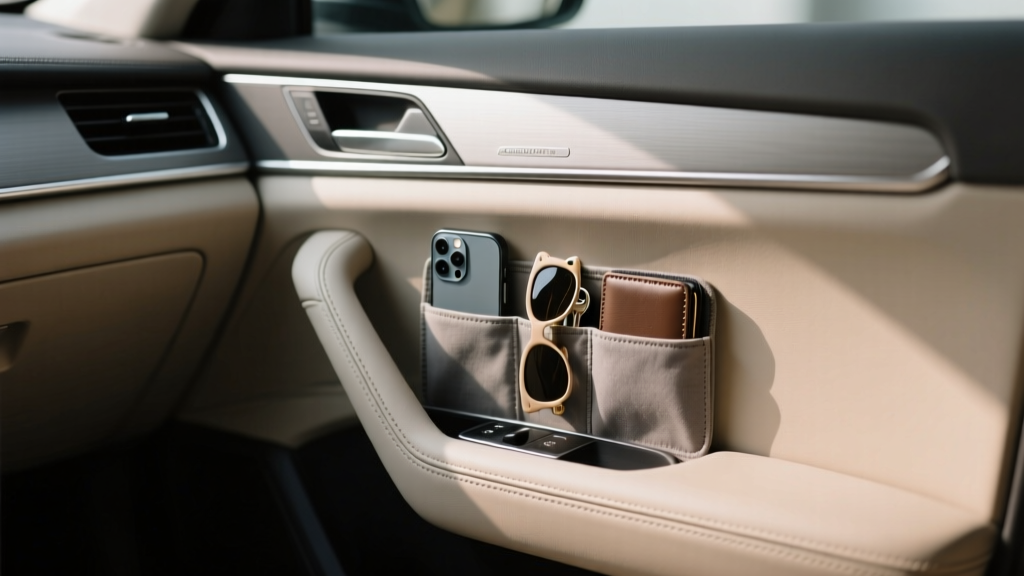
Door Pocket Organization: Troubleshooting Tips (2026)
Door pockets are one of the most used?and most abused?storage spots in a car interior. They catch everything you need quickly: sunglasses, a tire gauge, tissues, a parking pass, a small umbrella, charging cables, a bottle of water. Because they?re easy to reach, they become the ?default drawer? for whatever doesn?t have a better home.
When door pockets get messy, the problems go beyond clutter. Loose items rattle, bottles tip and leak, papers crumple, and heavier objects can damage the pocket liner or stress the door panel over time. In wet weather, door pockets can become a trap for moisture and grime, leading to odors and sticky residue. If you?ve ever closed the door and heard a chorus of clicks, clinks, and thuds, you already know why organization matters.
This guide walks through the most common door pocket headaches and how to fix them with practical, real-world solutions. You?ll get step-by-step troubleshooting, product comparisons, and simple habits that keep your door storage functional?without turning your car into a rolling junk drawer.
Why Door Pocket Organization Fails (and What It Costs You)
Most door pocket issues come down to three things: shape, movement, and ?stuff creep.? Door pockets are often narrow and angled, and the door is constantly moving?opened, closed, slammed, parked on inclines. That motion turns loosely stored items into projectiles and noise makers.
- Noise and rattles: Loose coins, tools, and keys bounce against plastic.
- Leaks and stains: Bottles tip over, caps loosen, condensation builds.
- Wear and damage: Heavy items can deform pocket liners or crack brittle plastics.
- Safety issues: Hard objects can become hazards in a sudden stop; sharp items can injure a hand reaching in blindly.
- Lost time: You waste minutes digging for that one cable or toll tag.
Think of door pockets as ?quick access? storage, not long-term storage. The goal is to keep only the items that genuinely benefit from being there?and contain them so they don?t roam.
Step 1: Diagnose Your Door Pocket Type and Constraints
Before buying organizers, take 2 minutes to assess what you?re working with. Door pockets vary widely by vehicle class and trim level.
Common Door Pocket Designs
- Deep bottle pocket with a narrow slot: Great for drinks, bad for small items (they fall to the bottom).
- Shallow tray-style pocket: Easy access, but items slide out on turns.
- Split pocket (upper slim + lower bottle area): Best overall if you assign categories.
- Carpet-lined or felt-lined pocket: Quieter and grippier, but can trap dirt and absorb spills.
- Hard plastic pocket: Easy to wipe clean, but rattles are more likely.
Quick Fit Check (Do This First)
- Measure pocket width and depth with a tape measure or even your phone?s measuring app.
- Check the door?s swing path: Make sure tall items won?t hit the seat or dash when the door closes.
- Look for drainage holes at the bottom of the door pocket (some doors have them; many don?t).
- Identify snag points: speaker grilles, window switch wiring areas, or pocket lips that might catch a hanging organizer.
Real-world example: A tall stainless water bottle might fit when the door is open, but once you close it, the bottle can press into the seat bolster and pop the cap loose. That?s a pocket-geometry issue, not a ?bad bottle? issue.
Step 2: Empty, Sort, and Set Door Pocket Rules
If you want door pockets that stay organized, you need a simple system. Start by emptying everything onto a towel and sorting.
Sorting Categories That Work
- Must-have in door pocket: tissues, microfiber cloth, hand sanitizer, small flashlight, parking card.
- Better in glove box/console: registration/insurance, spare cables, tools, spare change.
- Trash/recycle: receipts, wrappers, empty bottles.
- Seasonal: de-icer, sunscreen, bug spray (store elsewhere when not needed).
Simple ?Door Pocket Rules? (Easy to Maintain)
- Rule #1: No loose coins. Use a coin holder or move them to a console bin.
- Rule #2: No sharp metal objects (screwdrivers, pocket knives). Store them in a pouch elsewhere.
- Rule #3: One beverage container maximum per door pocket, and only if it seals reliably.
- Rule #4: Everything small goes into a micro-caddy or pouch?no ?naked? tiny items.
Troubleshooting Common Door Pocket Problems
Problem: Rattling and Buzzing Noises
Likely causes: hard plastic pocket + loose metal items + vibration from door speakers.
Fixes (from fastest to most effective):
- Remove hard items like coins, keys, and mini tools.
- Add a liner: a cut-to-fit rubber shelf liner or silicone mat dampens noise and adds grip.
- Use a small pouch: store small items in a zippered fabric pouch to prevent clinking.
- Check door panel clips if the rattle persists even when empty; some rattles aren?t ?stuff? at all.
Tip: If the rattle only appears with bass-heavy music, the culprit is usually a loose item hitting the pocket wall or a bottle vibrating in its ring.
Problem: Items Sliding Out When You Turn or Brake
Likely causes: shallow pocket, smooth plastic, tall items with a high center of gravity.
Fixes:
- Increase friction: add a grippy liner (rubberized mesh works well).
- Create compartments: use a slim door-pocket organizer insert with dividers.
- Lower the load: store heavy items in the console, not the door.
Real-world example: Sunglasses in a hard case often slide and thump. A felt-lined sleeve or a soft sunglasses pouch stops the movement and prevents scratched lenses.
Problem: Spills, Sticky Residue, and Funky Smells
Likely causes: leaky bottles, sugary drinks, condensation, or wet umbrellas.
Step-by-step cleanup:
- Remove everything and vacuum out crumbs and grit.
- Wipe with a mild interior-safe cleaner (or a diluted all-purpose cleaner safe for plastics?test first).
- Use a soft brush to lift sticky residue from textured plastic.
- Dry thoroughly with a microfiber towel; leave the door open for a few minutes if possible.
- Deodorize: place a small charcoal odor absorber pouch in the pocket for a few days.
Tip: If your door pockets are carpeted/felt-lined, avoid soaking them. Use a damp microfiber and gentle agitation, then blot dry.
Problem: Not Enough Space for Essentials
Likely causes: door pocket is doing too much; you?re storing long-term items there.
Fixes:
- Move documents to a slim glove box folder.
- Use a seat-back or center console organizer for bulk items (wipes, spare cables, first-aid).
- Assign zones: driver door = quick-access driving items; passenger door = comfort items (tissues, wipes).
Problem: Door Pocket Liner Sagging or Deforming
Likely causes: heavy bottles, tools, or repeated impact from slamming the door.
Fixes:
- Reduce weight: avoid storing metal tools or full-sized drink containers in the door.
- Add support: a rigid organizer insert can distribute load more evenly.
- Inspect mounting points: if the pocket is loose or cracked, a trim clip replacement or door panel repair may be needed.
Product Recommendations: What Actually Helps (and What to Skip)
You don?t need a complicated setup. A few targeted accessories can make door pockets quieter, cleaner, and easier to use.
Best Low-Cost Upgrade: Cut-to-Fit Non-Slip Liners
Why they work: Adds grip, reduces rattles, and makes cleanup easier.
- Rubber shelf liner: grippy and inexpensive; can trap dirt in open mesh patterns.
- Silicone mat: easy to wipe; often pricier; best for flat-bottom pockets.
Choose this if: your main issue is sliding and noise, not lack of space.
Best for Small Items: Zippered Pouches or Micro-Caddies
Why they work: They contain clutter and prevent ?bottomless pit? digging.
- Soft zip pouch: great for cables, adapters, tire gauge; won?t rattle.
- Small structured caddy with dividers: faster access; better for pens, lip balm, toll transponder.
Choose this if: you keep losing small essentials in the door pocket.
Best for Drink Stability: Bottle Stabilizers and Inserts
Why they work: Some door bottle holders are too wide for slim bottles, causing wobble.
- Foam/rubber spacers: reduce vibration; cheap and effective.
- Universal bottle grips: adjustable inserts that hold different sizes more securely.
Choose this if: your bottle rattles or tips when you close the door.
What to Skip (Most of the Time)
- Bulky hanging organizers on door edges: can interfere with door seals and look messy quickly.
- Overly rigid inserts that don?t fit well: they squeak, shift, and can scratch interior plastics.
- Sticky tape organizers on textured plastic: poor adhesion and residue problems later.
Step-by-Step Setup: A Practical Door Pocket System
This setup works for most sedans, SUVs, and trucks without looking ?over-organized.?
- Clean the pocket and dry it completely.
- Add a non-slip liner cut to the pocket?s bottom shape.
- Create two zones:
- Zone A (front/upper): quick-grab items (tissues, sanitizer).
- Zone B (rear/lower): a zip pouch for small gear (cables, adapter, flashlight).
- Limit drink storage: one sealed bottle only, and only if it fits without pressing against the seat.
- Do a ?door close test?: open/close the door a few times and listen for movement.
- Lock in a weekly reset: 60 seconds while fueling up?remove trash and return items to zones.
Common Mistakes to Avoid
- Using the door pocket as a tool box: weight + hard edges = wear, noise, and potential injury.
- Storing important documents in the door: papers get bent, wet, and forgotten.
- Ignoring moisture: wet umbrellas and bottles create odor and residue fast.
- Overfilling ?just in case? items: too many backups (cables, chargers, pens) become clutter.
- Skipping compatibility checks: organizers that don?t fit your pocket shape will slide and annoy you into quitting the system.
FAQ: Door Pocket Organization
What should I keep in my driver-side door pocket?
Stick to true quick-access items: tissues, a small microfiber cloth, hand sanitizer, a parking/garage card, and maybe a small flashlight. Avoid heavy items and anything sharp. If you carry a drink, make sure it seals and doesn?t press into the seat when the door closes.
How do I stop my water bottle from rattling in the door?
Try a rubberized liner first. If the bottle holder is too wide, add a thin foam or rubber spacer (or a universal bottle grip insert) so the bottle sits snugly. Also check that the cap is tight and the bottle isn?t vibrating against a hard plastic ridge.
Are door pocket liners safe for all interiors?
Most non-slip rubber or silicone liners are safe on hard plastic and vinyl, but avoid adhesives when possible. For delicate surfaces, choose a removable liner and clean underneath occasionally to prevent grit from rubbing the finish.
Why does my door pocket smell even after I clean it?
Odors usually linger because moisture soaked into carpet/felt or residue is trapped in textured plastic. Dry thoroughly, then use a charcoal deodorizer pouch for a few days. If the smell returns, check for a leaking bottle or repeated wet items like umbrellas.
Is it okay to store electronics like a power bank in the door pocket?
It?s not ideal. Door pockets see more temperature swings and vibration, and a power bank can slide and get damaged. A center console organizer or glove box pouch is typically a safer home?especially in hot climates.
My door pocket is tiny?what?s the best approach?
Go minimalist: a liner plus one slim pouch. Use the pocket for one category (like cleaning/comfort) and move everything else to the console or a compact seat-back organizer. Small pockets work best when they?re not forced to do multiple jobs.
Next Steps: Keep It Organized for the Long Haul
A door pocket doesn?t need to be empty to be organized?it needs boundaries. Start with a clean pocket, add grip, contain small items in a pouch, and limit drinks and heavy objects. Then do a quick weekly reset so clutter doesn?t creep back in.
If you?re ready to level up the rest of your cabin, explore more interior organization and care guides on carinteriormix.com. We?re building practical resources to help your car look better, feel better, and stay enjoyable to drive.