DIY Document Holder Replacement | CarInteriorMix
Your car?s document holder probably isn?t something you think about until it fails?usually at the worst time. You?re digging for registration at a roadside stop, your insurance card is buried under receipts, and the glove box latch is barely hanging on. A proper document holder setup keeps the essentials protected, easy to find, and less likely to get damaged by heat, spills, or general glove box chaos.
Replacing or upgrading your document holder is also a surprisingly satisfying interior DIY. It?s low-cost, doesn?t require specialty tools, and immediately improves everyday usability. Whether you drive a new daily commuter, a weekend project car, or an older vehicle with brittle plastics, a clean and secure storage solution makes your cabin feel more organized and ?put together.?
This guide walks you through choosing the right document holder, removing an old setup, installing a replacement, and optimizing the layout so you?re not fumbling at the next inspection, toll booth issue, or insurance claim.
What ?Document Holder Setup? Means in a Car Interior
A document holder setup can refer to a few different storage solutions, depending on your vehicle and how you prefer to organize paperwork:
- Glove box organizer/document wallet: A slim folder or zip pouch that holds registration, insurance, owner?s manual, and service records.
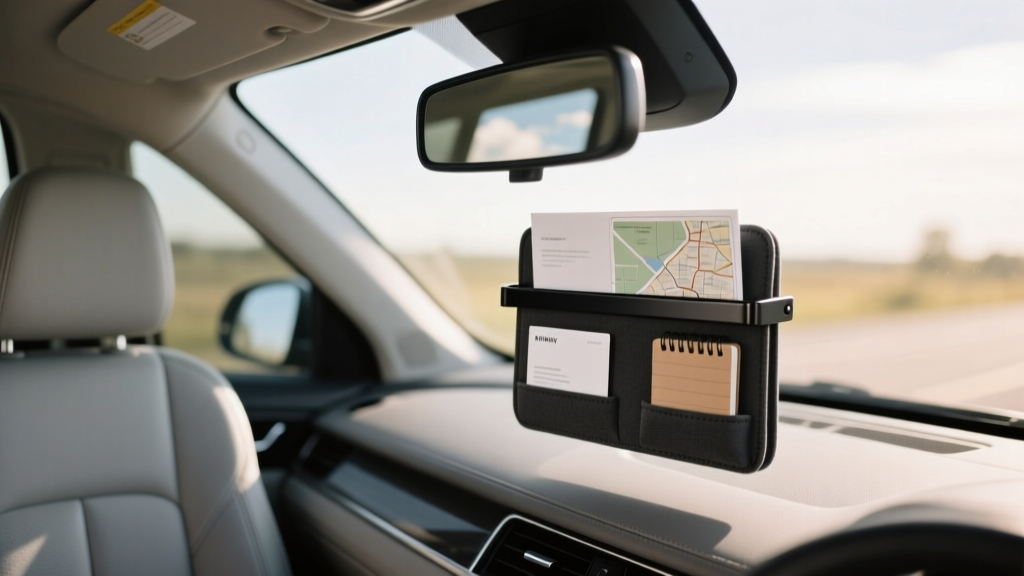
- Visor-mounted document holder: A holder attached to the sun visor for quick access (common for insurance cards and permits).
- Glove box integrated straps/clips: Factory or aftermarket straps that secure a manual pack or document sleeve.
- Seat-back or console document pockets: Useful for rideshare drivers, families, or fleets.
For most car owners, the best ?replacement? is either a better glove box document wallet or a visor holder?both are inexpensive and easy to install.
Before You Start: What You Should Store (and What You Shouldn?t)
Keeping the right items in your car is about legality, convenience, and security. Aim to store what you need for routine stops or emergencies, and avoid anything sensitive that could create a bigger problem if the car is broken into.
Documents that typically belong in the car
- Vehicle registration (as required in your region)
- Proof of insurance (current card/policy page)
- Roadside assistance info
- Basic emergency contacts
- Warranty info and service schedule summary
Documents you should generally avoid leaving in the car
- Passport, birth certificate, or Social Security documents
- Spare house keys with identifying tags
- Old insurance cards with personal info you no longer need
- Payment cards, checkbooks, or anything containing PINs
Real-world example: If you keep your home address on older paperwork inside the glove box, a smash-and-grab theft becomes more than a window replacement?now they know where you live and may have access via a garage remote.
Tools and Supplies Checklist
Most document holder replacements are tool-light. Here?s what covers nearly all installs:
- Microfiber cloth (for cleaning the mounting area)
- Interior-safe cleaner (non-greasy, residue-free)
- Trim tool or plastic pry tool (optional, for visor clip removals or tight panels)
- Small Phillips screwdriver (some visor accessories use tiny screws)
- Measuring tape or ruler (helps position adhesive holders)
- Adhesive promoter or isopropyl alcohol (for better adhesive bonding)
- Zip ties or adhesive cable clips (optional, for tidy glove box organization)
Choosing the Right Replacement: Product Types and Comparisons
Your best option depends on access needs, climate, and how much paper you actually carry.
Option A: Document wallet for the glove box (best all-around)
Why it works: Keeps papers flat, reduces creases, and prevents documents from slipping behind the glove box hinges.
- Pros: Clean look, more secure, less sun exposure, holds multiple documents
- Cons: Slightly slower access than visor-mounted holders
- Look for: Heat-resistant material, labeled sections, strong zipper or snap closure
Option B: Visor-mounted document holder (fastest access)
Why it works: Perfect for insurance cards, parking permits, gate access cards, and toll transponder instructions.
- Pros: Quick access, minimal glove box clutter
- Cons: Heat and sun exposure can fade ink; can interfere with vanity mirrors or visor airbags on some models
- Look for: Slim profile, non-scratch backing, secure closure, no sharp corners
Option C: Adhesive pocket inside glove box door (best for small cars)
Why it works: Uses unused vertical space and keeps documents visible and separated.
- Pros: Cheap, easy install, tidy layout
- Cons: Adhesives fail if installed on dirty or textured plastic; may peel in extreme heat
- Look for: 3M-style automotive adhesive, low-VOC materials, reinforced seams
Quick recommendation guide
- Hot climates / lots of sun: Glove box document wallet (less UV exposure)
- Fleet / rideshare / frequent stops: Visor holder or glove box door pocket
- Minimalist setup: Slim wallet with 2?4 compartments
Step-by-Step: Replace Your Document Holder Setup
Step 1: Empty and sort what you already have
- Remove everything from the glove box (and center console if you store papers there).
- Create three piles: Keep in car, Keep at home, Shred/recycle.
- Check expiration dates on insurance cards and permits. Toss outdated items.
Tip: Take a quick photo of your current registration/insurance and store it securely on your phone, if legal in your area. It?s not always a substitute, but it?s a useful backup.
Step 2: Clean the mounting area (even if you?re not using adhesive)
- Wipe down the glove box interior, visor surface, or glove box door where the holder will sit.
- Use isopropyl alcohol on a cloth to remove silicone shine products and skin oils.
- Let the area fully dry before installing anything.
Real-world example: Many adhesive holders fail because the area was treated with a glossy interior protectant. Alcohol removes that slick layer and makes adhesives hold.
Step 3: Remove the old holder (if applicable)
What ?removal? looks like depends on what you?re replacing:
- Old adhesive pocket: Warm it slightly with your car sitting in the sun (or a gentle hair dryer). Peel slowly from one corner. Remove residue with adhesive remover safe for plastics.
- Visor clip holder: Unclip carefully. If it uses screws, support the visor and remove them with a small Phillips screwdriver.
- Worn document wallet: Simply replace?no removal needed beyond emptying.
Safety check: If your vehicle has ?AIRBAG? labeling near the visor or A-pillar, avoid installing bulky items that could interfere with deployment.
Step 4: Test-fit your new holder
- Place your new holder where you want it without attaching anything yet.
- Open/close the glove box or visor fully to confirm there?s no binding.
- Verify it won?t rub against the glove box latch, cabin light switch, or dampers.
Tip: Keep the holder away from glove box hinges and corners. Those areas flex and can cause adhesives to peel.
Step 5A: Install a glove box document wallet (quick setup)
- Label sections (registration, insurance, service, manuals) if your wallet doesn?t come labeled.
- Load only the essentials first. Avoid overstuffing?it makes it harder to pull out quickly.
- Store it flat against the glove box back wall or on top of the owner?s manual pack.
Practical tip: If your glove box drops open quickly, keep the wallet toward the back so it doesn?t slide out when you open the door.
Step 5B: Install a visor-mounted holder (clip or strap style)
- Position it so it doesn?t block the visor pivot or vanity mirror cover.
- Clip or strap it securely?snug, but not so tight that it creases the visor material.
- Cycle the visor up/down and side-to-side to ensure it still locks in place.
- Add your most-used card(s) and confirm they won?t fall out on bumps.
Practical tip: Choose a holder with a full flap or zipper if you drive on rough roads. Open-top pockets look clean, but cards can eject over time.
Step 5C: Install an adhesive glove box pocket (best practices for durability)
- After cleaning with alcohol, wait 2?3 minutes for any remaining moisture to evaporate.
- Mark the placement lightly with painter?s tape so it goes on straight.
- Peel backing and apply pressure firmly for 30?60 seconds across the entire surface.
- Let it cure: avoid loading it for at least a few hours (24 hours is ideal for maximum bond).
Heat tip: Adhesives bond best around room temperature. If it?s freezing out, warm the interior first. If it?s extremely hot, park in shade so the adhesive doesn?t soften before curing.
How to Set Up Your Documents for Speed and Cleanliness
A great holder is only half the win. The layout matters when you?re trying to grab a document under pressure.
Suggested organization (front-to-back priority)
- Front slot: Proof of insurance (current)
- Second slot: Registration
- Third slot: Roadside assistance and emergency contacts
- Rear section: Service summaries, warranty info, small receipts you plan to file later
Make it more durable
- Use clear sleeves for papers that are printed on thin stock.
- Avoid folding documents more than necessary?creases become tears.
- If ink tends to fade (common on thermal prints), make a photocopy and store the copy in the car.
Common Mistakes to Avoid
- Overstuffing the holder: This bends cards, splits seams, and makes it harder to remove quickly.
- Ignoring airbag zones: Don?t add bulky accessories near airbags or areas marked ?SRS/AIRBAG.?
- Installing on dirty or shiny plastic: Adhesives fail fast when applied over silicone-based interior dressings.
- Leaving sensitive documents inside: Reduce identity theft risk?store only what you need.
- Using cheap vinyl in hot climates: Low-grade plastics can warp, stick to surfaces, or off-gas odors.
- Forgetting to update paperwork: A tidy holder doesn?t help if the insurance card expired months ago.
Recommended Features When Shopping (What Actually Matters)
When you?re browsing options online or in an auto store, prioritize function over gimmicks:
- Closure type: Zipper or snap beats open-top for long-term security.
- Material: Heat-resistant PU leather, nylon, or reinforced fabric tends to hold up better than thin vinyl.
- Size compatibility: Should fit standard insurance cards and folded letter/A4 papers without forcing them.
- Interior layout: At least 3 compartments so your key documents don?t stack into a messy pile.
- Low-profile design: Especially for visor mounts?avoid anything that hits your headliner or blocks mirrors.
FAQ
Should I keep my vehicle title in the car?
No. The title is a high-value document for fraud. Store it at home in a safe place. The car should only carry what?s required for driving and routine stops (registration and proof of insurance, depending on your local rules).
My adhesive pocket keeps falling off?what?s the fix?
Clean the surface with isopropyl alcohol, remove any old adhesive residue, and reapply using a quality automotive-grade adhesive strip. Also make sure you?re not mounting it on a highly textured or flexible area of the glove box door, and allow adequate cure time before loading it.
Is a visor document holder safe with airbags?
It can be, but you need to confirm your vehicle?s airbag locations. Avoid placing bulky items near airbag-marked areas, and never attach anything to the A-pillar trim where curtain airbags deploy. When in doubt, stick to a glove box document wallet.
What?s the best setup for multiple drivers (family car)?
Use a glove box document wallet with labeled sections and keep the front slots dedicated to insurance and registration only. Add a small card sleeve for each driver?s parking pass or permit, and set a reminder every six months to purge old paperwork.
How do I prevent papers from yellowing or fading?
Store them out of direct sun (glove box beats visor for this), use clear sleeves, and avoid leaving thermal-printed receipts as your only record?make a photocopy or scan and store a copy in your holder.
Next Steps: Make Your Interior Feel More Organized in 15 Minutes
Replace your document holder setup, then take an extra few minutes to tidy the surrounding area:
- Install a small glove box organizer tray for pens, flashlight, and spare fuses
- Add a microfiber cloth and a sealed pack of wipes (kept separate from documents)
- Set a calendar reminder to update insurance and registration copies
A clean, reliable document storage setup is one of those small interior upgrades that pays off every time you need it?especially when time is tight and stress is high. For more practical interior DIYs, storage ideas, and upgrade guides, explore the latest articles on carinteriormix.com.