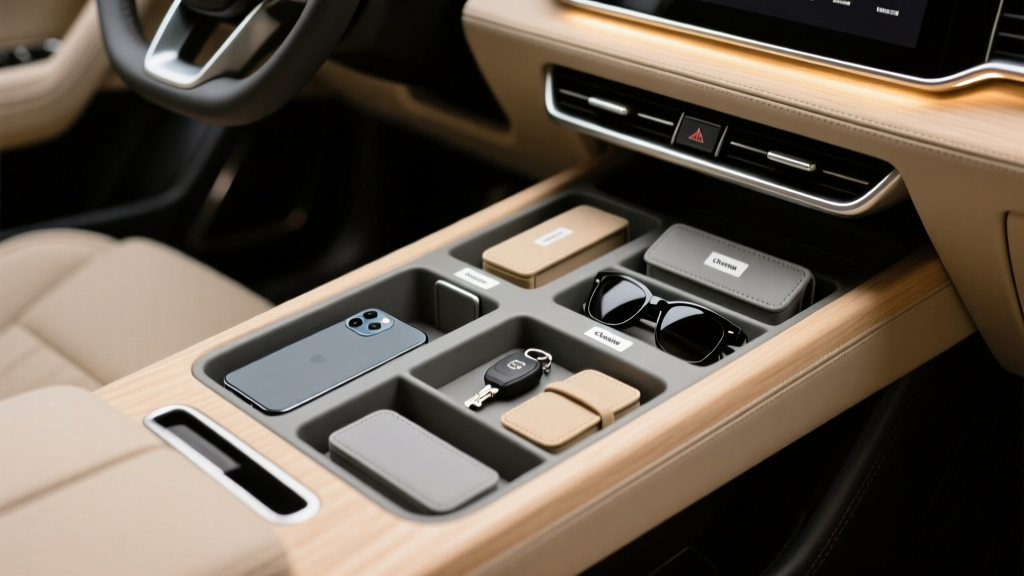
Console Organization by Car Model (2026)
Your center console is where daily driving chaos tends to collect: keys, sunglasses, charging cables, receipts, hand sanitizer, coins, gum, parking passes, even the occasional loose bolt from a DIY project. A well-organized console makes your cabin feel cleaner, but it also reduces distraction. When you can find what you need by touch?without rummaging?you keep your eyes where they belong.
The catch: console organizers aren?t truly ?universal.? A tray that fits a 2020 Toyota Camry may wobble in a 2022 Camry with a different trim, and something designed for a Ford F-150 may interfere with a sliding armrest or a rotary shifter in another model. This guide breaks down console organization compatibility by car model type and console design so you can buy (or build) the right setup the first time.
Below you?ll find a practical way to identify your console style, measure it correctly, choose organizer formats that match your vehicle, and avoid common fitment mistakes. If you?ve ever bought an organizer that looked perfect online and arrived ?almost right,? this is for you.
What ?Compatibility? Really Means for Console Organizers
Compatibility isn?t just about length and width. The best-fitting console organizer accounts for how you use the console and what?s already inside it. When comparing products (or planning a DIY setup), consider these fitment factors:
- Console shape: rectangular, tapered, curved sidewalls, stepped floors, or multi-level bins.
- Depth and usable height: many organizers fit the opening but sit too high and block the armrest latch or lid.
- Shifter and control layout: traditional PRND shifter, rotary dial, push-button, or joystick shifters can change storage placement.
- Sliding tray/armrest: common in Honda, Toyota, Volkswagen, and luxury models?organizers must not jam the slider rails.
- Power ports: USB-A/USB-C, 12V socket, or wireless charging pad location affects cable routing.
- Trim level differences: hybrid vs gas, sport vs base, optional console safe, removable dividers, or premium audio modules.
Step 1: Identify Your Console Type by Vehicle Category
Instead of chasing a massive list of every make/model/year, start with your console category. Most vehicles fall into one of these patterns, and organizer styles are surprisingly consistent within each.
Sedans & Midsize Cars (Camry/Accord/Altima/Passat class)
Typical console traits:
- Medium-depth main bin with a hinged armrest
- Front cupholders adjacent to shifter
- Small ?phone pocket? or shallow tray near the dash
Best organizer styles: model-specific drop-in trays, 2-tier trays with a sliding top, felt-lined modular bins.
Compact Cars & Hatchbacks (Civic/Corolla/Mazda3/Golf class)
Typical console traits:
- Narrower opening and more tapered walls
- Shallower bin; limited space for tall dividers
- Often a handbrake lever in older models (affects cupholder and tray shape)
Best organizer styles: slim trays with angled edges, stackable mini-bins, flexible silicone organizers that adapt to curves.
Crossovers & SUVs (CR-V/RAV4/Rogue/Highlander class)
Typical console traits:
- Deeper storage bins and taller armrests
- More charging options (rear USB, front USB, wireless pad)
- Occasional removable ?bucket? insert or factory divider
Best organizer styles: two-level trays, deeper compartment grids, organizers with cable pass-through cutouts.
Pickup Trucks (F-150/Silverado/Ram/Tacoma class)
Typical console traits:
- Very deep center console with wide opening
- Often includes a factory tray, file-hanging slots, or large under-tray storage
- Console lid may be thick; some have a fold-down work surface
Best organizer styles: heavy-duty ABS trays, multi-section ?toolbox? style bins, organizers with large cup inserts and coin trays.
Luxury & Performance (BMW/Audi/Lexus/Genesis class)
Typical console traits:
- High-gloss surfaces and tighter tolerances
- Rotary controllers, touchpads, or electronic shifters near storage areas
- Wireless charging pad and hidden compartments are common
Best organizer styles: custom-fit trays with soft liners, low-profile organizers that don?t interfere with electronics, microfiber/felt to prevent rattles.
Step 2: Measure Your Console Correctly (So ?Fits? Actually Fits)
Most returns happen because buyers measure the opening but ignore internal geometry. Use this quick method to get usable dimensions that match how organizers are designed.
Tools you?ll need
- Tape measure (or ruler)
- Notepad/phone notes
- Flashlight
- Optional: a piece of cardboard for a template
Measurement steps
- Empty the console. Remove factory inserts, rubber mats, and any removable dividers.
- Measure top opening width and length. This is the maximum size for a drop-in tray?s rim.
- Measure inner width and length at the depth where the tray will sit. Many consoles taper; an organizer that fits the top can bind lower down.
- Measure usable depth. Close the lid and note any hinges, latches, or protrusions that reduce height.
- Locate ports and rails. Mark where USB/12V outlets and sliding armrest rails sit so you don?t block them.
- Check for stepped floors. Some bins have a raised section that prevents flat-bottom organizers from sitting level.
Real-world example: A common issue in compact SUVs is buying a two-tier tray that fits the opening, then discovering the tray?s underside hits a raised ?hump? molded into the console floor. The organizer rocks side-to-side and rattles?annoying, and it can scratch the console lining over time.
Compatibility Guide by Common Car Models (What Typically Works)
Below are compatibility patterns seen across popular models. Always verify by year and generation?automakers redesign consoles frequently, even mid-generation.
Toyota (Camry, Corolla, RAV4, Highlander, Tacoma)
- Common fit: Drop-in ABS trays with rubber liners (often marketed as ?custom fit?).
- Watch for: Hybrid trims sometimes relocate wiring under the console; organizers that sit too deep can press on harnesses or bulge the liner.
- Best add-ons: Coin holder inserts, cable pass-through trays, felt liners to reduce plastic-on-plastic noise.
Honda (Civic, Accord, CR-V, Pilot)
- Common fit: Two-level organizers with a sliding top tray (especially in CR-V/Accord).
- Watch for: Sliding armrest mechanisms?avoid organizers with thick outer rims that can rub rails.
- Best add-ons: Narrow dividers for small items; non-slip silicone mats for shallow upper trays.
Ford (F-150, Escape, Explorer, Mustang)
- Common fit: Deep-bin trays for trucks; modular bins for SUVs.
- Watch for: Large consoles in trucks vary between bench-seat ?jump seat? setups and full console configurations?organizers are not interchangeable.
- Best add-ons: Heavy-duty organizer kits with multiple layers; dedicated flashlight/knife slots if you carry tools.
Chevrolet/GMC (Silverado/Sierra, Equinox, Tahoe/Yukon)
- Common fit: Multi-compartment trays with deeper pockets for larger items (keys, wallets, gloves).
- Watch for: Factory console trays that look removable but are slightly different between trims; measure before buying duplicates.
- Best add-ons: Lidded mini-bins for loose items; rubber liners to reduce rattles on rough roads.
Nissan (Altima, Rogue, Pathfinder)
- Common fit: Drop-in trays and shallow top organizers.
- Watch for: Tapered sidewalls??universal rectangle? organizers often leave gaps and slide around.
- Best add-ons: Soft-sided organizers or silicone dividers that conform to curves.
Hyundai/Kia (Elantra, Sonata, Tucson, Sportage, Telluride)
- Common fit: Custom-fit trays with cutouts for USB ports and wireless charging layouts.
- Watch for: Console designs change frequently across model years; confirm generation (e.g., 2021+ redesigns).
- Best add-ons: Cable management clips, felt-lined trays to protect gloss-black trim.
Volkswagen/Audi (Golf, Jetta, Tiguan; A4/Q5)
- Common fit: Low-profile organizers that don?t interfere with electronic shifters and rotary controls.
- Watch for: Sensitive fitment around sliding covers and tight console tolerances?avoid oversized ?universal? trays.
- Best add-ons: Microfiber-lined inserts; slim cable routing channels.
BMW/Mercedes/Lexus (3 Series, C-Class, ES/RX)
- Common fit: Custom, felt-lined trays with precise cutouts.
- Watch for: Wireless charging pads and NFC/phone key areas?metal organizers or thick inserts can reduce charging performance or cause heat buildup.
- Best add-ons: Non-slip liners, minimalist dividers, and dedicated key fobs/sunglasses sections.
Choosing the Right Organizer Format (With Product-Style Recommendations)
Rather than recommending a single brand for every vehicle, here are organizer types that consistently perform well across models. Use these as your shopping checklist for Amazon, OEM accessory catalogs, or specialty interior retailers.
1) Custom-fit ABS tray with rubber liner
Best for: Most sedans, crossovers, and trucks with a standard rectangular opening.
- Pros: Stable, easy to clean, usually zero-wobble when truly model-specific
- Cons: Can squeak if liner quality is poor; cheap ABS can warp in extreme heat
Look for: ?Vehicle-specific? plus year range, anti-rattle rubber pads, and a cable pass-through slot.
2) Two-tier organizer (top tray + under-tray storage)
Best for: Deep consoles in SUVs and trucks; drivers who want quick access to daily items.
- Pros: Doubles usable organization without losing depth completely
- Cons: Can block tall items (large water bottles, bulky sunglasses cases)
Look for: Sliding top trays with smooth runners and a low-profile design that still allows the lid to close.
3) Silicone modular bins/dividers
Best for: Tapered or curved consoles in compact cars and some Nissan models.
- Pros: Flexible fit, quiet (no rattles), easy to remove and wash
- Cons: Not as ?factory clean? looking; can trap dust if textured
Look for: Non-slip bottoms and heat-resistant silicone that won?t deform in summer.
4) Felt/microfiber-lined premium trays
Best for: Luxury vehicles and anyone annoyed by console noise.
- Pros: Eliminates rattles, protects finishes, upscale look
- Cons: Harder to clean if you spill; needs occasional lint removal
Step-by-Step: How to Set Up a Console Organization System That Stays Organized
- Sort items into ?daily,? ?weekly,? and ?rare.?
- Daily: keys, sunglasses, lip balm, small sanitizer, charging cable
- Weekly: tire gauge, wipes, parking pass
- Rare: spare fuses, emergency cash, backup cable
- Assign zones. Keep daily items in the top tray; store weekly/rare items under it in labeled pouches.
- Use one dedicated cable route. Thread charging cables through the organizer?s cutout (or add adhesive cable clips) so the lid closes without pinching.
- Add anti-rattle lining where needed. If your tray doesn?t include rubber, add thin non-slip drawer liner or felt strips on contact points.
- Do a ?lid close? test. Close the console firmly, then reopen and confirm nothing shifted into the hinge area.
- Maintain it with a 60-second weekly reset. Toss receipts, return coins to a coin tray, and wipe dust from the organizer liner.
Real-world setup example: In a family SUV, a two-tier tray can keep a driver?s essentials up top while storing kid-related supplies (wipes, small snacks, spare hair ties) in the lower bin inside a small zip pouch. The pouch prevents loose items from migrating under seats during sharp turns.
Common Mistakes to Avoid
- Buying by model name only, not year/generation. ?Honda Accord organizer? can mean five completely different consoles depending on year and trim.
- Ignoring tapered walls. A rigid organizer that?s too square will rock, squeak, or wedge halfway down.
- Blocking ports and wireless charging pads. If the organizer covers USB ports, you?ll end up removing it?wasting money.
- Overfilling the top tray. A stuffed tray defeats the purpose and can jam the lid or spill items when you brake.
- Using hard plastic without liners in noisy cabins. Trucks and firm-suspension cars can amplify rattles; rubber or felt lining matters more than people think.
- Skipping heat considerations. Cheap plastics and adhesives can warp or peel in hot climates?choose heat-resistant materials.
FAQ: Console Organizer Compatibility
How do I know if an organizer is truly ?custom fit? for my car?
Look for a listing that specifies your exact year range (example: ?2018?2022?) and ideally notes trim considerations (hybrid, console safe, sliding armrest). Reviews that mention your exact model year are a good sign, especially if they include photos.
Are universal console organizers ever a good idea?
Yes?mainly flexible silicone bins, adjustable dividers, or small modular trays. Universal rigid ABS trays are hit-or-miss because console walls often taper and vary by a few millimeters.
My organizer fits but rattles. What?s the fix?
Add thin non-slip liner, felt tape, or rubber pads at the contact points (usually the rim and corners). Also check if the tray is sitting on a raised floor section?shimming the low side with a thin rubber strip can stabilize it.
Will an organizer damage my console?
A properly sized organizer with rubber or felt lining is generally safe. Damage usually happens when a tray is forced into a tapered opening, or when hard plastic rubs against gloss trim. If you see scuffing, remove it and add protective felt tape.
What if my car has a wireless charging pad in the console area?
Choose a low-profile organizer that doesn?t sit on top of the charging surface or trap heat around the phone. Avoid metal-lined organizers near charging areas, and make sure the phone can lay flat where the pad expects it.
Should I buy an OEM organizer or aftermarket?
OEM accessories usually have excellent fitment and finish, but they can be pricey and sometimes limited in function. Quality aftermarket options often offer better compartment layouts and liners?just verify year/trim compatibility and return policies.
Conclusion: Your Next Steps for a Perfect-Fit Console Setup
Start by identifying your console type, then measure the opening and the internal taper at the depth where an organizer will sit. Pick an organizer format that matches how you drive?two-tier trays for deep SUV/truck consoles, slim trays for compact cars, and lined premium inserts for luxury interiors where rattles and scratches stand out.
If you?re shopping today, here?s a simple checklist:
- Match organizer to year + generation + trim
- Confirm port access and armrest/sliding rail clearance
- Prioritize rubber or felt liners to prevent noise and wear
- Do a quick weekly reset so clutter doesn?t creep back
Want more interior upgrades that actually fit and function? Explore more practical guides at carinteriormix.com and build a cabin you?ll enjoy every time you drive.