Bobby Pin Container Maintenance (2026)
If you?ve ever fished around your center console for a loose bobby pin (or found one wedged in a seat track at the worst time), you already know why a dedicated bobby pin container matters. It?s a small accessory, but it solves a surprisingly common car interior headache: metal pins that vanish into crevices, rattle over bumps, snag fabric, and collect grime.
For many drivers?especially parents, commuters, and anyone who keeps hair accessories in the car?a bobby pin container is part of a bigger organization system. Like a sunglass holder or a mini trash bin, it keeps your cabin tidy and reduces distractions. But to stay useful, the container itself needs basic upkeep. Heat, humidity, spilled drinks, makeup residue, and everyday dust can turn even the nicest organizer into a sticky mess.
This guide breaks down how to clean, maintain, and store a bobby pin container so it lasts for years and keeps your car interior looking sharp. You?ll get step-by-step cleaning instructions, product recommendations, common mistakes to avoid, and a few real-world tips that make a big difference.
Why Bobby Pin Container Maintenance Matters in a Car Interior
A bobby pin container lives in one of the harshest environments for small accessories: your vehicle cabin. Between temperature swings, UV exposure, and constant handling, even durable materials can degrade faster than expected. Maintenance isn?t about perfection?it?s about preventing the common issues that make these containers annoying or unhygienic.
- Heat and UV can warp cheaper plastics, fade colors, and weaken adhesives on magnetic strips.
- Dust and grit can scratch clear lids and clog hinges or slide mechanisms.
- Moisture (wet hands, spilled water, condensation) can promote rust on bobby pins and corrosion on magnets.
- Residue from hair products, lotion, sunscreen, or makeup can create sticky buildup and attract more dirt.
Keeping your bobby pin container clean also protects the rest of your interior. Loose grime transfers to cupholders, console lids, steering wheel trim, and upholstery. A two-minute routine every few weeks prevents that ?mystery sticky? problem that seems to spread across the cabin.
Know Your Container: Materials and How They Age
Before you clean anything, identify what you?re working with. Different materials tolerate different cleaners, and the wrong product can haze clear plastic or weaken rubber seals.
Common container types in cars
- Hard plastic cases (ABS, polycarbonate): Lightweight and common; can scratch and haze if cleaned with harsh chemicals.
- Silicone pouches or sleeves: Great grip and easy cleaning; can hold onto lint and pick up odors if ignored.
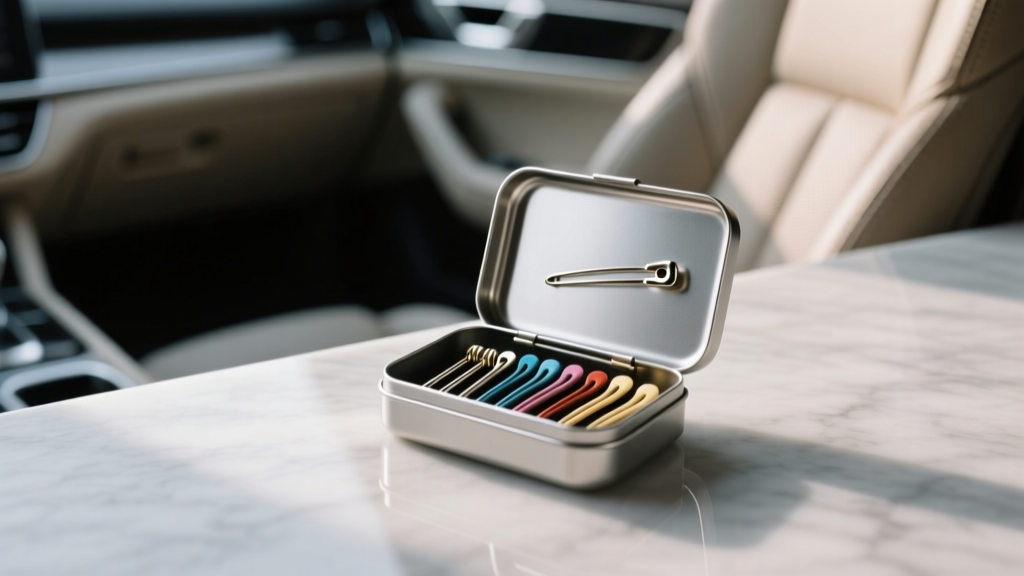
- Metal tins: Durable and stylish; may dent and can trap moisture inside if not dried fully.
- Magnetic holders (magnet strip or magnetic dish): Convenient; needs careful mounting and rust prevention for pins.
- 3D-printed containers: Can be strong but may soften with high cabin heat depending on filament; avoid aggressive solvents.
Quick ?heat test? for your setup
If your car regularly bakes in the sun, aim for containers that handle heat and don?t rely solely on adhesive. For example, a silicone case tucked into a console tray often survives better than an adhesive-mounted magnetic strip on textured plastic.
Weekly and Monthly Maintenance Schedule (Simple, Realistic)
You don?t need a complicated routine. A basic schedule keeps things under control without turning into another chore.
Weekly (1?2 minutes)
- Open the container and shake out loose dust.
- Wipe the outside with a dry microfiber cloth.
- Quick-check pins for rust or bent tips.
Monthly (10?15 minutes)
- Remove all pins and sort: keep, toss, or relocate.
- Clean inside and outside using the step-by-step method below.
- Inspect hinges, seals, magnets, or latches.
- Dry thoroughly and re-load with only good pins.
Seasonal (every 3?4 months)
- Check mounting method (adhesive, clip, Velcro, tucked placement) for stability.
- Replace any weakened adhesive strips.
- Consider swapping container location for summer heat (move from dash area to console).
Step-by-Step: Cleaning a Bobby Pin Container the Right Way
These steps work for most containers used for car interior organization. Adjust based on material type.
What you?ll need
- Microfiber cloths (2)
- Warm water
- Mild dish soap
- Soft detailing brush or old soft toothbrush
- Cotton swabs (for corners/hinges)
- 70% isopropyl alcohol (optional, for sanitizing hard surfaces)
- Compressed air (optional, for tight seams)
Step 1: Empty and inspect
- Remove all bobby pins and accessories.
- Look for rust, bent pins, and chipped coatings.
- Toss pins with rust, sharp burrs, or flaking paint?those can stain upholstery and scratch plastic trim.
Step 2: Dry clean first
- Tap the container upside down over a trash bin.
- Use a dry microfiber to wipe out dust.
- For seams and hinges, use compressed air or a soft brush.
Step 3: Wash based on material
For hard plastic cases
- Mix warm water with a drop of mild dish soap.
- Dampen (don?t soak) a microfiber cloth and wipe inside/out.
- Use a soft brush for corners and textured areas.
- Wipe again with a clean damp cloth to remove soap residue.
For silicone containers
- Wash with warm water and mild dish soap.
- Rinse well?silicone can hold onto soap if not rinsed thoroughly.
- If odor lingers, soak in warm soapy water for 10 minutes, then rinse again.
For metal tins
- Wipe with a lightly damp microfiber and mild soap if needed.
- Avoid soaking; water trapped in seams can cause corrosion.
- Dry immediately and completely.
For magnetic holders (strip or dish)
- Wipe the magnet surface with a barely damp cloth.
- Dry right away.
- If there?s adhesive backing, avoid saturating the edges?moisture can weaken the bond.
Step 4: Optional sanitize (hard, non-porous surfaces only)
- Lightly mist a microfiber cloth with 70% isopropyl alcohol.
- Wipe the container interior and lid.
- Let it air dry fully before adding pins back.
Skip alcohol on: soft-touch coatings, some 3D-printed plastics, and anything with printed graphics that might fade.
Step 5: Dry fully (this is where most people mess up)
- Leave the container open in a shaded, ventilated area.
- Wait until it?s fully dry to the touch?especially corners and hinges.
- Only re-load once there?s zero moisture to prevent bobby pin rust.
Real-World Tips for Keeping Bobby Pins Clean and Rust-Free
Maintenance isn?t just cleaning the container?it?s also controlling what goes into it.
- Don?t store wet pins. If you used a pin after the gym, at the beach, or with damp hair, let it dry before returning it to the container.
- Rotate your stock. Keep 10?20 pins in the car and store the bulk at home. Fewer pins means less clutter and easier cleaning.
- Add a mini moisture buffer. If you live in a humid area, a tiny silica gel packet (the type from shoe boxes) near the container can reduce rust risk. Keep it out of reach of kids and pets.
- Choose coated pins. Epoxy-coated or rust-resistant bobby pins typically last longer in a vehicle environment than bare metal.
- Keep it off the dash. Direct sun accelerates warping and weakens adhesives. A console tray or glove box is usually better.
Example: If you keep a magnetic bobby pin holder on the side of the center console, summer heat can soften adhesive and cause it to slide. A better setup is a small magnetic dish inside the console bin?still easy to access, but protected from UV and less likely to become a projectile if the adhesive fails.
Product Recommendations and Smart Comparisons
The best bobby pin container for long-lasting results depends on your car interior layout and how you drive. Here are practical options and what to look for.
Best for most drivers: Hard plastic case with secure latch
- Why it works: Easy to clean, keeps pins contained over bumps, fits in console trays.
- Look for: Rounded interior corners (easier cleaning), a hinge that doesn?t bind, and a latch that won?t pop open.
Best for hot climates: Silicone container stored in the console
- Why it works: Silicone tolerates heat well and won?t shatter if dropped.
- Tradeoff: Can attract lint; needs an occasional deeper wash.
Best for quick access: Magnetic bobby pin holder
- Why it works: One-handed access, great for quick touch-ups at red lights (while stopped) or in parking lots.
- Look for: A magnet with a protective coating and a stable mounting method (clip-in or placed in a compartment beats cheap adhesive strips).
Best for minimalist setups: Small metal tin
- Why it works: Slim, durable, looks tidy.
- Tradeoff: Must be dried thoroughly to prevent internal moisture buildup.
Tip for car owners: If your car has a rubberized console tray, pick a container with a grippy base (silicone or rubber feet) to reduce rattles and sliding.
Common Mistakes to Avoid
Most bobby pin container problems come from a few predictable habits. Fix these and you?ll get dramatically longer life from both the container and the pins.
- Using harsh cleaners (bleach, ammonia, strong degreasers). These can haze clear plastic, strip coatings, and damage adhesives.
- Re-loading before the container is dry. Trapped moisture is the fastest path to rusty pins and a musty smell.
- Overstuffing. Overfilled containers don?t close properly, and pins spill into seat rails and cupholders.
- Storing with loose change. Coins scratch plastic lids and can bend pins; they also create noise.
- Mounting with weak adhesive in high heat. If it comes loose during a hard stop, it becomes a distraction (or worse).
- Ignoring damaged pins. Bent or sharp pins can snag upholstery, poke fingers, and scratch trim.
Step-by-Step: Refreshing a Sticky or Grimy Container
If your bobby pin container has that stubborn hair spray + lotion film (common in family cars and daily commuters), do this deeper refresh.
- Pre-wipe with a dry microfiber to remove loose dust.
- Use warm soapy water and a soft brush to break down the film.
- Target edges and hinges with cotton swabs dipped in soapy water.
- Rinse wipe with a separate damp cloth to remove soap residue (residue attracts dirt).
- Optional: wipe hard plastic with a small amount of 70% isopropyl alcohol on a microfiber cloth.
- Air dry completely with the lid open.
Extra tip: If your container is stored near cupholders, expect more sugary residue from drink splashes. Consider relocating it to the console bin or adding a small tray insert to separate it from drink zones.
FAQ: Bobby Pin Container Care for Car Interiors
How often should I clean my bobby pin container in the car?
A quick wipe weekly is plenty for most people. Do a deeper clean monthly, especially if you use hair products, carry makeup, or the container lives in a dusty console area.
Can I use interior detailer spray on the container?
On hard plastic, a mild interior detailer can work, but avoid anything greasy or glossy?it will attract dust and make pins feel oily. For silicone, stick to soap and water.
Why are my bobby pins rusting even though the container looks clean?
Usually it?s moisture. Pins go back in wet (from humidity, damp hair, or wet hands), or the container wasn?t fully dried after cleaning. Swap to coated pins and add a small silica packet nearby if humidity is a constant issue.
Is a magnetic bobby pin holder safe to use in a vehicle?
Yes, if it?s secured properly and placed where it won?t become a projectile. Avoid flimsy adhesive mounting on textured plastics in hot climates. Inside a console bin or in a stable tray is typically safer.
What?s the best place to store a bobby pin container for easy access?
Most drivers do best with the center console tray, a console organizer insert, or the glove box. Avoid storing it loose in door pockets if you hear rattles or if it slides under braking.
My container smells like perfume or product buildup?how do I fix it?
Wash with warm water and mild dish soap, rinse thoroughly, and let it air dry open. Silicone may need a short soak. Avoid heavy fragrances to ?cover? smells?they usually mix with residue and get worse.
Next Steps: Keep Your Pins (and Your Interior) Under Control
A well-maintained bobby pin container is one of those small wins that makes your car feel cleaner, calmer, and more intentional. Set a simple routine: a quick weekly wipe, a monthly wash-and-dry, and a seasonal check of where and how it?s stored. Your future self will thank you the next time you need a pin quickly?and don?t have to dig through a dusty console for it.
If you want to level up your cabin organization even more, explore our other practical car interior care and storage guides on carinteriormix.com.