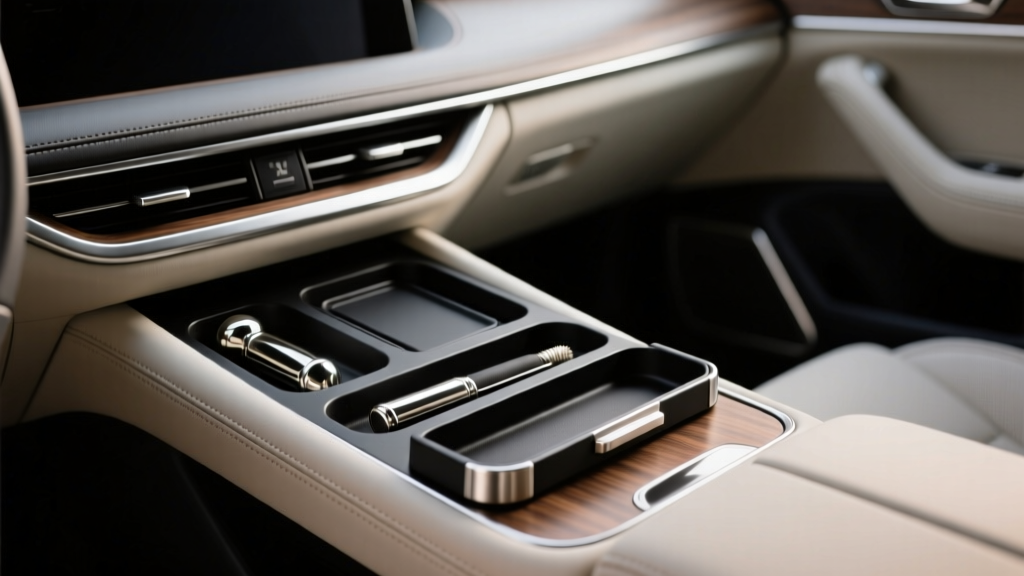
Shaving Kit Storage Customization | CarInteriorMix
A shaving kit in your vehicle sounds like a small detail?until you?re on a road trip, coming from the gym, heading to a meeting, or picking up a client and realize you?d really rather not look like you slept in the driver?s seat. For a lot of car owners, a travel grooming kit becomes part of the ?everyday carry,? right alongside phone chargers, sunglasses, and emergency supplies.
The challenge is that most vehicles weren?t designed with wet grooming gear in mind. A shaving kit can leak, smell, rattle, stain upholstery, or vanish into the black hole under a seat. The good news: with a little planning and the right interior-friendly materials, you can create a storage solution that looks factory-clean, stays sanitary, and keeps your cabin organized.
This guide covers advanced shaving kit storage customization techniques for real vehicles?sedans, trucks, SUVs, and performance cars?using methods that range from no-drill modular organizers to semi-permanent mounts and custom inserts. You?ll learn how to choose a location, control moisture, prevent noise, and build a setup that fits your exact routine.
Plan First: What Are You Storing and How Often?
Before buying organizers or drilling anything, define your shaving kit ?profile.? A compact electric trimmer setup needs very different storage than a wet shave kit with soap, brush, and aftershave.
Quick inventory checklist
- Razor type: cartridge, safety razor, straight razor, or electric shaver
- Consumables: blades, shaving cream/soap, pre-shave oil, aftershave
- Accessories: brush, comb, tweezers, nail clippers, deodorant
- Liquids: cologne, toner, witch hazel (consider leak risk)
- Power needs: USB-C, 12V adapter, charging dock, spare cable
- Frequency: daily touch-ups, weekly grooming, occasional travel backup
Set your ?non-negotiables?
- Leak control: nothing should be able to soak carpet or seats
- Heat tolerance: cabin temps can exceed 120�F (49�C) in summer
- Rattle-free: avoid clunking in door pockets and center consoles
- Fast access: reachable in under 30 seconds when parked
- Clean look: no messy bags sliding around your interior
Best Storage Locations in the Cabin (and When to Use Each)
Where you store a shaving kit matters as much as how. Choose based on temperature swings, theft visibility, and how often you?ll grab it.
1) Center console: best for daily access
- Pros: close to driver, easy to organize with inserts
- Cons: limited space; liquids may warm up quickly
- Best for: electric trimmer, compact deodorant, small grooming pouch
2) Under-seat lockbox or soft case: best for security and space
- Pros: hidden, larger capacity, less cabin clutter
- Cons: harder to access; must avoid interfering with seat rails
- Best for: full kit, backup supplies, longer trips
3) Trunk/cargo side cubby: best for separating wet items
- Pros: keeps moisture and scents away from cabin; more room
- Cons: not quick; you?ll need to step out and open cargo area
- Best for: wet shave gear, bottles, spare towels
4) Seatback organizer: best for passengers or rideshare
- Pros: easy access from rear seat; modular pockets
- Cons: can look cluttered; may scuff seatbacks if poorly fitted
- Best for: small ?freshen up? kit in a discreet pouch
Moisture and Odor Control: The Difference Between Clean and Gross
A shaving kit becomes a problem when moisture lingers. Even if you don?t use it daily, condensation, small leaks, and humid towels can create odors fast.
Advanced moisture control strategies
- Use a two-layer system: a washable inner pouch inside a wipeable outer container.
- Add a drip barrier: line the storage compartment with a removable silicone tray or rubber mat with raised edges.
- Desiccant packs: place 2?4 silica gel packs in the container; rotate monthly.
- Odor neutralizers: activated charcoal bags work well and are less perfume-heavy than air fresheners.
- Spill-proof travel bottles: upgrade from drugstore bottles to silicone or locking-cap containers.
Real-world example
A common setup for a gym commuter: a compact toiletry bag inside a hard-sided lunchbox-style container. The hard container prevents crushing and catches leaks; the inner bag holds the grooming tools. Add a charcoal pouch and a couple silica packs, and the kit stays neutral-smelling even in summer.
Customization Technique #1: Modular Console Inserts and Dividers
If your center console is a deep bin, it?s perfect for a purpose-built insert. The goal is to prevent ?vertical pile chaos? and stop sharp items from drifting.
Step-by-step: build a console insert system
- Measure the interior: width, length, depth, and any protrusions (USB ports, hinges).
- Choose an insert type:
- Vehicle-specific molded insert
- Universal adjustable dividers
- Custom cut foam (EVA or polyethylene)
- Create zones: one zone for ?dry tools,? one for ?liquids,? one for ?charging.?
- Line the bottom: use thin rubber shelf liner or automotive-grade felt to prevent rattles.
- Test with a drive: include braking and turns; adjust dividers until nothing shifts.
Pro tip
Keep blades in a rigid blade bank or small screw-top container. Even a ?safe? foil packet can tear after months of vibration and heat cycling.
Customization Technique #2: Custom Foam Cutouts for a Factory-Fit Look
For enthusiasts who want a clean, high-end result, custom foam is hard to beat. It?s the same idea used for tool drawers: everything has a home, and you can tell at a glance if something?s missing.
Materials that work well in cars
- EVA foam (closed-cell): light, water-resistant, easy to cut
- Polyethylene foam: durable and firm, excellent for precision fit
- Kaizen-style layered foam: allows depth control by peeling layers
Step-by-step: cut foam for a shaving kit tray
- Select a container: choose a rigid bin that fits your console, under-seat space, or cargo cubby.
- Cut the foam blank: match the container?s inner dimensions. Keep the fit snug so it won?t slide.
- Arrange items: place razor, trimmer, comb, travel bottles, and wipes in a layout that keeps liquids upright.
- Trace outlines: use a silver marker or chalk pen for visibility.
- Cut gradually: use a sharp utility knife; aim for multiple shallow passes instead of one deep cut.
- Set depths: leave at least 1/4 inch (6 mm) foam beneath the deepest item for structure.
- Finish edges: lightly sand or trim fuzz; consider a thin fabric wrap if you want a premium look.
Practical detail that matters
Design your cutouts with ?finger notches.? A snug cutout looks great, but you still need to remove items quickly without digging or pinching blades.
Customization Technique #3: Hidden Mounting and Retention (No More Sliding Bags)
Soft toiletry bags are convenient, but they slide. Advanced retention keeps the kit locked in place without making your interior look modified.
Smart retention options
- Industrial hook-and-loop: stick loop-side to plastic trim or a removable tray; attach hook-side to the bag?s base.
- Low-profile bungee net: ideal for cargo side pockets and trunk organizers.
- Strap anchors: use existing tie-down points in cargo areas for a secure, no-drill strap setup.
- Magnetic retention (carefully): works for metal tool tins; avoid near sensitive electronics and credit cards.
Step-by-step: under-seat retention without drilling
- Pick a low-profile container: it must clear seat rails through full range of motion.
- Clean the mounting surface: use isopropyl alcohol on plastic trim (not carpet fibers).
- Apply hook-and-loop strips: place two long strips for stability rather than several small squares.
- Test movement: slide the seat forward/back and check for contact points.
- Road-test for noise: add felt pads where plastic might tap during bumps.
Customization Technique #4: Power and Charging Integration for Electric Shavers
If you run an electric shaver or trimmer, the annoyance is always the same: the charger disappears, the cord tangles, or the shaver ends up dead when you need it.
A clean charging setup
- Use a dedicated cable: keep a short, high-quality cable (USB-C or micro-USB) in the kit.
- Add a cable clip: stick-on cable retainers keep cords from falling behind console trim.
- Choose the right adapter: a dual-port 12V USB fast charger is usually better than a cheap single-port.
- Heat consideration: don?t leave lithium battery devices charging unattended in extreme heat.
Product comparison: what works best
- USB-powered shavers/trimmers: easiest for vehicle use; fewer proprietary bricks
- Dock-based shavers: neat at home, but bulky in a car and more likely to rattle
- Hard case vs soft pouch: hard cases protect the shaver head and reduce noise
Recommended Products and Materials (Practical Picks)
You don?t need luxury gear, but you do want items that handle vibration, heat, and occasional leaks.
Storage and organization
- Hard-sided EVA toiletry case: crush-resistant and easy to wipe clean
- Leakproof travel bottles (silicone or locking caps): reduce spill risk in summer heat
- Silicone tray or collapsible bin liner: makes cleanup simple if something leaks
- Trunk organizer with side pockets: ideal for separating wet items from cabin air
Noise and protection
- Non-slip shelf liner: cheap, effective for console bins and trays
- Adhesive felt tape: eliminates plastic-on-plastic squeaks and taps
- Foam sheet pack (EVA/PE): best for custom cutouts and a factory-fit finish
Common Mistakes to Avoid
- Storing liquids upright without secondary containment: one loose cap can ruin carpet and leave lingering scent.
- Leaving wet razors or brushes sealed: that?s a fast track to mildew.
- Using cheap adhesive in hot weather: bargain hook-and-loop often fails after a few heat cycles.
- Blocking seat rails or airbags: under-seat storage must not interfere with seat movement or wiring.
- Overbuilding the setup: a massive kit becomes clutter; keep the in-car kit minimal and refill from home.
- Ignoring visibility: an expensive branded grooming bag on the seat is an easy theft target.
Maintenance Routine: Keep It Clean in 5 Minutes
A customized storage solution is only as good as your upkeep. A simple routine prevents smells and keeps your interior looking sharp.
- Weekly: wipe the container/tray; check bottles for seepage; remove hair debris from trimmer.
- Monthly: swap silica gel packs; wash the toiletry pouch; inspect hook-and-loop adhesion.
- Seasonally: review your kit for heat-sensitive items (aftershaves, aerosols) and replace cracked bottles.
FAQ: Advanced Shaving Kit Storage in a Car
What?s the best place to keep a shaving kit in a hot climate?
The trunk/cargo side cubby is usually best because it?s less exposed to direct sun and keeps scents away from the cabin. Use leakproof bottles and a secondary containment tray either way.
Can I store shaving cream or aerosol cans in my car?
It?s not ideal. Aerosols and pressurized containers can be sensitive to heat. If you must, keep them out of direct sunlight, avoid leaving them in the car for long periods, and consider switching to a non-aerosol cream or shave soap in a sealed container.
How do I stop my toiletry bag from sliding around?
Use a retention method: hook-and-loop strips on a removable tray, a cargo net in the trunk, or straps anchored to existing tie-down points. Add non-slip liner under the bag for extra grip.
Is it safe to keep razor blades in the car?
Yes, if they?re stored correctly. Keep blades in a rigid blade bank or screw-top container, and store that inside a secured case so it can?t open or puncture anything during sudden stops.
What?s the most ?OEM-looking? customization option?
A rigid container with custom-cut foam inserts. It looks intentional, prevents rattles, and keeps everything neatly aligned?especially in a center console or trunk cubby.
How can I prevent odors from aftershave or cologne in the cabin?
Use small leakproof bottles, store them inside a sealed pouch, and add an activated charcoal bag to the storage container. Avoid storing strong fragrances in door pockets where heat accelerates evaporation.
Next Steps: Build a Kit That Fits Your Driving Life
Start by choosing one storage location (console, under-seat, or cargo cubby), then add a leak-proof container and a simple retention method so nothing slides. If you want the cleanest, most advanced result, step up to a custom foam insert and a two-layer moisture-control setup with silica and charcoal.
If you?d like more practical interior organization ideas?console optimization, trunk storage systems, and materials that survive heat and daily driving?explore more guides on carinteriormix.com.