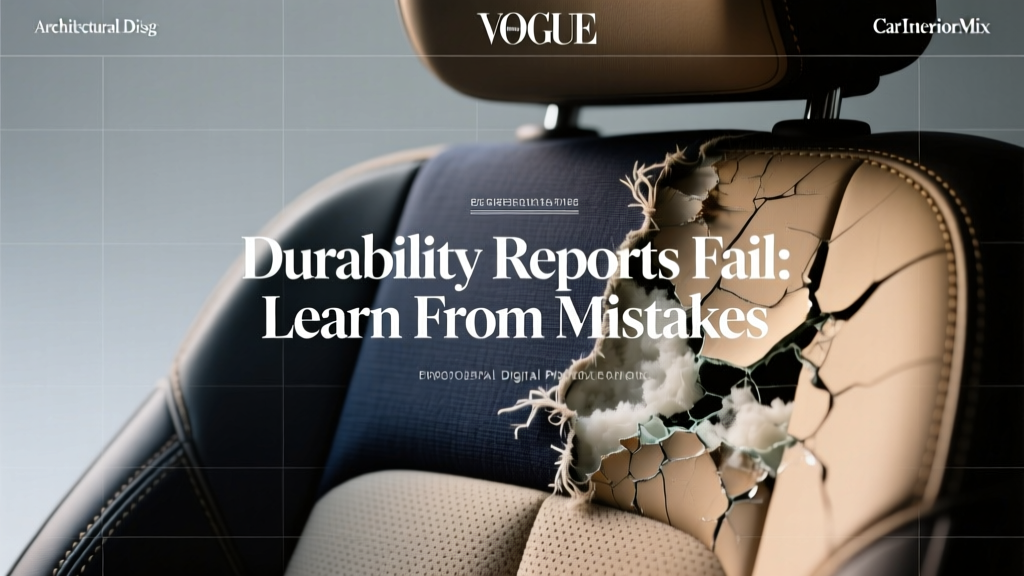
Durability Reports Fail: Lessons from CarInteriorMix
Durability Reports Fails: Learn From Mistakes
We?ve all been there: you read a durability report, watch a ?one-year update? video, or skim a forum thread that swears a seat cover, steering wheel wrap, or ceramic tint is ?bulletproof?? and then your interior tells a different story. Maybe the driver bolster started pilling, the ?scratch-proof? trim got that one perfect gouge, or your fresh leather conditioner turned your seats into a shiny slip-n-slide.
Instead of treating durability fails like personal defeats, let?s talk about them like a community does best: swapping notes, comparing conditions, and figuring out what went wrong (or what was misunderstood). Because the truth is, durability reports don?t always fail because someone lied?sometimes they fail because our use cases are wildly different.
So consider this an open thread in article form: what makes durability reports miss the mark, and how do we learn from the mess without turning every product discussion into a comment war?
1) The ?Lab-Test Loyalists?: Controlled Data or Real-Life Blind Spots?
What it is: Some of us trust standardized durability tests?abrasion ratings, UV resistance claims, chemical resistance charts, etc. If a product has numbers, certifications, or a manufacturer test sheet, it feels safer.
Pros:
- Consistent benchmarks (especially helpful when comparing materials like leatherette vs. cloth)
- Less influenced by hype or a single person?s experience
- Great for spotting obvious low-quality products
Cons:
- Lab conditions rarely match real life: sweaty commutes, pets, denim rivets, kids, sunscreen, hand sanitizer, and coffee chaos
- ?Passes testing? doesn?t mean it looks good after 18 months of sliding in and out
- Some brands cherry-pick tests that flatter their product
Works best for: Folks who mod carefully, keep the car relatively clean, and want objective comparisons before buying.
Community voice: ?I bought a ?UV-rated? dash mat because the spec sheet looked solid. Two summers later it was faded, and the edges curled like potato chips. Turns out my windshield angle plus desert sun is basically a laser.?
2) The ?Daily Driver Realists?: If It Survives My Routine, It?s Durable
What it is: This group trusts real-world updates: daily driver mileage, seasonal changes, school drop-offs, rideshare hours, gym bags, dogs, and all the normal wear that durability reports sometimes forget.
Pros:
- Relatable context: ?Here?s what happened in normal life?
- Shows cosmetic aging, not just whether something technically ?held up?
- Often includes maintenance routines (or lack of them), which matters a lot
Cons:
- One person?s ?normal? can be someone else?s extreme
- Hard to compare across different climates and habits
- Sometimes the product gets blamed when the real issue is cleaning method or installation
Works best for: Anyone who wants to know what it?s like living with a product, not just owning it.
Community voice: ?My seat covers looked perfect for three months. Then summer hit and my commute doubled. Turns out the ?breathable? fabric wasn?t breathable enough for me?now I?ve got stretched spots where I slide in wearing work pants.?
3) The ?Maintenance Matters? Camp: The Product Didn?t Fail?Our Care Routine Did
What it is: This perspective is the most controversial, because it can sound like blaming the owner. But sometimes durability fails really do come down to cleaning chemicals, conditioning frequency, or improper tools.
Pros:
- Helps us separate material weakness from user error
- Encourages smarter routines (pH-safe cleaners, soft brushes, microfiber habits)
- Explains why two people can have opposite results with the same item
Cons:
- Can turn into ?you did it wrong? arguments fast (we?ve seen those threads)
- Some products claim to be low-maintenance but secretly aren?t
- Not everyone has time to baby an interior
Works best for: Detail-minded owners and anyone trying to make premium materials last (leather, Alcantara, piano black trim).
4) The ?Fitment & Install Truthers?: Durability Isn?t Just Material?It?s How It Sits
What it is: A lot of ?durability fails? are actually fitment fails. Wrinkles, tension points, loose edges, adhesive issues, and clips rubbing in the wrong place can make a good product look terrible fast.
Pros:
- Explains early wear patterns like fraying edges and lifted corners
- Highlights the difference between universal and vehicle-specific products
- Helps us evaluate reviews: ?Did they install it correctly??
Cons:
- Not everyone wants a two-hour install for a ?simple? cover or trim kit
- Some products are unforgiving?one mistake and it?s permanent
- Install quality can vary wildly between DIY and shop work
Works best for: DIY modders, anyone installing wraps/trim overlays, and people who care about OEM-like fit.
Community voice: ?I thought my steering wheel wrap was junk because it started separating. Then I realized the seam was placed right where my hand rests on long drives. I re-wrapped it with a different seam position and it?s been solid.?
5) The ?Expectation Check? View: ?Durable? Doesn?t Mean ?Forever New?
What it is: This is the classic community debate: should a product be judged by whether it survives, or whether it stays looking factory-fresh? Some people are okay with patina; others want showroom vibes forever.
Pros:
- Sets realistic standards (especially for high-touch areas)
- Reduces disappointment when normal wear appears
- Encourages smarter choices: matte finishes, textured plastics, or sacrificial protection layers
Cons:
- Can excuse genuinely poor quality (?it?s supposed to wear?)
- Hard to define the line between patina and premature failure
Works best for: Anyone who uses their car daily and wants to enjoy it without obsessing over every mark.
Quick Poll: Where Do Durability Reports Go Wrong Most Often?
Pick one in the comments (or rank them if you?re feeling spicy):
- A) The testing doesn?t match real life
- B) Different climates/usage patterns make reviews meaningless
- C) Installation or fitment issues get ignored
- D) Maintenance routines aren?t mentioned (or are unrealistic)
- E) Our expectations are too high for high-touch surfaces
Discussion Prompts (Let?s Hear It)
- What?s the most disappointing ?durability win? that turned into a fail for you?seat covers, steering wheel wrap, tint, trim overlay, floor mats?
- Which interior material do you trust most long-term: cloth, leather, leatherette, or Alcantara-style suede?
- What?s one cleaning product or habit you think quietly ruins interiors (even when people swear by it)?
Now it?s our turn: drop your durability fail story in the comments?what product, what car, what climate, and what you?d do differently next time. Bonus points if you share what actually fixed it (switching brands, changing maintenance, re-installing, or just accepting the patina).
So what do you think?when a durability report ?fails,? is it usually the product, the process, or the expectations?