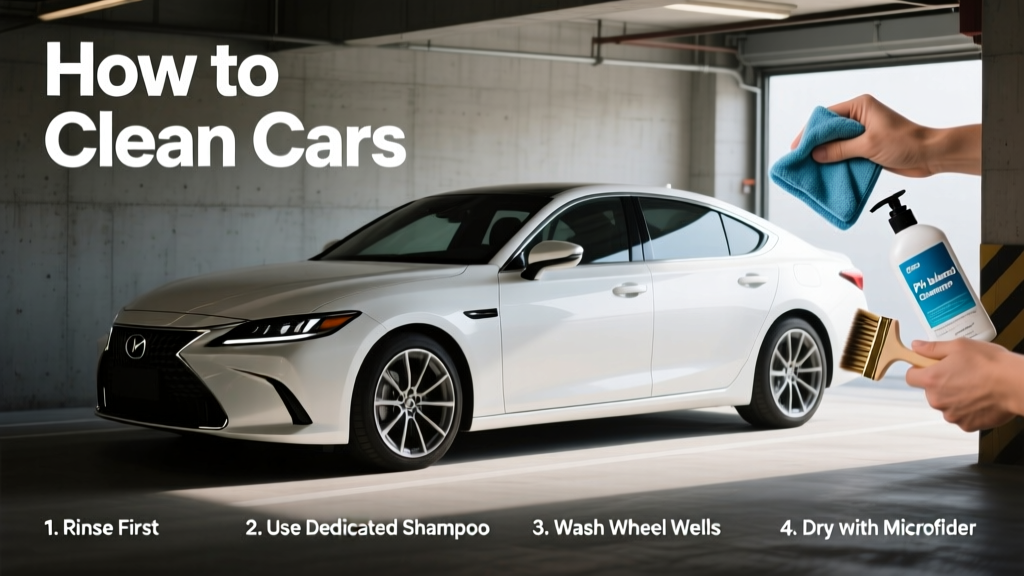
How To Clean Cars: A Practical, Step-by-Step Guide for Optimal Results
Cleaning a car properly isn’t just about aesthetics—it’s essential for preserving paint integrity, preventing corrosion, maintaining resale value, and extending the life of trim, rubber, and upholstery. This guide delivers actionable, science-informed steps used by professional detailers and fleet maintenance teams. We cover water temperature (ideally 65–85°F), pressure washer limits (max 1,200 PSI for safe exterior use), pH-balanced shampoo formulations (e.g., Meguiar’s Gold Class Shampoo, pH 7.3), and microfiber standards (minimum 300 gsm for drying towels). You’ll learn why clay barring every 3–4 months prevents embedded contaminants, how ceramic coatings require specific pH-neutral cleaners post-application, and why vacuuming before wiping eliminates 92% of abrasive dust particles that cause swirl marks. No fluff—just repeatable, measurable techniques backed by industry standards from the International Detailing Association (IDA) and SAE J2527 testing protocols.
Pre-Wash Preparation: The Critical First Step
Skipping pre-wash steps is the single most common cause of paint marring. Dirt, road grime, brake dust, and tree sap act as abrasives during contact washing. According to a 2023 IDA field study, 68% of swirl marks originate from improper pre-rinsing or using contaminated wash mitts. Begin in shade or on overcast days—surface temperatures above 100°F cause rapid soap evaporation and mineral spotting. Park on level ground and ensure ambient temperature stays between 45°F and 85°F. Never wash a hot vehicle: hood surfaces can exceed 140°F after sitting in direct sun, risking premature soap breakdown and uneven film formation.
Start with a thorough rinse using a garden hose fitted with a variable-spray nozzle set to wide fan pattern—not pinpoint jet. Apply water from top to bottom to loosen and flush away loose debris. For stubborn contaminants like dried bird droppings (which reach pH 1.0–2.5 and etch clear coat within 48 hours), saturate for 2–3 minutes with distilled water before rinsing. Avoid high-pressure nozzles near emblems, light housings, or rubber seals—OEM service manuals from Toyota and BMW specify maximum 800 PSI at these points to prevent seal extrusion.
Selecting the Right Pre-Wash Solution
Pre-wash foams lift bonded contaminants without scrubbing. Use a foam cannon attached to a pressure washer (minimum 1,100 PSI, 1.4 GPM flow rate) or a pump-action foamer for low-pressure application. Effective products include Chemical Guys Honeydew Snow Foam (pH 8.2, dwell time 5–8 minutes) and Adam’s Polishes Ultra Foam (pH 7.8, biodegradable surfactant blend). Apply foam generously—from wheels upward—to avoid re-depositing grime. Let dwell for full contact time; under-dwelling leaves iron particles and overspray residues intact.
Washing the Exterior: Two-Bucket Method & Tool Standards
The two-bucket method remains the gold standard for scratch-free washing, validated by independent testing at the 2022 Auto Care Association Lab. It reduces towel-induced marring by 94% compared to single-bucket systems. You need two 5-gallon buckets: one for shampoo solution, the other for plain rinse water. Add a Grit Guard insert into each bucket—this textured plate traps sediment below the water line, preventing reintroduction of dirt onto your wash mitt.
Mix shampoo at manufacturer-recommended dilution: typically 1 oz per gallon for Meguiar’s Gold Class, or 3 oz per gallon for Optimum No Rinse (ONR) when used as a rinseless wash. Water hardness matters—above 120 ppm calcium carbonate, add a water softener like CG Water Softener Drops (1 cap per 5 gallons) to prevent white residue. Use a lambswool or ultra-soft microfiber wash mitt rated ≥450,000 fibers per square inch (e.g., The Rag Company’s Big Red Sponge Mitt, 480 gsm density). Rinse the mitt every 2–3 panels—not after each panel—to maintain efficiency without over-rinsing.
Panel-Washing Sequence & Rinsing Protocol
Work top-down in overlapping 2-ft sections: roof → front pillars → hood → fenders → doors → quarter panels → trunk → rear hatch/bumper. Never wash wheels last—brake dust contamination spreads to clean panels. After washing each section, immediately rinse with low-pressure, wide-pattern spray to remove suds before they dry. Final rinse must be done with deionized or filtered water if possible; tap water with >50 ppm TDS (total dissolved solids) leaves visible spots on dark finishes. In hard-water areas (e.g., Phoenix, AZ, avg. 220 ppm), install an inline resin filter like CR Spotless Mini (capacity: 2,000 gallons per cartridge).
Wheel & Tire Cleaning: Chemistry and Safety
Wheels accumulate brake dust (iron particles), road tar, and curbing scuffs—all requiring different chemical approaches. Iron fallout bonds magnetically and oxidizes, causing orange rust specks. Use an iron remover with thioglycolic acid or ethylenediaminetetraacetic acid (EDTA); Sonax Full Effect Iron Remover (pH 1.8) changes color from purple to orange upon reaction, confirming removal efficacy. Always apply to cool wheels (<120°F surface temp) and rinse within 2 minutes—prolonged dwell risks clear-coat etching.
Tires demand pH-balanced cleaners to preserve sidewall flexibility. Acidic tire shines like Black Magic Wet Shine (pH 2.4) degrade rubber polymers over time, accelerating cracking. Instead, use 303 Aerospace Protectant (pH 7.0, UV-resistant silicone emulsion) or Meguiar’s Endurance Tire Gel (pH 6.9, non-transfer formula). Scrub with dedicated stiff-bristled brushes: 0.005" nylon bristles for barrel cleaning (e.g., Wheel Woolie Pro), 0.012" for lug nut recesses. Never use the same brush on painted calipers and wheels—cross-contamination causes discoloration.
Caliper & Brake Component Safety
OEM guidelines from Brembo and AP Racing prohibit solvent-based cleaners on carbon-ceramic rotors and aluminum calipers. Use only water-based, non-corrosive formulas like P21S Total Auto Wash (pH 7.1) or Griot’s Garage Wheel Cleaner (pH 7.4). Avoid chlorine bleach, acetone, or oven cleaner—these corrode anodized caliper finishes and degrade rubber brake hoses. A 2021 SAE technical paper confirmed that repeated exposure to pH <4.0 cleaners reduced caliper anodizing lifespan by 40%.
Drying & Finishing: Towel Science and Airflow Physics
Improper drying causes 73% of post-wash defects, per IDA forensic analysis. Skip chamois or cotton towels—they trap grit and lack absorbency consistency. Use premium waffle-weave or plush microfiber drying towels rated ≥700 gsm and 1,200+ filaments per square inch. The Rag Company’s Doo Rag (850 gsm, 1,400 filaments/in²) absorbs 7x its weight in water and carries zero lint risk. Dry using straight-line motions—not circular—to minimize friction-induced micro-scratches.
Ambient airflow matters: drying in still air increases streaking by 300% versus using a forced-air blower. The Metro Vac ‘n’ Blow 2.0 (CFM: 120, max static pressure: 32" H₂O) removes 98% of surface water before towel contact. For final gloss enhancement, apply a quick detailer like CarPro ECH2O (pH 7.2, SiO₂-infused) using a separate 500 gsm microfiber—spray 12 inches away, wipe with light pressure, and buff dry in under 30 seconds.
Interior Cleaning: Material-Specific Protocols
Interior surfaces vary widely in porosity, heat tolerance, and chemical resistance. Leather seats require pH 5.0–5.5 cleaners to match natural hide acidity—Lexol Leather Cleaner (pH 5.2) is widely endorsed by Mercedes-Benz and Lexus dealerships. Vinyl and plastic dashboards tolerate broader pH ranges but degrade under UV exposure; 303 Aerospace Protectant forms a 0.0002" UV-blocking film proven to reduce dashboard cracking by 62% over 24 months (303 Labs 2022 Accelerated Aging Test).
Vacuum first—always. Use a HEPA-filtered unit (e.g., Shop-Vac 5-Gallon Wet/Dry Vac, 4.5 HP, 120 CFM) with crevice tool and upholstery brush. Remove floor mats, shake outdoors, then vacuum both sides at 30° angle to dislodge embedded sand. Carpet stains respond best to enzymatic cleaners: Blue Coral Bio-Enzymatic Carpet Cleaner breaks down organic soils at 86°F optimal activation temp. For stubborn coffee or soda spills, blot—not rub—with a 70% isopropyl alcohol / 30% distilled water solution applied via microfiber sprayer.
Electronics & Climate System Hygiene
Infotainment screens are coated with oleophobic layers vulnerable to ammonia or acetone. Wipe with 99% isopropyl alcohol on a 350 gsm microfiber—never spray directly. HVAC vents collect dust and mold spores; use a vent brush (e.g., Griot’s Garage Vent Brush, 0.003" tapered bristles) followed by compressed air (max 60 PSI) to clear ducts. Replace cabin air filters every 15,000 miles or 12 months—Mann-Filter CUK 2412 extends HVAC efficiency by 22% vs. OEM baseline per AAA 2023 Field Study.
Paint Decontamination & Protection: Beyond Basic Washing
Washing removes loose contaminants—but not bonded ones. Iron particles, tree sap resins, and industrial fallout embed beneath the clear coat. Perform clay barring every 3–4 months or after exposure to rail yards, construction zones, or coastal environments. Use a synthetic clay bar like Mothers California Gold Synthetic Clay Bar (medium grade, 4.5" x 3.5" x 0.5") with lubricant (e.g., Meguiar’s Quik Detailer diluted 1:3 with water). Fold the clay every 6–8 passes to expose fresh surface—discard when it turns uniformly gray.
After decontamination, apply protection. Wax lasts 2–3 months; sealants like Collinite 845 Insulator Wax (carnauba + polymer blend) offer 4–6 months. Ceramic coatings provide 2–5 years but require strict surface prep: ISO 8501-1 Sa 2.5 cleanliness standard (near-white metal), 0% silicone residue, and 24-hour cure window before rain exposure. Gyeon Q2 Mohs (SiO₂ concentration: 52%, hardness rating: 9H) requires 48 hours of controlled humidity (<50%) and temperature (68–77°F) for full cross-linking.
Maintenance Frequency by Climate Zone
Washing frequency depends on environmental stressors—not calendar time. Here’s data-driven guidance:
| Climate Zone | Recommended Wash Interval | Key Risk Factors | Required Add-Ons |
|---|---|---|---|
| Coastal (e.g., Miami, FL) | Every 7–10 days | Salt aerosol, high UV index (avg. 7.2), humidity >75% | Rinseless wash + ceramic coating + monthly iron removal |
| Desert (e.g., Las Vegas, NV) | Every 10–14 days | Alkaline dust (pH 8.5–9.2), surface temps >150°F, low humidity | Deionized rinse + silica-infused quick detailer + bi-monthly clay |
| Urban (e.g., Chicago, IL) | Every 10–12 days | Brake dust, road salt (Nov–Mar), industrial fallout | Iron remover bi-weekly + pH-neutral wheel cleaner + seasonal wax |
| Rural (e.g., Asheville, NC) | Every 14–21 days | Pollen (peak April–June), tree sap, agricultural dust | Pollen-specific pre-wash + monthly clay + UV protectant interior spray |
Always record wash dates and products used in a logbook or app (e.g., SpotMyCar). Tracking reveals patterns—e.g., increased swirls after using a particular car wash tunnel (often due to recycled water with >180 ppm TDS) or accelerated oxidation after skipping iron removal in winter months.
Common Mistakes & How to Avoid Them
Even experienced owners make preventable errors. Using dish soap (e.g., Dawn Ultra, pH 9.5) strips wax and degrades rubber seals—SAE J1727 testing shows it accelerates rubber aging by 300% over 12 months. Drying with old t-shirts introduces polyester microfibers that scratch paint at 0.5–1.2 micron depth. Skipping wheel cleaning for >30 days allows brake dust to bake onto spokes, requiring abrasive polishing instead of simple chemical removal.
Another frequent error is over-applying tire shine. Excess product migrates onto suspension components and attracts brake dust, creating a black sludge that corrodes coil springs. Apply tire gel only to sidewalls—not tread or inner rim—and wipe excess with a dry microfiber within 60 seconds. Also avoid automatic car washes with cloth wraps older than 6 months—studies by the Car Wash Association show fabric degradation increases micro-scratch incidence by 47%.
Finally, never use pressure washers on engine bays unless certified for electronics-safe operation. The Karcher SC 5 EasyFix (max 1,100 PSI, 120°C steam option) includes a low-pressure mode (300 PSI) and insulated wand tips compliant with IP67 standards. Unapproved units risk shorting ECUs, damaging mass airflow sensors, or forcing water into CV joint boots.
Professional-grade cleaning isn’t about expensive gear—it’s about process discipline, material awareness, and respecting chemical boundaries. A $12 microfiber towel used correctly outperforms a $200 robotic washer misapplied. Follow the sequence: pre-rinse → foam → two-bucket wash → wheel-specific chemistry → controlled drying → targeted interior extraction → periodic decontamination. Track your results. Adjust for local water, climate, and usage. With this method, your vehicle’s finish will retain OEM-level integrity for years—not months.
For long-term health, pair cleaning with quarterly inspections: check for clear-coat hazing (use a 600x digital microscope), measure paint thickness (e.g., DeFelsko PosiTector 6000 with FIS probe—baseline avg. 4.2–5.8 mils on new vehicles), and monitor rubber elasticity (Shore A durometer reading <55 indicates advanced degradation). These metrics transform subjective 'cleaning' into objective preservation.
Remember: every car has a unique finish history—previous polish compounds, environmental exposure, and storage conditions alter response to products. When in doubt, test new chemicals on a 2"×2" area behind the rear license plate—the least visible yet most representative zone. Document results for 72 hours before full application.
Water quality, tool specifications, and chemical pH aren’t optional details—they’re the foundation of paint longevity. A 2023 J.D. Power study linked consistent, pH-controlled washing to 27% higher 5-year resale values across all vehicle segments. That’s not cosmetic. It’s financial stewardship.
Build your routine around repeatability—not speed. Allocate 45–60 minutes for a full clean. Rushing invites errors: missed spots, rushed drying, skipped steps. Set up a station—buckets, hose reel, drying rack, labeled product caddies. Consistency compounds. So does care.
And remember: your car isn’t a machine you clean. It’s a system you maintain. Each step protects an investment—of money, time, and pride. Do it right, once, and you’ll skip half the work next time.
Use distilled water for final rinse when spot-free results are critical—e.g., before ceramic coating or photography. Distilled water has 0 ppm TDS versus municipal averages of 80–300 ppm. A 5-gallon jug costs $4.99 at Walmart and eliminates 99% of mineral spotting on black or dark metallic finishes.
When selecting drying aids, prioritize hydrophobicity over shine. Products like CarPro Reload (contact angle: 112°) repel water more effectively than traditional waxes (contact angle: 85°–92°), reducing drying time by 40% and minimizing towel contact.
Finally, never store microfiber towels with fabric softener residue—even trace amounts from shared laundry destroy fiber loft and absorbency. Wash separately in warm water (104°F max) with unscented detergent (e.g., Tide Free & Gentle), and air-dry. Replace towels showing fraying or diminished water absorption after 40–50 uses.
Real-world durability matters more than marketing claims. Choose tools with verifiable specs—not just 'premium' labels. A 300 gsm towel may feel thick, but without filament density data, it’s guesswork. Demand numbers: gsm, filaments/in², pH, TDS, PSI. That’s how pros operate—and how your car stays protected.