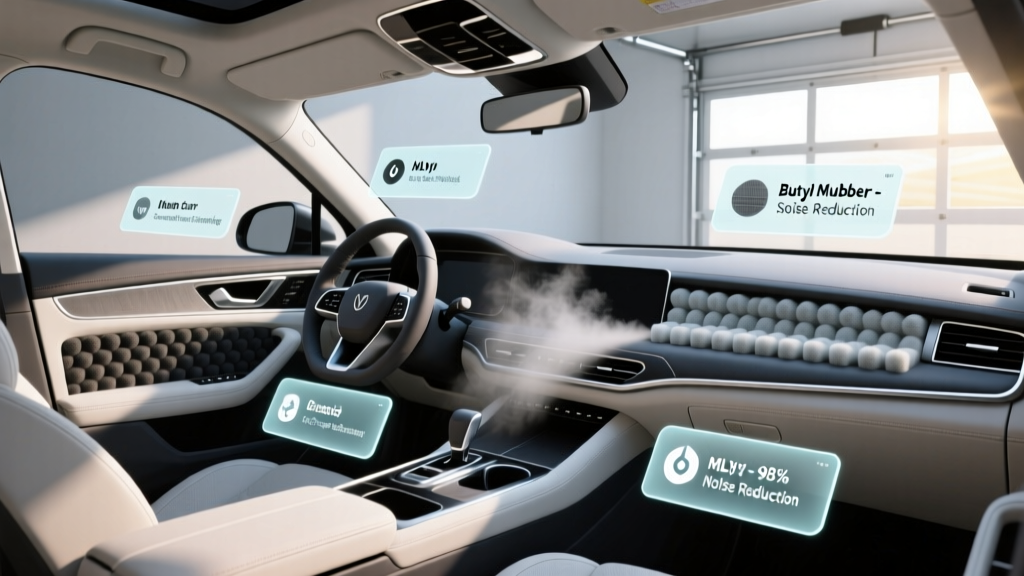
Best Car Interior Sound Deadening (2026)
Why Sound Deadening Matters for Your Car Interior
Road noise, wind whistle, and engine vibration make every drive more stressful than it needs to be. Quality sound deadening materials can reduce cabin noise by 50% or more, turning a noisy commute into a peaceful experience. Whether you are restoring a classic car or upgrading your daily driver, the right sound deadening material makes a dramatic difference.
Top Sound Deadening Materials for Car Interiors
1. Butyl Rubber Sheets (Best Overall)
Butyl rubber sheets like Dynamat and Noico are the gold standard for car sound deadening. They are heat-resistant, easy to cut, and provide excellent vibration damping. Apply them to door panels, floor pans, and the trunk floor for maximum noise reduction.
2. Closed-Cell Foam (Best for Heat and Moisture)
Closed-cell foam adds both thermal insulation and sound absorption. It is ideal for firewalls, roof liners, and areas where moisture is a concern. Unlike open-cell foam, it will not absorb water and lose effectiveness.
3. Mass Loaded Vinyl (MLV) (Best for Low-Frequency Noise)
MLV blocks low-frequency sounds like tire roar and engine drone at highway speeds. It is heavier than other options but provides the best noise-blocking performance per square foot. Install it under carpet or behind door panels.
4. Acoustic Foam Panels (Best for High-Frequency Absorption)
Acoustic foam absorbs echoes and high-frequency rattles inside the cabin. While it does not block outside noise like butyl or MLV, it improves sound clarity for your audio system and reduces harsh reflections.
5. Spray-On Deadener (Best for Hard-to-Reach Areas)
Spray-on products like HushMat or Second Skin work well inside wheel wells, undercarriage, and other areas where sheets are difficult to apply. They are especially effective at reducing road noise from tires.
Installation Tips
- Clean all surfaces thoroughly with alcohol before applying adhesive-backed materials
- Start with the floor and doors, which contribute the most to cabin noise
- Use a J-roller to press out air bubbles and ensure strong adhesion
- Cover at least 25% of a surface for noticeable improvement; 50% for significant reduction
- Combine different materials for the best result (e.g., butyl + MLV)
How Much Does Sound Deadening Cost?
A full sedan treatment with quality butyl sheets costs between $150 and $300 for materials. DIY installation takes a weekend. Professional installation runs $500 to $1,500 depending on coverage area.
Final Verdict
For most car owners, a combination of butyl rubber sheets on the floor and doors plus closed-cell foam on the firewall delivers the best noise reduction per dollar spent. Start with the areas that bother you most and expand from there.